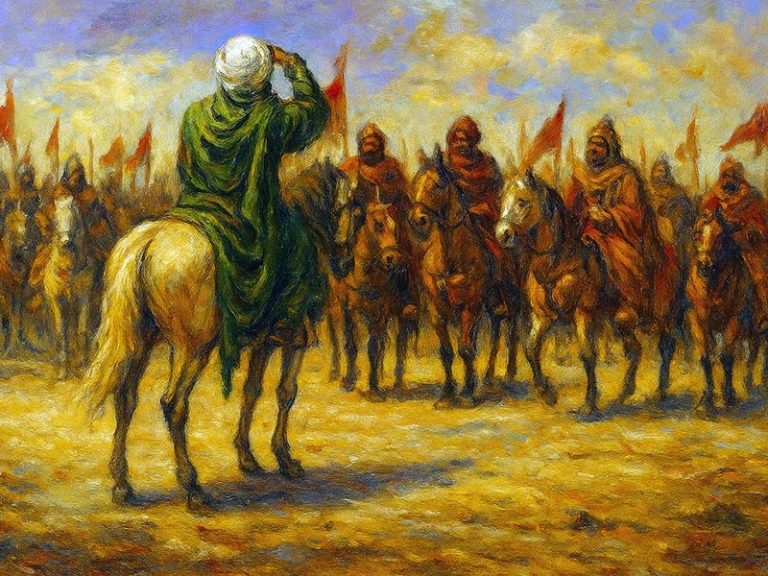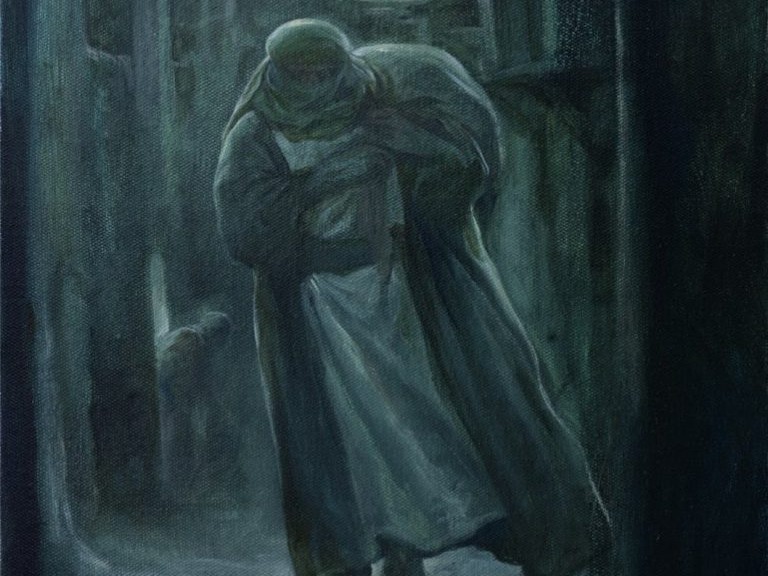

Imam Ali (peace be upon him), as in every major campaign of the Prophet, played a pivotal and unmatched role in the Conquest of Makkah event. His courage, wisdom, and loyalty shone brightly, especially when the Prophet (peace and blessings be upon him and his family) expressed his deep affection for him, saying:
“May my parents be sacrificed for you, O Ali.”
This declaration came after the Imam (peace be upon him) corrected the wrongdoing of Khalid ibn al-Walid, ensuring that the conquest remained a victory of mercy and justice—not vengeance. Imam Ali (peace be upon him) also raised the banner of Islam upon entering Makkahand destroyed the idols within and around the Sacred Kaaba, restoring the House of God to its true sanctity.
The Breach of the Treaty: The reason for the Conquest
In the eighth year after the Hijrah, the Quraysh violated the Treaty of Hudaybiyyah, which they had earlier pledged with the Prophet. By supporting their allies, the tribe of Banu Bakr, against the Banu Khuzaʿah—the Prophet’s confederates—they reignited hostilities. Upon hearing of this treachery, the Prophet (peace be upon him and his family) resolved to defend the oppressed and uphold the sanctity of the treaty by marching upon Makkah.
To ensure success, the Prophet commanded secrecy, praying, “O God, conceal our movements from their eyes until we reach them suddenly.”
Imam Ali’s Swift Action and Preservation of the Divine Secret
A man named Ḥaṭib ibn Abi Baltah secretly wrote a letter to the Quraysh, warning them of the Prophet’s plan. He entrusted it to a woman and instructed her to take an obscure route to Makkah.
Revelation immediately informed the Prophet (peace be upon him and his family) of this betrayal. He summoned Imam Ali (peace be upon him) and said:
“Some among my companions have written to the people of Makkah, disclosing our plans, though I sought God’s concealment. The letter is with a woman traveling by a side road. Take your sword, intercept her, and retrieve it.”
The Prophet also sent Zubair ibn Awam with him. When they found the woman, she denied having any letter and began to weep. Al-Zubair hesitated, but Imam Ali, recalling the Prophet’s words, declared firmly:
“By God, the Messenger of Allah never spoke falsely. If you do not hand over the letter, I shall expose you.”
Terrified, the woman revealed the letter hidden within her hair. Imam Ali (peace be upon him) took it and brought it back to the Prophet, thus preserving the divine mission and thwarting the plot.
The Banner of Mercy: From Sad ibn Ubadah to Imam Ali
When the Prophet (peace be upon him and his family) set out for Makkah with ten thousand soldiers, he entrusted the army’s banner to Sad ibn Ubadah. As the army approached the city, Sad declared:
“Today is the day of battle, the day of vengeance, the day when sanctities are violated.”
A companion reported this to the Prophet, who immediately corrected it, proclaiming:
“Today is the day of mercy. Today the sanctities shall be preserved.”
He then ordered:
“O Ali, take the banner from Saʿd and enter Makkah in peace.”
With this command, Imam Ali (peace be upon him) became the standard-bearer of compassion and divine justice.
Those Exempt from Amnesty
The Prophet (peace be upon him and his family) entered Makkah with dignity and without bloodshed, declaring to its people:
“Go, for you are all free.”
However, ten individuals—six men and four women—were excluded from this general amnesty due to their grave crimes and persistent enmity toward Islam. Among them were Akramah ibn Abi Jahl, Abd Allah ibn Sad ibn Abi Sarḥ, and Hind bint Utbah.
Imam Ali (peace be upon him) personally found two of them—al-Ḥarith ibn Hisham and Abd Allah ibn Rabiah—under the protection of Umm Hani, the Prophet (peace be upon him and his family) said:
“O Ali, I too grant protection to those whom Umm Hani has granted safety.”
Thus, mercy once again triumphed under the Prophet’s guidance.
The Prophet’s Words of Devotion: “May My Parents Be Sacrificed for You”
Following the conquest, the Prophet (peace be upon him and his family) dispatched Khalid ibn al-Walid to the tribe of Banu Jadhimah to invite them to Islam. Though they had already embraced the faith, Khalid treacherously attacked them, killing many and taking their families captive.
Upon hearing this, the Prophet (peace be upon him and his family) raised his hands and said:
“O God, I disavow what Khalid has done.”
He immediately sent Imam Ali (peace be upon him) to restore justice. The Imam compensated every victim and returned all the spoils—even a camel’s rope or a dog’s bowl—until no grievance remained.
When the Prophet learned of his actions, he was deeply moved and said:
“O Ali, what you have done pleases me more than if I were given red camels.”
Then he added with profound affection:
“May my parents be sacrificed for you.”
Through Imam Ali’s compassion, the stain of injustice was cleansed, and the Prophet’s mission of mercy was perfectly upheld.
In every stage of the conquest, Imam Ali (peace be upon him) embodied the Prophet’s divine vision — strength without cruelty, justice without arrogance, and mercy without weakness. His actions preserved the sanctity of the faith and reflected the pure light of prophetic guidance.