One of the enduring mysteries in Islamic history—and a profound point of reflection among Muslims—is the hidden burial place of Lady Fatimah al-Zahra (peace be upon her), the beloved daughter of the Prophet Muhammad (peace be upon him and his family).
Following the Prophet’s demise, Lady Fatimah (peace be upon her) endured deep injustices and hardships. In protest against the wrongs committed after her father’s passing, she requested that her burial remain concealed—an everlasting message to future generations about the oppression endured by the Ahl al-Bayt (peace be upon them).
The Reason Behind the Hidden Grave
According to reliable narrations, Lady Fatimah (peace be upon her) instructed Imam Ali (peace be upon him):
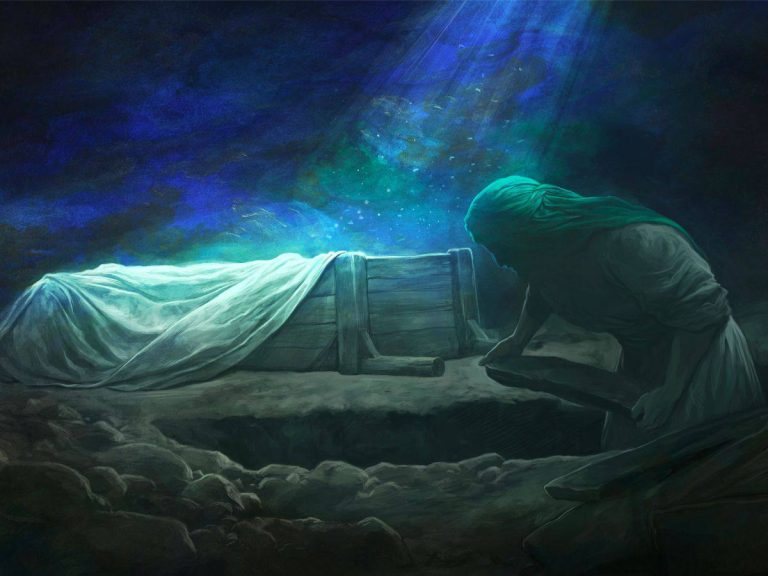
“Bury me at night and do not allow those who wronged me and usurped my rights to attend my funeral or perform the prayer over my body.”
Imam al-Baqir and Imam al-Sadiq (peace be upon them) confirmed that Lady Fatimah wished to be buried in secret so that none of her oppressors could participate.
Even in Sunni sources such as Sahih al-Bukhari and Sahih Muslim, it is narrated from Aisha:
“Fatimah was displeased with Abu Bakr and did not speak to him until her death. When she passed away, Ali buried her at night and did not inform Abu Bakr.”
This act of concealment was therefore not merely personal—it was a powerful, enduring declaration of moral resistance.
Opinions Regarding the Burial Site
Islamic historians and scholars have presented three main opinions regarding the location of Lady Fatimah’s resting place:
1. Buried in Her Own House
Numerous narrations—especially from Imam al-Ridha (peace be upon him)—indicate that Lady Fatimah (peace be upon her) was buried in her home, which later became part of the Prophet’s Mosque during its expansion.
Imam al-Ridha (peace be upon him) said:
“She was buried in her house; when the Umayyads expanded the mosque, her grave became part of it.”
This is considered the most authentic view among many Shia scholars, including al-Majlisi and al-Saduq.
2. Buried in the Rawdah (the Garden of Paradise)
Some narrations suggest that her grave lies in the Rawdah al-Ridwan—the area between the Prophet’s blessed grave and his pulpit.
Imam al-Sadiq (peace be upon him) stated:
“The grave of Fatimah is between the Prophet’s grave and his pulpit. Indeed, that place is a garden from the gardens of Paradise.”
This opinion is also supported by early scholars such as Shaykh al-Mufid and Abu al-Futuh al-Razi.
3. Buried in al-Baqi Cemetery
Another group of historians holds that she was buried in the cemetery of al-Baqi, near the graves of the Imams of Ahl al-Bayt (peace be upon them).
Narrations describe that after her burial, the earth was leveled and several new graves were dug around her resting place to obscure the exact location, ensuring her wish for secrecy was fulfilled.
A Symbol of Perpetual Protest
The hidden grave of Lady Fatimah (peace be upon her) stands as a silent yet eloquent testimony to her steadfastness, dignity, and unwavering stand for truth.
It remains an eternal symbol of resistance against injustice, a mark of her deep sorrow, and a call to remember the plight of the Prophet’s family (peace be upon them) throughout history.