
Accounts of Historians and Scholars
- Khalifah ibn Khayyat records:
“Imam Ali (peace be upon him) was born in the Banu Hashim quarter of Makkah. He was martyred in Kufa, where his son Imam al-Hasan (peace be upon him) performed the funeral prayer over him. He was then buried in the Rahbah of Kufa, and according to another report, in al-Hirah near Najaf.”
- Al-Yaqubi writes:
“Amir al-Muminin (peace be upon him) was martyred on the night of Friday, the first of the last ten days of Ramadan in the year 40 AH, at the age of sixty-three. Imam al-Hasan (peace be upon him) washed his blessed body, led the funeral prayer with seven takbirs, and declared he would never again offer such a prayer for anyone after his father. He was buried in Kufa in a place known as al-Ghari.”
- Ahmad ibn Atham al-Kufi states in al-Futuh:
“He was buried at night in a place called al-Ghari. Some claimed he was buried between his house and the mosque, and God knows best.”
- Al-Shalmaghani, as quoted by Sayed Ibn Tawus:
“The Commander of the Faithful (peace be upon him) was buried behind Kufa. He had instructed his son al-Hasan (peace be upon him) to dig his grave wherever the bier came to a halt, for there a prepared burial niche awaited him—said to have been dug by Prophet Noah.”
- Al-Masudi states in Muruj al-Dhahab:
“There is disagreement about the burial place of Amir al-Muminin (peace be upon him). Some claim he was buried in al-Ghari near Kufa, some in the Mosque of Kufa, and others in the Rahbah, the Palace of Government, or even that he was transferred to Madinah and buried beside Lady Fatimah al-Zahra (peace be upon her). Other narrations also exist.”
- Ibn Hawqal, the geographer, writes:
“The grave of Amir al-Muminin (peace be upon him) is in Kufa, near a corner of the Great Mosque, hidden due to fear of the Umayyads. A fodder-seller’s shop later occupied that location. However, many of his descendants affirmed that the actual grave is the one still known today, situated a league from Kufa.”
- Shaikh Khazaz al-Qummi relates through Tariq ibn Shihab:
“Imam Ali (peace be upon him) was martyred on the twenty-first of Ramadan in the year 40 AH and was buried in al-Ghari.”
The Emphasis of Historians Regarding the Grave of Amir Al-Muminin (peace be upon him)
- Al-Sharif al-Radi writes:
“Although various opinions exist concerning his burial place—in the Rahbah, the Palace of Government, or transferred to Madinah—the reliable and accepted view is that he was buried in al-Ghari near the outskirts of Kufa. Imam Jafar al-Sadiq (peace be upon him) visited his grave in that very location after the caliph al-Mansur formally recognized it.”
- Ibn Shahrashub, quoting al-Ghazali:
“It is widely reported that the Commander of the Faithful (peace be upon him) was buried in Najaf. His blessed body was placed on a camel that travelled until it came to rest at the burial site, refusing thereafter to move.”
- Ibn al-Jawzi narrates:
“No grave of any Companion in Kufa achieved definite recognition except the grave of Amir al-Muminin (peace be upon him).”
Statements of Scholars Regarding the Burial Site
- Ali ibn Abi Bakr al-Harawi affirms:
“Najaf contains within it the tomb of Imam Ali (peace be upon him), surrounded by the resting places of many Alawid nobles.”
Yaqut al-Hamawi notes differing views but lists Najaf among the principal opinions.
- Ibn al-Athir al-Jazari writes:
“The authentic view is that his grave is the one presently visited.”
- Kamal al-Din ibn Talhah al-Shafi states:
“He was buried at night in al-Ghari. Some said between his house and the Great Mosque, and God knows best.”
- Sibt ibn al-Jawzi:
“The well-known and reliable opinion is that his grave is in Najaf, at the site visited today.”
- Ibn al-Ibari (al-Arbili):
“Reports concerning his burial in al-Ghari are abundant and clear. All Shia agree on this, and the site matches the accounts transmitted by the Imams (peace be upon them).”
Muhibb al-Din al-Tabari documents the various opinions and includes Najaf among them.
- Ibn Tabataba (Ibn al-Tiqtaqa) says:
“He was buried at night in al-Ghari, and his grave later became apparent—the very site visited today.”
He adds:
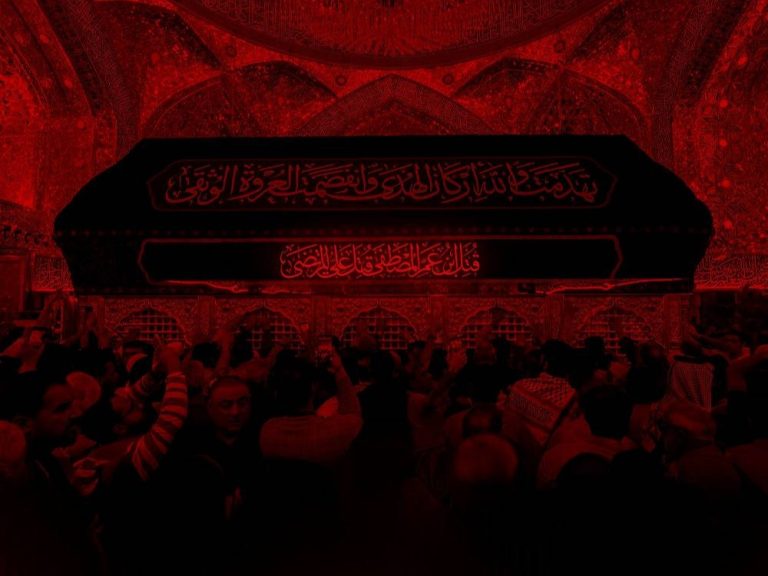
“People from every land seek visitation at this lofty shrine.”
- Abu al-Fida writes:
“His grave lies near Najaf, a sacred site to which pilgrims travel from across the world.”
He also cites the differing views but affirms the same conclusion.
Al-Mizzi and others record the variations, yet Najaf remains among the principal opinions.
- Hamdallah Mustawfi in Nuzhat al-Qulub:
“A league from Kufa lies the burial site of Amir al-Muminin (peace be upon him), known as al-Ghari.”
- Al-Istakhri writes:
“His grave is near Najaf. Some said within the Mosque of Kufa, hidden due to fear of the Umayyads, while others identified the site two leagues from Kufa with visible traces of graves and a small bridge.”
- Ibn Shihnah:
“The correct opinion is that he is buried in the place visited today in Najaf.”
- Al-Qalqashandi writes:
“He was martyred seventeen nights before the end of Ramadan in 40 AH and buried in Najaf—this is the well-known and sound position.”
Ibn Anbah, Ibn Hajar, Ibn Sabbagh, al-Basnawi, al-Khafaji, al-Zabidi, and al-Qanduzi all record similar affirmations or primary opinions centering on Najaf.
- Al-Qanduzi reports:
“The grave of Imam Ali (peace be upon him) remained concealed until the era of Imam Jafar al-Sadiq (peace be upon him), after which it became known in al-Ghari. It has since remained a sanctuary for all who seek refuge.”
Conclusion
Considering the extensive narrations and historical testimonies presented, the common point of agreement among both classical scholars and transmitted reports is that the sacred resting place of the Commander of the Faithful, Imam Ali (peace be upon him), is in the region of al-Ghari, known today as Najaf al-Ashraf.