This will is a precious legacy of divine teachings and the Prophetic Sunnah, serving as a guide for the Ummah forever. Amir al-Muminin not only introduced his successors in the line of Imamate but also emphasized the importance of religious rites and protecting the sanctity of the Ahl al-Bayt and the companions.
Recommendations Regarding the Burial
Amir al-Muminin (peace be upon him) detailed his ghusl, shrouding, and embalming (hunut) using the remaining heavenly scent of the Prophet (peace be upon him and his family). He told Imam al-Hasan (peace be upon him):
“O Hasan, when I pass away, wash me, shroud me, and embalm me with the remainder of the Prophet’s (peace be upon him) hunut, which is heavenly camphor brought by Gabriel.”
“When you place my body in the coffin, do not lift the front; instead, hold the back and follow wherever the coffin leads. Wherever it stops, know that it is my grave. Place my body there, and you, O Hassan, lead the prayer over me with seven Takbirs, for this is not permissible for anyone but me, except for your brother’s son, al-Hussain, for he is the leader of the progeny of Muhammad and the al-Mahdi of this nation and will eradicate oppression for people.
“After the prayer, remove my body from the coffin and dig the ground; you will find a prepared tomb (lahd) and a finely carved plank made for me by my father Noah. Place me on that plank and arrange the seven large bricks found there over me. Wait a moment, then remove one brick and look inside; you will not see me, for I will have joined your grandfather, the Messenger of God (peace be upon him and his family).”
“Know that if a prophet is buried in the East and his successor buries him in the West, God brings their souls and bodies together. Then, fill my grave with soil and keep its location hidden from the people. At dawn, place an empty coffin on a camel and send it toward Medina so no one knows my true resting place.”
Secrecy of the Grave
Amir al-Muminin (peace be upon him) emphasized a secret burial and the creation of multiple symbolic graves to mislead enemies.
It is narrated from Imam Jafar al-Sadiq (peace be upon him) that the Imam told Imam al-Hassan (peace be upon him):
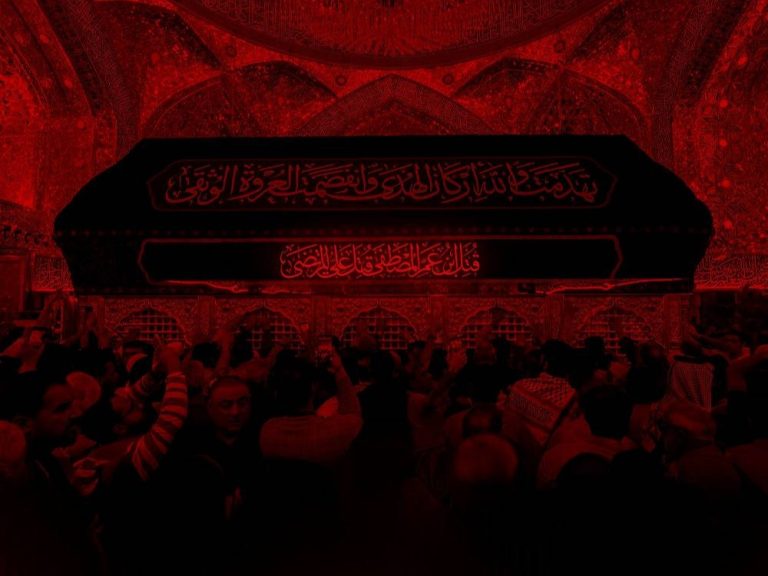
“Dig four graves for me in four places: the Kufa Mosque, Rahbah Square, Najaf, and the house of Juda ibn Hubayrah so no one can find my real grave.”
The author notes:
“This secrecy was to prevent enemies like the Khawarijites and the Umayyads from desecrating his holy body. The grave remained hidden until the time of Imam al-Sadiq (peace be upon him), when the location was revealed to close companions and eventually became known to all during the reign of Harun al-Rashid. (1)
Witnesses to the Will of Amir al-Muminin (peace be upon him)
When Amir al-Muminin (peace be upon him) was delivering his will to Imam al-Hasan (peace be upon him), they were not alone; rather, his close relatives and companions were also present. Salim narrates:
“I was present when Amir al-Muminin was dictating his will to his son, Imam Hasan. He took Imam al-Hussain; Muhammad ibn al-Hanafiyyah; all his children; his household; and the leaders of his Shia as witnesses.” (2)
Introducing the Imams and Handing over the Trusts of Imamate
The trusts of Imamate, including sacred books and weapons, were handed to Imam al-Hasan (peace be upon him) and then to Imam al-Hussain (peace be upon him). The Imam said, “My son, the Prophet (peace be upon him and his family) commanded me to bequeath these to you, just as he entrusted them to me. He also commanded me to tell you to hand them over to your brother al-Hussain when your death approaches.”
His testament began:
“I bear witness that there is no god but Allah. He is One and has no partner. Muhammad (peace be upon him and his family) is His servant and messenger, who was sent with guidance and the religion of truth to make it prevail over all religions, even though the polytheists may dislike it. “My prayer, my worship, my life, and my death are all for Allah, Lord of the Worlds, Who has no partner. With this I have been commanded, and I am of those who surrender (to Him) (3).”
Commitment to Piety, Islam, and Unity
The central theme of Amir al-Muminin’s (peace be upon him) testaments was commitment to piety (Taqwa), Islam, unity around the truth, and the reconciliation of people (reforming relationships).”
Amir al-Muminin (peace be upon him) said, “O Hassan, I advise you and all my children and every believer who receives this to fear God. Do not leave this world except as Muslims do. Hold fast to the rope of Allah and do not be divided.”
He quoted the Prophet (peace be upon him and his family):
“Reconciling people is better than much prayer and fasting; malice and corruption destroy religion, and there is no power except by (the help of) God. (4)
Recommendations Regarding orphans, the Quran, and neighbors
Regarding kinship, caring for orphans and neighbors, and safeguarding the Quran, Amir al-Muminin (peace be upon him) said:
“Attend to your kinsmen and maintain ties with them so that God may make your reckoning easy.
Fear God, fear God regarding orphans; do not let them go hungry (do not neglect their needs), and do not let the orphans under your guardianship be lost or destroyed.
I heard the Prophet (peace be upon him and his family) saying, ‘Whoever takes responsibility for the expenses of an orphan until they become self-sufficient, God makes Paradise mandatory for them, just as He makes the fire of Hell mandatory for those who consume the orphan’s property.’
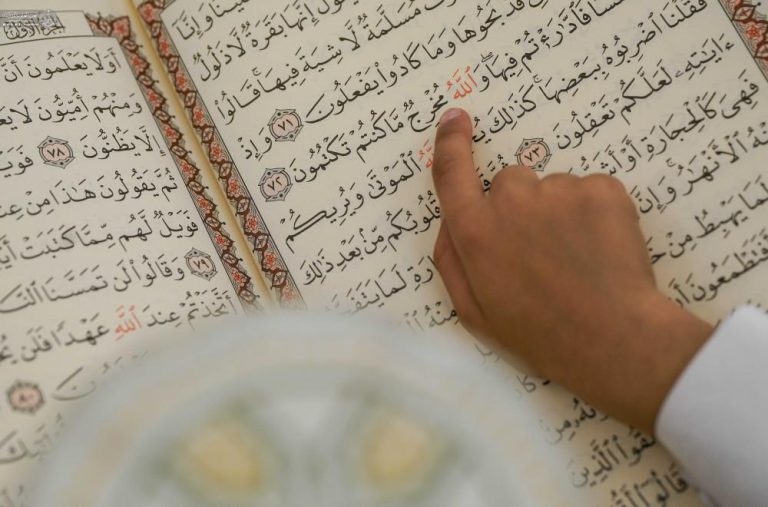
Fear God, fear God regarding the Quran; let no one surpass you in acting upon its teachings.
Fear God; fear God regarding your neighbors, for the Prophet (peace be upon him and his family) has commanded kindness toward them.” [5]
Recommendations on Hajj, Prayer, Zakat, Fasting, and Jihad
Amir al-Muminin (peace be upon him) also emphasized the importance of Hajj, prayer, Zakat, fasting, supporting the poor, and Jihad in the way of God in this will. He said:
“Fear God; fear God regarding the house of your Lord. Do not leave it empty as long as you live, for if the house of God is abandoned, you will be given no respite (divine punishment will not be delayed), and the least reward for one who heads toward the house of God is that their past sins are forgiven.
Fear God; fear God regarding prayer, for it is the best of deeds and the pillar of your religion.
Fear God, fear God regarding Zakat, for it extinguishes the wrath of your Lord.
Fear God; fear God regarding the month of Ramadan, for its fast is a shield against the fire (of Hell).
Fear God, fear God regarding the poor and the needy; make them partners in your blessings and livelihood.
Fear God; fear God regarding Jihad in His way with your wealth and your lives. Two groups of people strive in the way of God: a leader (imam) who provides guidance and a follower who adheres to that guidance.” [6]
Preserving the sanctity of the Ahl al-Bayt of the Seal of Prophets (peace be upon him and his family)
Amir al-Muminin (peace be upon him) advised preserving the sanctity of the Ahl al-Bayt and the companions of the Prophet (peace be upon him and his family), saying:
“Fear God; fear God regarding the children of your Prophet. Let them not be oppressed among you while you have the power to defend them.
Fear God regarding those companions of your Prophet (peace be upon him and his family) who did not introduce any wrong religious innovations (bidah) and did not provide shelter to innovators. For the Prophet (peace be upon him and his family) has commanded regarding them and has cursed both the innovator and the one who shelters an innovator. [7]
Enjoining Good and Forbidding Evil
Amir al-Muminin (peace be upon him) advised preserving the sanctity of women and the practice of enjoining good and forbidding evil, saying:
“Fear God; fear God regarding women, your servants, and your slaves. In the way of God, do not fear the reproach of any critic so that God may suffice you. Speak kindly to people, just as God has commanded you.
Do not abandon enjoining. Good and Forbid Evil; otherwise, God will hand over your affairs to the wicked among you, and your prayers will not be answered.
My sons, it is incumbent upon you to maintain ties with one another; be consistently generous and virtuous. Avoid division, cutting ties, and estrangement from one another. Cooperate with one another in righteousness and piety, but do not cooperate in sin and aggression. Practice God-wariness, for the punishment of God is severe and painful.” [8]
The Farewell of Amir al-Muminin (peace be upon him).
Finally, Imam Ali (peace be upon him), while mentioning the Oneness of God, attained martyrdom on the 21st night of the month of Ramadan.
In his final moments, he said, “May God protect you, the Ahl al-Bayt, and preserve the religion and Sunnah of your Prophet among you. I entrust you to God and bid you farewell.”
After these words, Amir al-Muminin (peace be upon him) continued to repeat the dhikr “La ilaha illa Allah” (There is no god but Allah) until he passed away from this world. This event occurred on Friday night, the first night of the last ten days of Ramadan—that is, the 21st night—in the year 40 AH. [9]
[1] Muntaha al-Amal fi Tarikh al-Nabi wa al-Al (peace be upon them) (Persian), Vol. 1, p. 437.
[2] Asrar-e Al-e Muhammad (peace be upon them), Translation of the Book of Sulaym, p. 638.
[3] Asrar-e Al-e Muhammad (peace be upon them), Translation of the Book of Sulaym, p. 640.
[4] Ibid. (Same as above).
[5] Ibid.
[6] Asrar-e Al-e Muhammad (peace be upon them), Translation of the Book of Sulaym, p. 641.
[7] Ibid.
[8] Asrar-e Al-e Muhammad (peace be upon them), Translation of the Book of Sulaym, p. 642.
[9] Ibid.