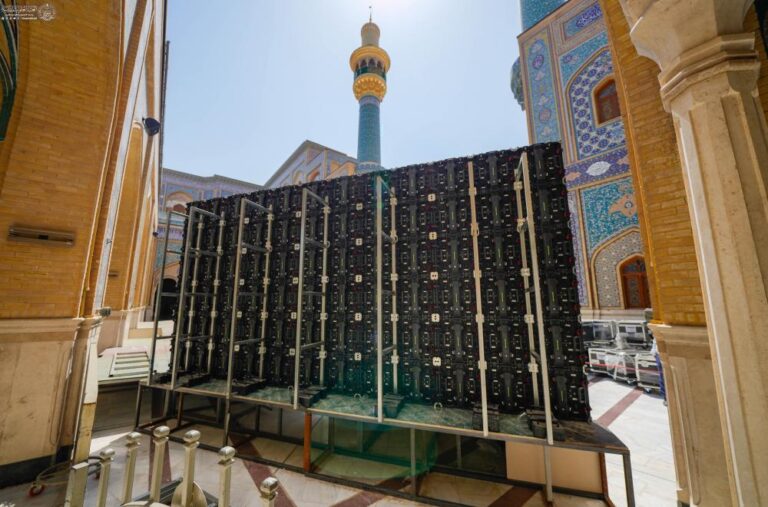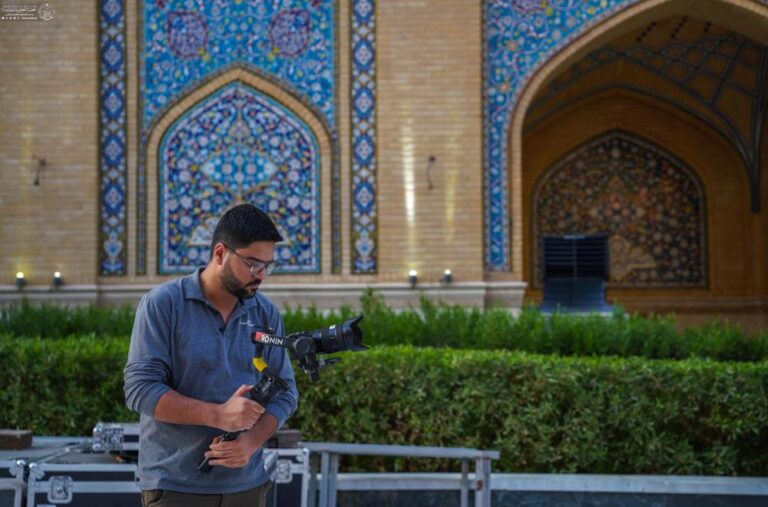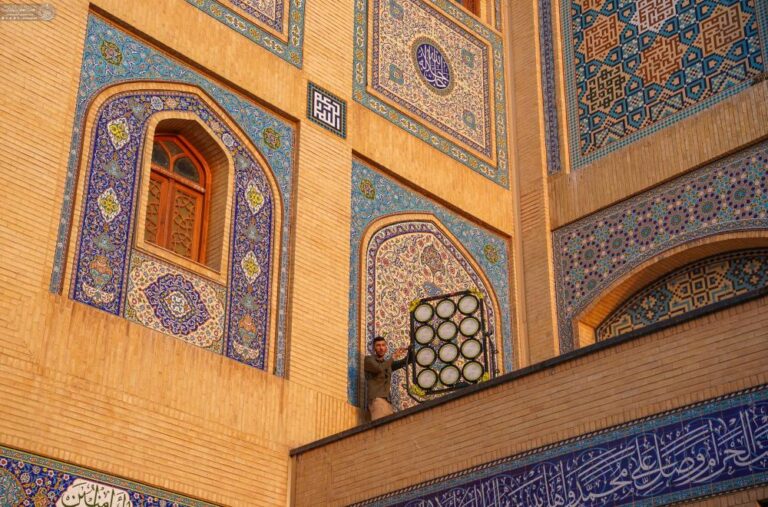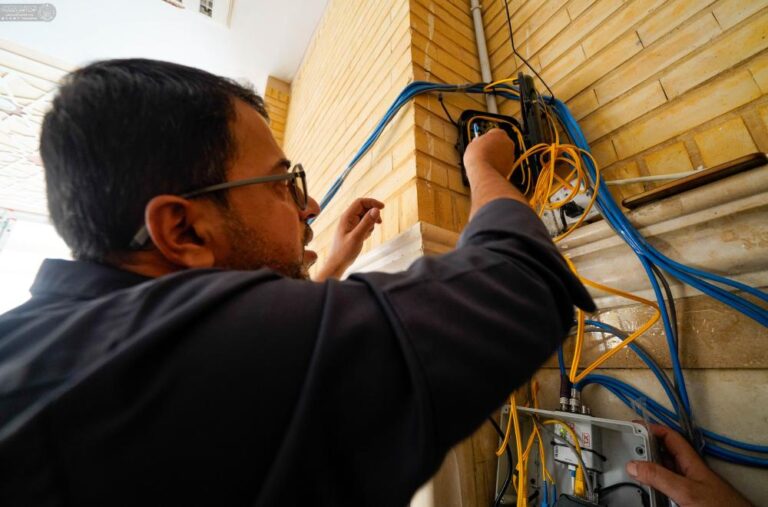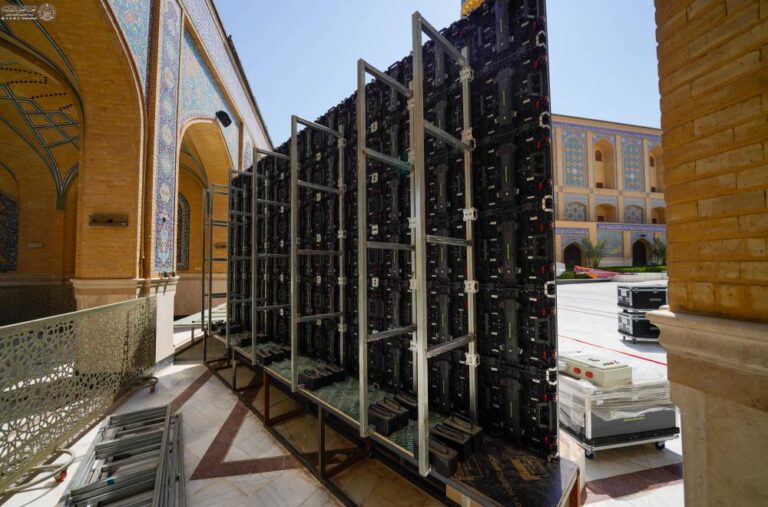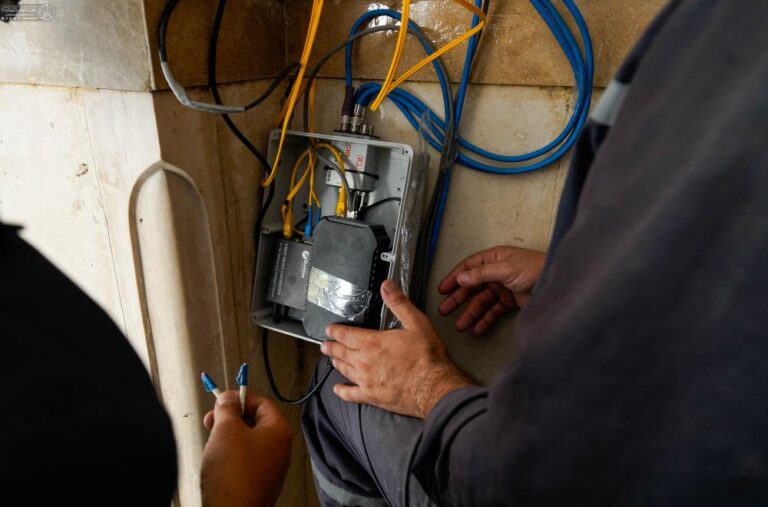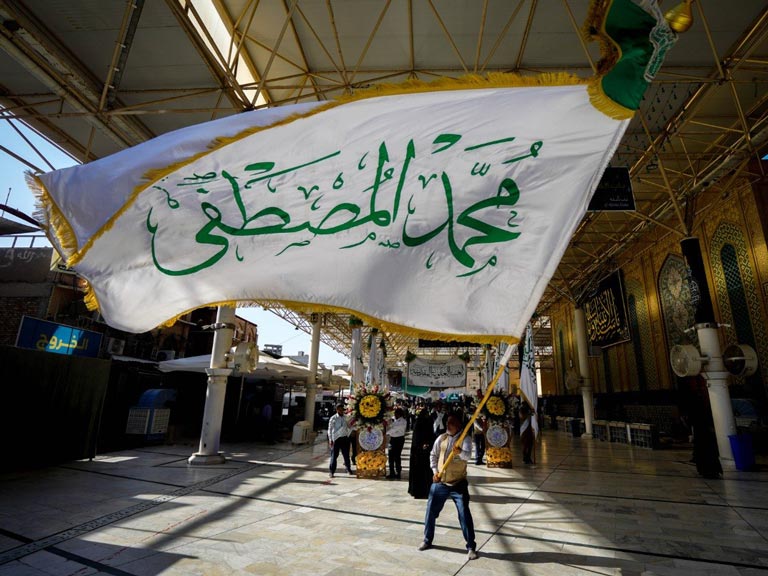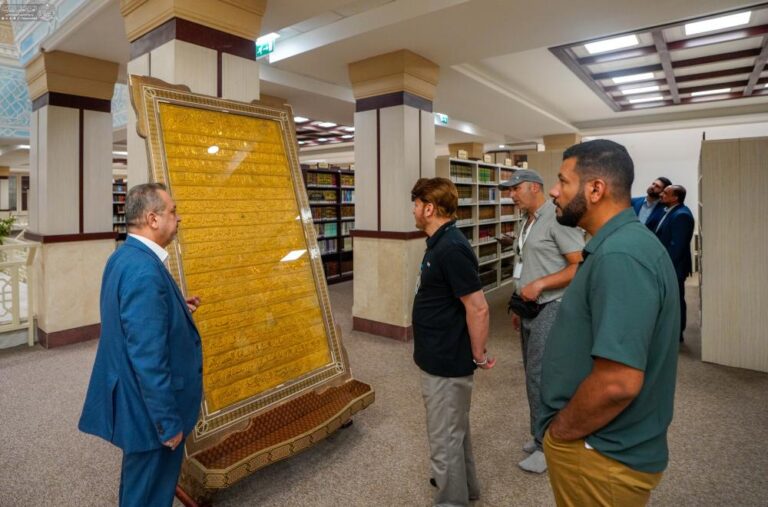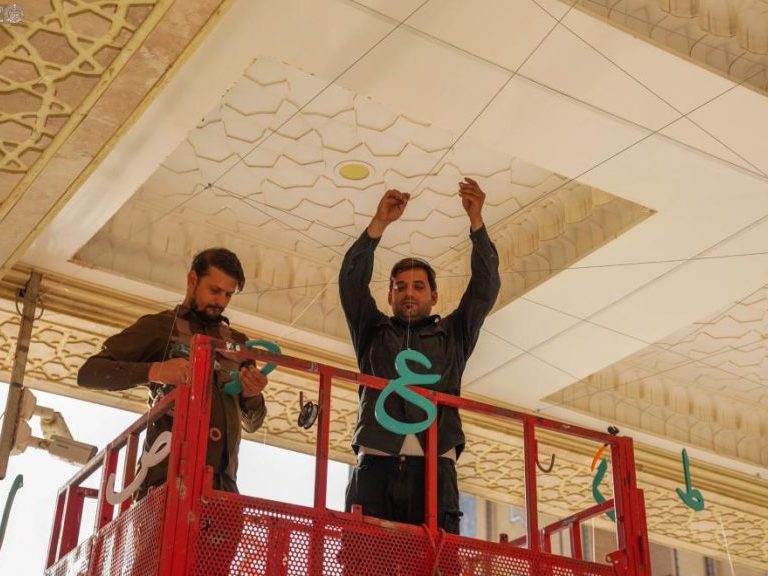
The Media Department of the Holy Alawi Shrine has completed its technical, media, operational, and documentation preparations for the “Rasul al-A’zam” Arabic Poetry Festival — a festival held as part of the programs of the Fifth International Sadiqayn Week, featuring a gathering of some of the most prominent poets from the Arab world and Iraq.
Jaafar al-Budairi, the festival’s executive director, told the Shrine’s News Center: “These preparations included covering every media, technical, operational, and documentation aspect, in a manner befitting the significance of this event and its cultural standing, laying the groundwork for the festival’s programs to be presented in a fitting way. A dedicated program for photographic and video documentation has also been completed, along with the preparation of media content and reports covering the various contributions and programs of the festival.”
Al-Budairi added: “This program includes a range of varied sections and activities, among them theatrical performances that revisit brilliant chapters in the history of Islamic poetry and highlight the role of poetry in defending the Islamic message. These performances introduce figures who were both poets and Muslims contemporary with the Noble Prophet (peace be upon him and his family) — figures who, through their words and verse, played a role in supporting Islam and in recording and documenting the events of the Prophetic biography.”
It is worth noting that the Fifth “Rasul al-A’zam” Festival for Arabic Poetry will be held on Tuesday, 18 Rabi al-Awwal 1448 AH, in the courtyard of Lady Fatimah (peace be upon her), under the slogan “Toward Medina, from Its Gate,” and will continue for two days.
The festival will bring together a group of some of the most prominent poets from Arab countries, including Egypt, Lebanon, Libya, the Sultanate of Oman, Morocco, and Sudan, along with one poet from Iran, in addition to the participation of a large number of poets from Najaf and other parts of Iraq.