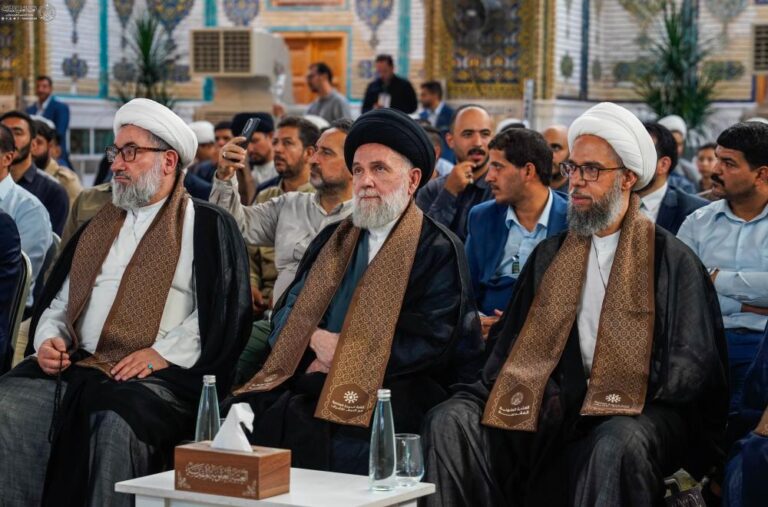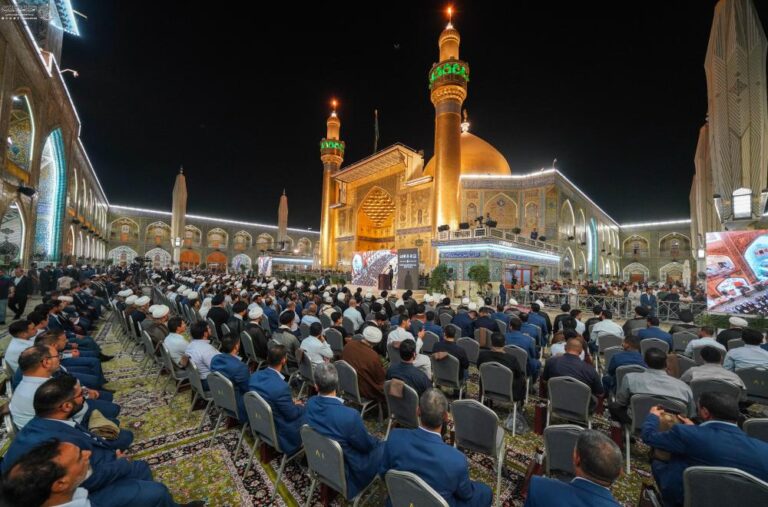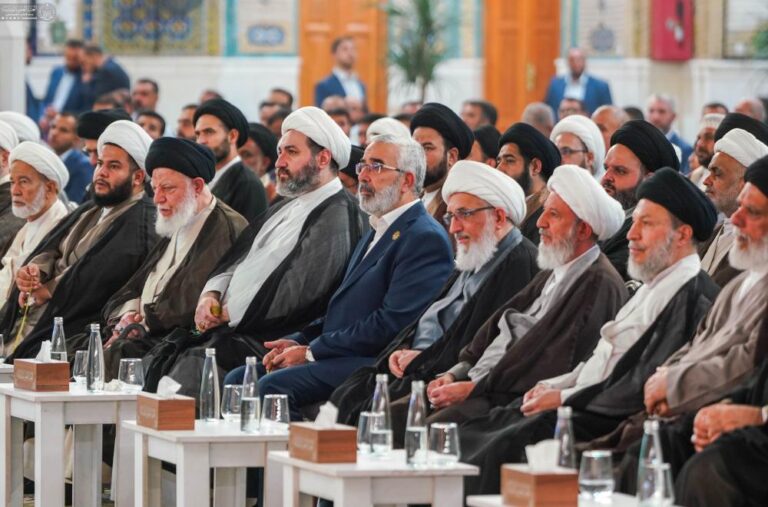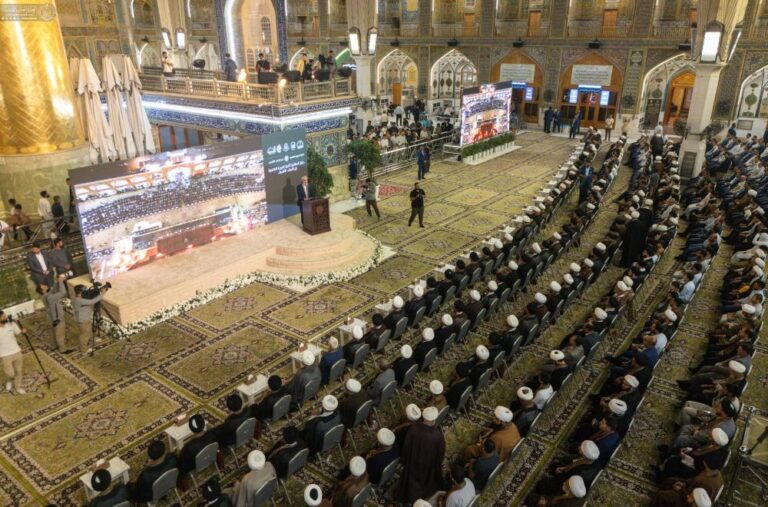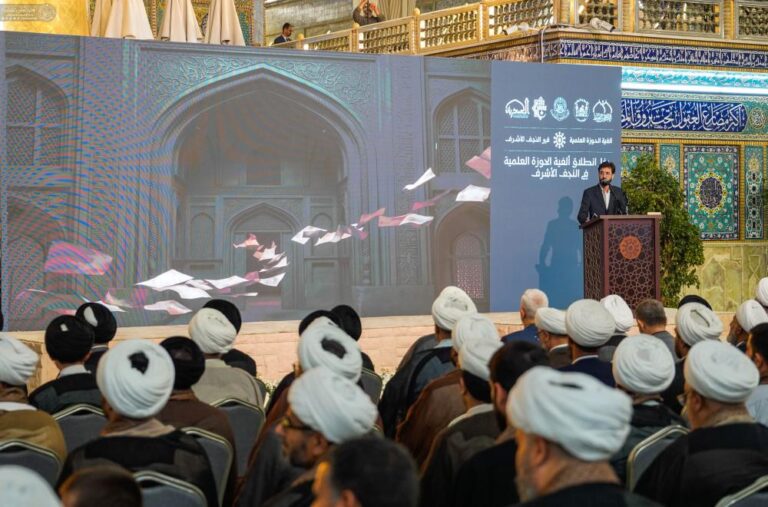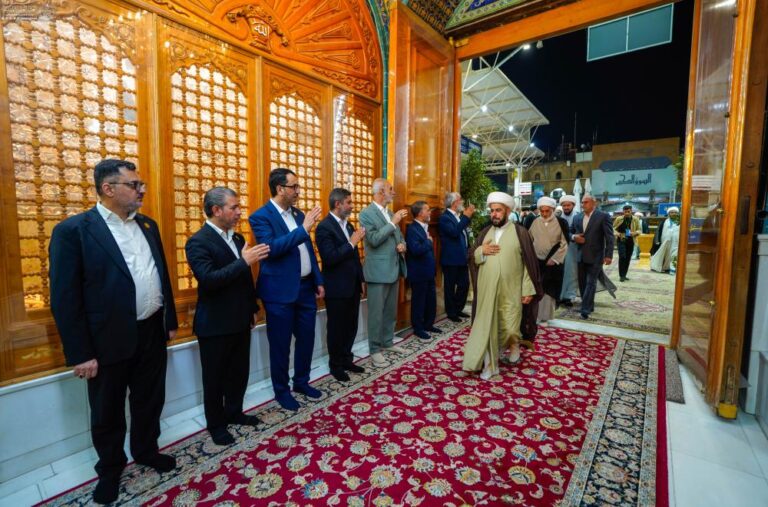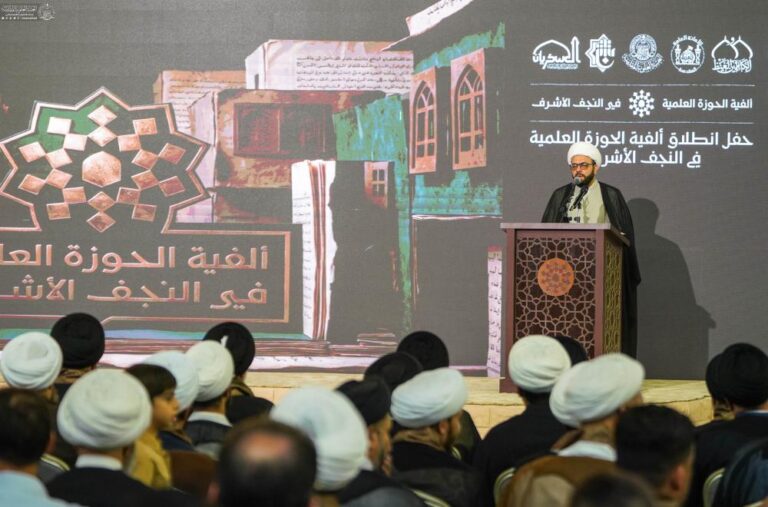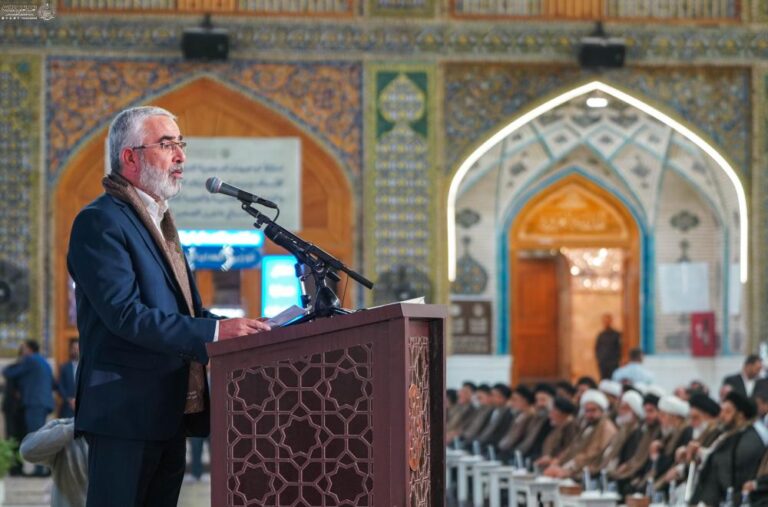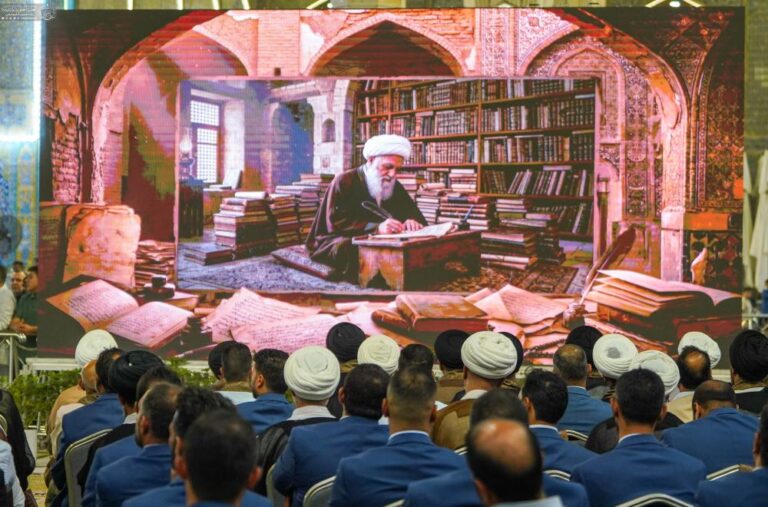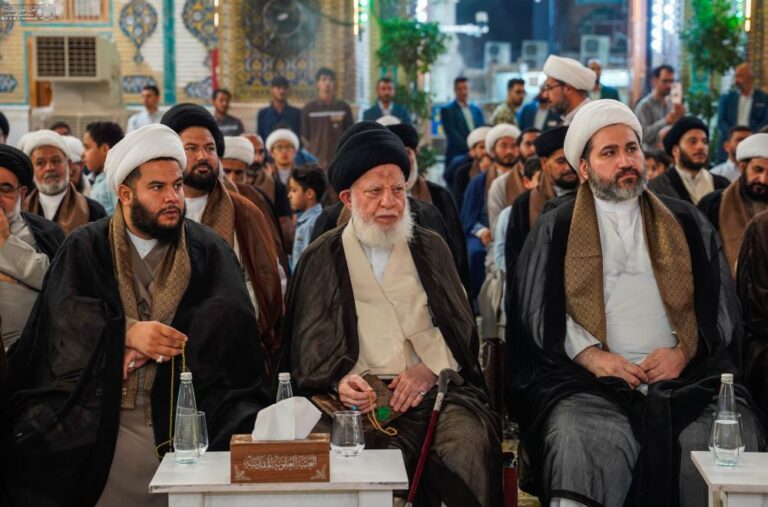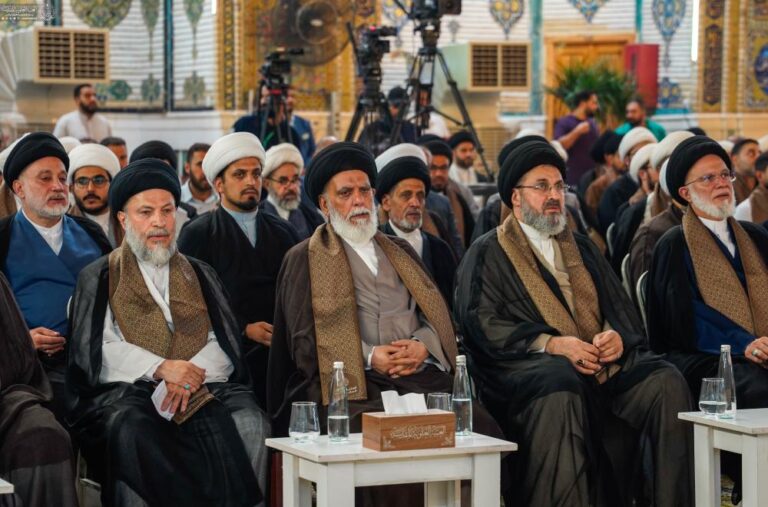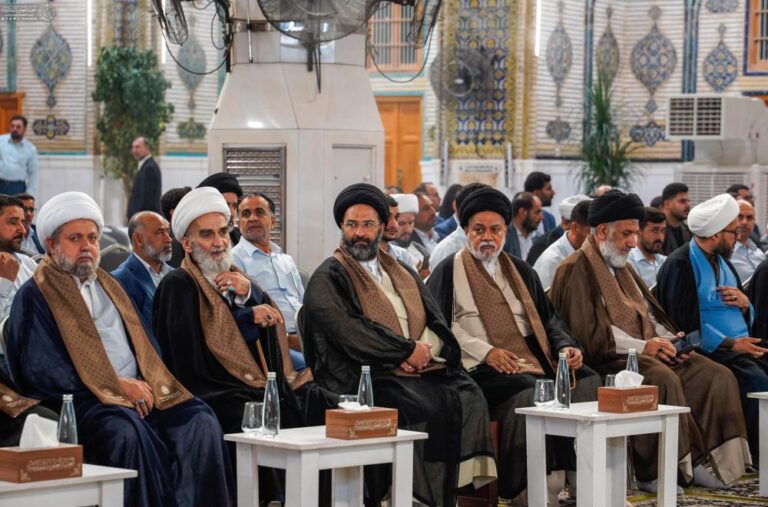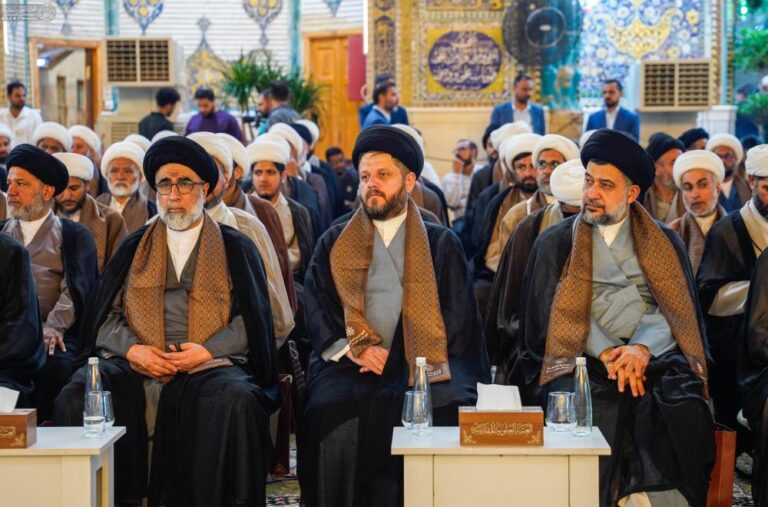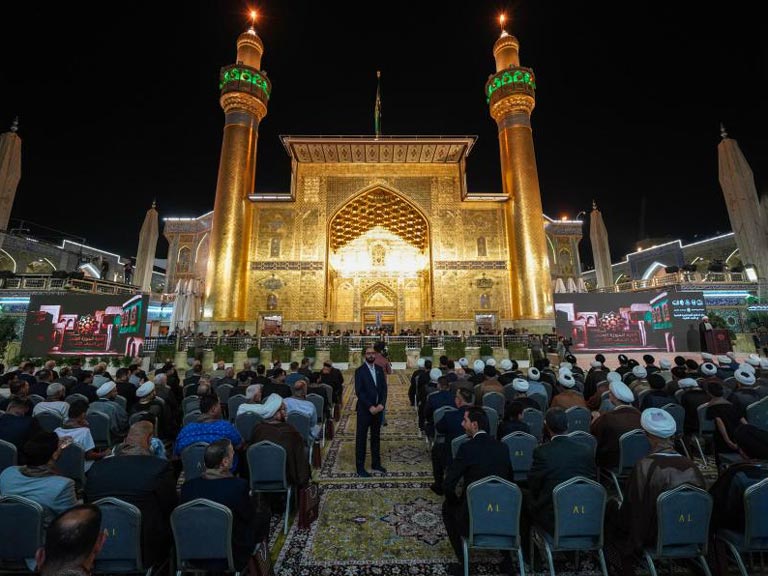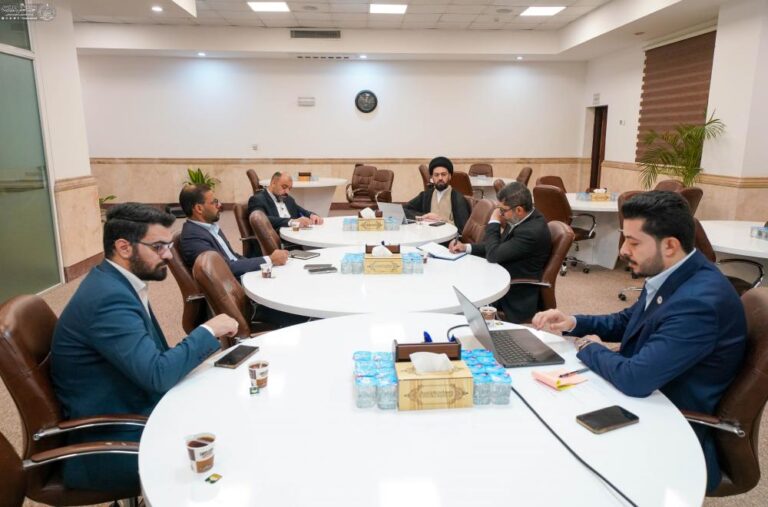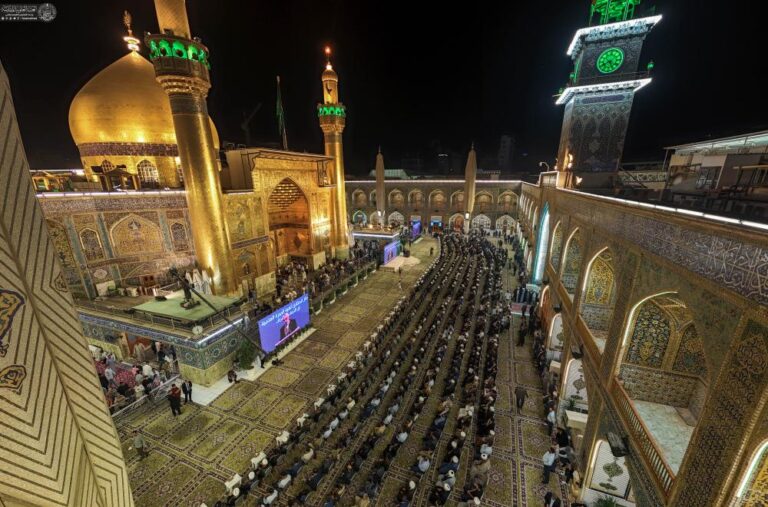
The “Millennium of the Hawza” program at the Holy Alawi Shrine opened with an address by the Deputy Custodian of the Holy Alawi Shrine. Distinguished guests were welcomed by Sayyid Eisa al-Khirsan, Deputy Custodian of the Holy Alawi Shrine, along with his deputy, board-member staff, and heads of the shrine’s various departments.
Opening of the Ceremony
The ceremony began with the recitation of verses from the Holy Qur’an and Surat al-Fatihah. Sayyid Eisa al-Khirsan, Deputy Custodian of the Holy Alawi Shrine, then delivered the Custodianship’s address, addressing the history of the Najaf Hawza, the continuity of its scholarly path, and the role and contributions of its eminent scholars — from Shaikh Tusi to Sayyid Kazim Yazdi, Shaikh Naini, the eminent marja’ Sayyid Muhsin al-Hakim, Ayatollah Khoei, and finally the eminent marja’, Grand Ayatollah Sayyid Sistani (may his blessings continue).
He emphasized that the Hawza, throughout its historical continuity, is a link in the chain of knowledge handed down from earlier generations — not severed from its roots or beginning from a point without precedent, but a branch of a firmly established root, from which successive generations have learned knowledge from their predecessors, generation after generation and lesson after lesson, to the point that the passage of time appears as though all these eras were a single gathering, with scholars, despite the time separating them, standing together like members of a single class and a single scholarly generation.
He stated:
“The millennium of the Hawza is therefore a covenant upon us — a covenant with Amir al-Muminin (peace be upon him), whose banner has flown above this school; a covenant with the scholars who have departed from among us and left us their works as a legacy; and a covenant with the generations yet to come, who will ask: what did you preserve of what was entrusted to you?”
Address by the Representative of the Hawza
Sayyid Riyadh al-Hakim, a professor of the Hawza, delivered an address on the seminary’s behalf. He emphasized that the blessed school, rich in the teachings of the Ahl al-Bayt (peace be upon them), has given the deeply rooted Najaf Hawza a place among its centers of learning.
He stated that keeping alive the memory of this Hawza’s founding a thousand years ago carries its own instructive story, as the seminary was forged amid hardship and trials — among them the tribulations and pressures faced by Shaikh Tusi, which he was able to transform into an opportunity to establish a scholarly institution whose fruits remain evident to this day.
He added:
“The deeply rooted Najaf Hawza flourished and preserved its independence and autonomy in decision-making, such that its decisions arose from the ijtihad of its marja’s and scholarly figures, and were not imposed upon it by other institutions or powers.”
He continued:
“Drawing on its insight, this Hawza preserved the straight path of the school of the Ahl al-Bayt (peace be upon them) against successive and varied seditions, and in doing so safeguarded the Ummah from deviation, misguidance, and confusion.”
He also said:
“The positions of the Hawza have always been aligned with the interests of the Ummah and its sanctities, and have been adopted on the basis of wisdom and religious principles, not emotional motives or reactive sentiment.”
According to him, these very achievements have shaped the authentic identity of the Najaf Hawza and preserved its path, to the point that the seminary today embodies the depth and authenticity of the school of the Ahl al-Bayt.
Sayyid Riyadh al-Hakim concluded his remarks by expressing appreciation for the efforts of the holy shrines in reviving the project marking the thousandth anniversary of the Hawza, describing it as a blessed step.
He expressed hope that all programs aimed at introducing the Hawza would be coordinated with one another, and that efforts in this direction would continue jointly and synergistically.
Various Segments of the Ceremony
The ceremony included several segments, among them the recitation of a poem on the history of Najaf and the Hawza, read by Shaikh Abdul Majid Faraj-Allah.
The ceremony concluded with the screening of an introductory clip on the life of Shaikh Tusi (may his secret be sanctified), followed by a presentation on the unveiling of the volume Endowment Deeds of the Manuscript Qur’ans in the Alawi Treasury, authored by Shaikh Hussein al-Wathiqi.
The work is the first independent publication to compile the collection of Qur’anic endowment heritage and documents held in the vicinity of the holy shrine of Amir al-Muminin (peace be upon him).