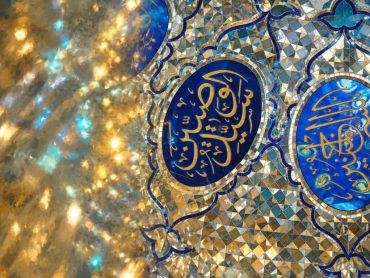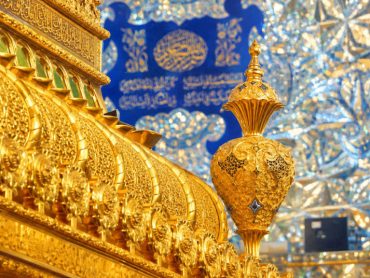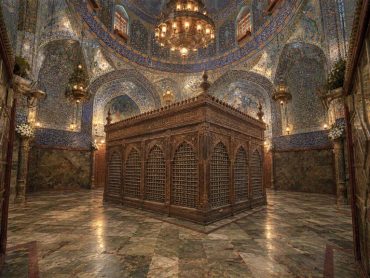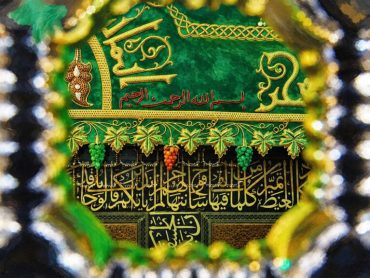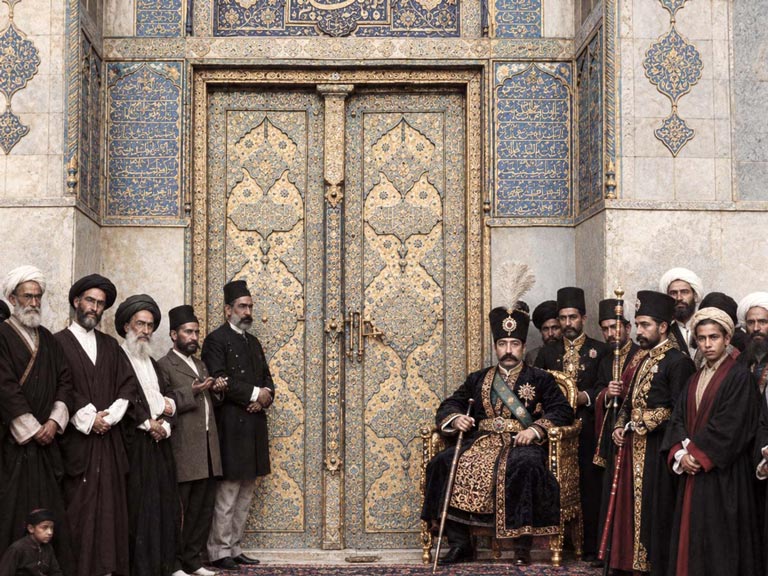
From its earliest historical examples to the present Khatam Chest, the chest has seen periods of construction, destruction, reconstruction, and restoration. Over time, kings, rulers, artists, and benefactors have cared for and protected it. The present chest, with its fine woods, khatam marquetry, engraved Quranic verses and hadiths, and artistic ornamentation, is a matchless expression of Iranian and Islamic art in the sacred Alawi shrine.
History of the Tomb and the Khatam Chest of the Zarih of Amir al-Muminin
This article examines the history of the construction, destruction, reconstruction, and evolution of the Khatam Chest of the tomb of Amir al-Muminin (peace be upon him). It covers the measures taken by kings, caliphs, rulers, and benefactors to preserve and restore the chest, and presents historical descriptions of it by travelers, poets, and historians.
The First Structure of the Tomb and the Place of the Khatam Chest
Ten years after that incident, the ruler of Tabaristan, Sayyid Muhammad ibn Zayd al-Da’i al-Hasani, built the first structure over the tomb of Amir al-Muminin (peace be upon him) in 283 AH, corresponding to 896 CE. The Khatam Chest remained in its original position at the center of the sacred shrine, within this new structure.
The Attention of Early Rulers to the Chest
In later centuries, the chest continued to receive the attention of prominent figures. In 371 AH, corresponding to 981 CE, when Adud al-Dawla al-Daylami came to Najaf on pilgrimage, he placed several dirhams upon the chest with great reverence and gave them as a gift to the servants of the shrine.
The Visits of the Abbasid Caliphs and Their Role in Developing the Shrine
Sayyid Abd al-Karim ibn Tawus writes of those among the Abbasid caliphs who visited the tomb of Amir al-Muminin (peace be upon him):
“The Caliph al-Mustansir Billah built the noble Alawi zarih, exerted the utmost care in its construction, and increased its splendor and grandeur.”
The historian Ibn al-Fuwati likewise reports:
“Sayyid Jalal al-Din Abdullah ibn Mukhtar Alawi al-Kufi (the naqib of the Alawi shrine, d. 649 AH) advised the Caliph al-Mustansir Billah to wear the trousers of futuwwa, plain trousers that symbolize chivalry, when visiting the tomb of Amir al-Muminin (peace be upon him). The Caliph al-Mustansir went to the holy shrine and put on these trousers beside the noble Alawi zarih.”
Ibn Battuta’s Account of the Magnificent Chest of the Sacred Zarih
The magnificent chest that the renowned traveler Ibn Battuta saw when visiting Najaf in 727 AH, corresponding to 1326 CE, appears to be the same one that the Caliph al-Mustansir Billah had earlier placed in the zarih. Ibn Battuta describes it as follows:
“In the middle of the dome stood a square platform covered with wood, upon which engraved and skillfully worked sheets of gold were mounted, fastened with silver nails, so that the wood was almost invisible. Its height was less than that of a person of average stature, and above it were three graves, said to be: one the grave of Adam (peace be upon him), another the grave of Noah (peace be upon him), and the third the grave of Amir al-Muminin (peace be upon him).”
The Burning of the Chest in the Ninth Century AH
In 857 AH, corresponding to 1453 CE, the Emir of Ahwaz, Ali ibn Muhammad al-Mushasha’i, set fire to the chest of the sacred zarih. Ghiyath al-Din al-Baghdadi reports:
“He entered the zarih on horseback and ordered that the chest be broken and burned; and so the chest was broken and set ablaze.”
The genealogist Sayyid Damin ibn Shadqam al-Husayni also writes:
“The extremist sectarian (ghali) came to Iraq and set fire to the chest beneath the dome of Amir al-Muminin (peace be upon him), and turned the dome into a kitchen. This situation continued for a full six months, because he said: ‘He is God, and God does not die.’”
Shah Ismail I Safavi Orders New Chests
When Shah Ismail I Safavi entered Iraq in Jumada al-Akhira 914 AH, corresponding to 1508 CE, he ordered new Khatam chests to be made for the zarihs of the infallible Imams (peace be upon them), with the exception of Najaf, Karbala, Kadhimayn, and Samarra, to replace the old chests.
The Persian book Jahangusha-ye Khaqan, by an unknown author, states:
“The victorious king would always return to Baghdad and devote himself to the rights, splendor, and prosperity of the exalted shrines of the infallible Imams (peace be upon them), and to cursing their enemies until the Day of Resurrection. He ordered that skilled carpenters and chest-makers be gathered from every corner of the protected domains and prepare six engraved chests, with very beautiful and precise floral designs, for the six infallible Imams, with a fine and beautiful curtain prepared for each chest. It was also ordered that the old chests be removed from these sacred tombs and replaced with the new chests. At each of these great shrines, a high platform for playing the drums (naqqarakhaneh) was built and an official appointed for it, and the development and beautification of Najaf were also pursued extensively.”
Shah Ismail’s Visit and Measures in Najaf
Shaikh Jafar Mahbouba writes: “The first of the Safavids to come on pilgrimage was Sultan Shah Ismail I, in 914 AH. In that same year, a canal was dug and Sayyid Muhammad Kammuna was appointed governor of Najaf.”
The book Alam Ara (vol. 1, p. 26) states:
“Shah Ismail honored those secluded in devotion at these shrines with royal respect and gifts, and guardians, muezzins, and servants were appointed. Lamps of gold and silver, fitting carpets, and precious chests were also donated to the holy shrine, part of Iraq’s revenues was endowed to the sacred Alawi shrine, and large sums were spent on those living in its vicinity.”
Restoration of the Chest in the Ottoman Era
In 1126 AH, corresponding to 1714 CE, the governor of Baghdad, Hasan Pasha, rebuilt the chest of the noble zarih during the reign of the Ottoman Sultan Ahmad III. This was recorded, with its date, in a qasida by the poet and man of letters Shaikh Muhammad Jawad Awwad al-Baghdadi.
The Gift and Construction of the Present Khatam Chest
The present Khatam Chest was donated by King Muhammad Jafar ibn Muhammad Sadiq Zand in 1202 AH. The text of the dedication is recorded in Arabic in the middle of the lower band of the chest, on the side of the sacred head:
“This exalted and valuable chest was completed with pure intention and for the pleasure of Allah, the Exalted, with the aim of sincere service to Him and His saints. Its maker was the dog of the threshold of Amir al-Muminin Ali ibn Abi Talib (peace be upon him), Muhammad Jafar ibn Muhammad Sadiq Zand. May Allah maintain his support and protection. Year 1202 AH.”
In the left corner of the chest, it is written in Persian:
“The work of the humble servant Muhammad Hussain, carpenter of Shiraz.”
In the right corner, on the southern side of the chest, it is also written:
“Inscribed by Muhammad ibn Ala al-Din ibn Muhammad al-Hussaini, year 1198 AH.”
Poetry and Historical Record
The Persian poet Sabbahi Kashani composed these lines on the completion of the chest:
“This eye-illuminating, heaven-like zarih,
before whose splendor the sun sank, abashed, into darkness,
when it was completed, for [its date] he made…”
And on the plaque on the face of the chest, he also wrote: “The Treasury of the Divine Secrets” (Makhzan al-Asrar al-Ilahiyyah).
Transfer of the Chest to Najaf
In Rabi al-Thani 1203 AH, corresponding to 1789 CE, King Muhammad Jafar Zand passed away, and the chest was transferred from Iran to Najaf by his son, King Lutf Ali Khan. In the book al-Durar al-Manthura, Shaikh Muhammad Kubbah states: “In 1203 AH, the chest was renewed over the noble grave.”
The date of the chest’s installation in the sacred shrine was recorded by the poet Sayyid Sadiq al-Fahham al-Najafi.
Artistic and Aesthetic Description of the Chest
The renowned poet Abd al-Baqi al-Umari said of this chest:
“This chest is a unique work of art, for it displays precision of construction, delicacy of engraving, and beauty of calligraphy. The chest is made of Indian teak and decorated with other colorful materials such as mother-of-pearl, ivory, and ebony, and adorned with astonishing geometric patterns. Quranic verses, noble hadiths, and portions of the Supplication of Jawshan al-Kabir are engraved on all of its surfaces, and above it, in old Kufic script, two lines of a repeating invocation are beautifully framed.”
Dimensions and Restoration of the Chest in the Twentieth Century
Shaikh Ali Khaqani gave the chest’s dimensions as follows: “Length 4.83 meters, width 3.03 meters, and height 1.83 meters.” The chest’s restoration and preservation were carried out in the 1940s CE.
In late 1361 AH, corresponding to 1942 CE, the old silver lattice of the zarih was removed and a new zarih was installed in its place. The Khatam Chest was cleaned and polished so that its luster and splendor would be restored. This was recorded, with its date, by the poet Sayyid Muhammad Hussain al-Hilli.
Alongside the installation of the new zarih, the project’s officials decided to protect the Khatam Chest of the sacred zarih with glass, to shield it from dust and pollution. This was done by Muhsin Hajj Muhammad Salih al-Jawharji at his own expense, and the glass chest was made by Hajj Muhammad Said al-Saigh.
The poet Shaikh Hasan al-Sabti recorded this measure in a qasida.
Damage to and Restoration of the Khatam Chest
The chest over the noble grave was damaged by the brutal military operations of the former Ba’athist regime and its assault on the sacred zarih after the Sha’baniyyah Uprising in 1411 AH, corresponding to 1991 CE. Traces of fracturing, since repaired and restored, can still be seen at the right corner of the chest on the eastern side.
When the silver zarih was restored and regilded by the Bohra community in 1438 AH, corresponding to 1396 SH, Sultan Mufaddal Saif al-Din contributed financially to renewing the protective glass of the Khatam Chest. This glass was made with special properties, including resistance to bullets and flames, and the thickness of its glass layers is 34 centimeters.
The sides of the chest are adorned with beautiful golden bands in the form of ropes bearing the name “Ali,” inlaid with rubies, which allude to the firm rope of Allah (Hablullah al-Matin). The dimensions of the glass chest are as follows:
“Length 5.16 meters, width 3.35 meters, height 2.25 meters.”
After more than two centuries, the present Khatam Chest remains preserved in the tomb of Amir al-Muminin (peace be upon him), embodying part of the artistic and historical heritage of the sacred Alawi shrine. Its restoration and the protective glass covering were likewise carried out to preserve this valuable work for future generations.
Source
Drawn from the book Tarikh al-Marqad al-Alawi al-Mutahhar.
We also recommend reading the previous article, which examines the history of the restoration and reconstruction of the sacred Alawi zarih in the contemporary era.