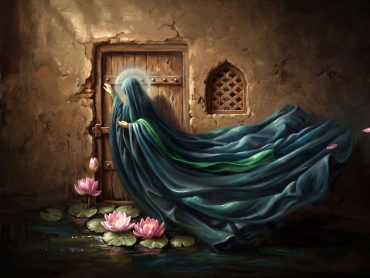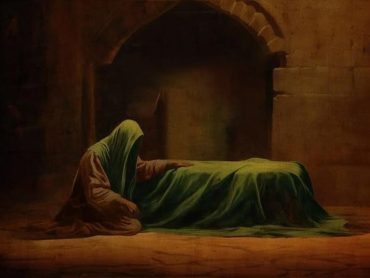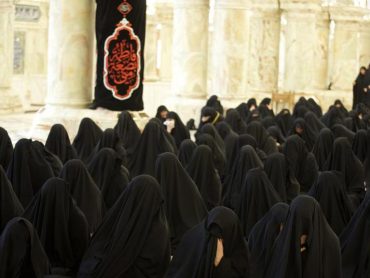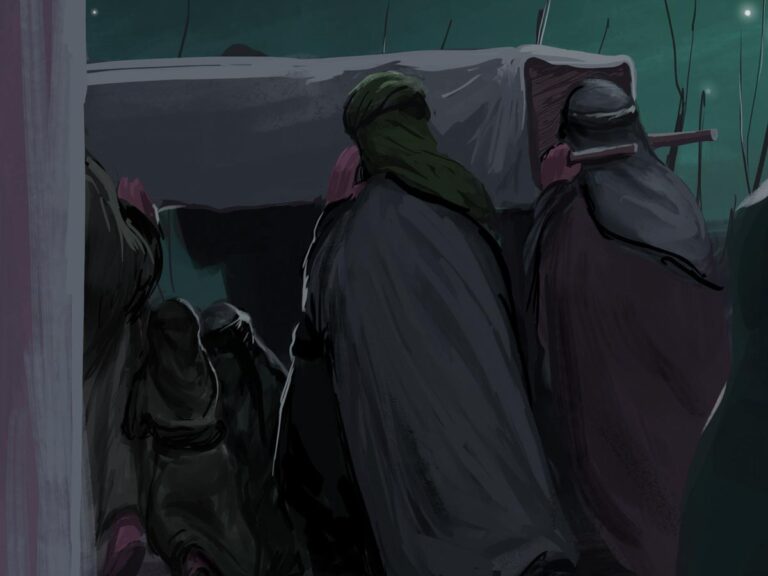
Imam al-Sadiq (peace be upon him), in the narration of the Ascension (Miraj), relates that the Prophet was told: Your daughter will be wronged and deprived, and her right, which you have set aside for her, will be seized by force. She will be struck while pregnant, and her home and its sanctity will be entered without permission. Humiliation and abasement will befall her, and she will find no one to defend her. She will lose the child in her womb because of the blows, and she will die from those blows.[1]
According to a narration from Ibn Abbas, the Prophet (peace be upon him and his family) also said: “Fatimah will be the first of my household to join me. She will come to me grieved, distressed, and sorrowful, her right usurped and she herself slain.”[2] In another narration, in the final days of his life, he said to his daughter: “You are the first of my household to join me, and you are the chief of the women of Paradise. After me you will see oppression and rage, until you are struck and one of your ribs is broken. May God curse your killer, and may He curse the one who commands it, the one who is pleased with it, the one who assists in it, the one who backs it against you, and the one who wrongs your husband and your two sons.”[3]
Imam al-Sadiq (peace be upon him) related another saying of his grandfather: “Accursed, accursed is the one who wrongs my daughter Fatimah after me, usurps her right, and kills her.”[4]
The reports from after the Prophet’s passing attest that these injuries took place. At the end of the narration of Ammar ibn Yasir, which Imam al-Baqir related from Imam al-Sajjad (peace be upon them both), from Muhammad ibn Ammar, from his father, it is stated: Lady Fatimah (peace be upon her) was pregnant with Muhsin. After the Prophet’s passing, and in the events that took place when that group entered her house and took Amir al-Muminin (peace be upon him) out, the harm that reached her from that man [Umar] caused her to miscarry her child, and that was the beginning of her illness and her death.[5]
The report of Sulaym ibn Qays gives this event in greater detail: when Lady Fatimah came between Qunfudh and her husband, Qunfudh struck her with a whip (Umar had sent word to him: if Fatimah stands in your way, strike her). Qunfudh pushed her and pressed her against the doorframe of her house; her rib was broken and she miscarried her child. She remained bedridden after that and, as a result of that same injury, was martyred.[6]
It is likewise narrated from Imam al-Sadiq (peace be upon him) in Dalail al-Imamah: the cause of her passing was that Qunfudh, Umar’s servant, at his command, struck her with the tip of a sword’s scabbard; Muhsin was miscarried, and she fell gravely ill. The same narration states that she did not allow any of those who had harmed her to visit her.[7]
Imam al-Kadhim (peace be upon him) spoke of her thus: “Indeed, Fatimah was a Siddiqah (the Truthful) and a martyr.”[8] Allamah al-Majlisi, in his commentary on this hadith, writes: This report indicates that Fatimah (peace be upon her) was a martyr, and this is among the matters established by mass transmission (mutawatirat).[9]
In another report from the Book of Sulaym, after the plot to have Khalid ibn al-Walid kill Amir al-Muminin (peace be upon him) failed, the women of Banu Hashim came out and cried out: “O enemies of God! How quickly you have revealed your enmity toward the Messenger of God and his household! You had long intended this against the Messenger of God (peace be upon him and his family) too, but you were unable to carry it out. Yesterday you killed his daughter, and today you want to kill his brother, his cousin, his successor, and the father of his children? By the Lord of the Kaaba, you lie! You will never succeed in killing him.” The report adds that people feared a great strife would break out.[10]
The remembrance of this tragedy also remained alive in the words of Amir al-Muminin. Ibn Abbas says: I went to see Amir al-Muminin (peace be upon him) at Dhi Qar. He brought out a document and said: “The Messenger of God dictated this document to me, and I wrote it with my own hand.” I asked him to read it to me. It contained the events that followed the Prophet’s passing, up to the martyrdom of Imam al-Hussain: how he would be killed, his killers, and his martyred companions and supporters. He wept so intensely that he made me weep too. Among the things he read was how people would treat him, and how Lady Fatimah and Imam al-Hasan (peace be upon them) would be martyred.[11]
The martyrdom of Lady Fatimah stands alongside the narrations that foretell the martyrdom of the other members of the Ahl al-Bayt. It is narrated from Imam al-Sadiq (peace be upon him): “By God, there is none among us but he will be killed and martyred.” Imam al-Rida (peace be upon him) used the same expression, and when he was asked who would kill him, he said: “The worst of God’s creation in my time; he will kill me with poison.”[12]
Ibn Shahrashub and al-Tabarsi also report that many Shia scholars accepted that all the Imams were martyred, citing this same statement of Imam al-Sadiq (peace be upon him).[13]
In a report attributed to Ibn Babawayh in Ibn Shahrashub’s Mathalib al-Nawasib, after stating that all the Imams were martyred, the following are mentioned as the initial injustices: pushing Amir al-Muminin aside from the caliphate, usurping Lady Fatimah’s inheritance from her father, killing Muhsin in his mother’s womb, and striking Salman al-Farsi on the neck.[14]
The narrations also speak of the outcome of these injustices. Abdullah ibn Bukayr says: I was traveling from Medina to Mecca with Imam al-Sadiq (peace be upon him). We passed a black, foreboding mountain. The Imam said: This mountain is called Kamad, and it lies over one of the valleys of Hell. Later in the narration, the killers of Amir al-Muminin, Lady Fatimah, Muhsin, and Imam al-Hasan and Imam al-Hussain (peace be upon them) are mentioned among those confined in it.[15]
In another narration from Imam al-Sadiq (peace be upon him), the Prophet (peace be upon him and his family) told Lady Fatimah about the martyrdom of Imam al-Hussain and his companions at Karbala, and informed her that the heavens, the earth, the angels, and the other creatures would weep for him. Lady Fatimah wept. To console her, the Prophet said:
“Are you not pleased that your husband will, on the Day of Thirst, drive the people back from the Pool, giving his friends drink from it and driving his enemies away from it? Are you not pleased that he will be the divider of the Fire? He will command the Fire and it will obey him, bringing out of it whomever he wills and leaving in it whomever he wills. Are you not pleased that you will see the angels on the horizons of the heavens, looking at you and at what you command, and looking at your husband as he stands before the people and pleads his case against them before God? What do you think God will do to the killer of your son and to your killers, when your husband’s proof prevails over the people and the Fire is commanded to obey him?”[16]
[1]«وأما ابنتك فتظلم وتحرم ويؤخذ حقها غصبا الذي تجعله لها، وتضرب وهي حامل، ويدخل عليها وعلى حريمها ومنزلها بغير إذن، ثم يمسها هوان وذل ثم لا تجد مانعا، وتطرح ما في بطنها من الضرب وتموت من ذلك الضرب.»
Ibn Qulawayh, Kamil al-Ziyarat, ed. Jawad Qayyumi, ch. 108, pp. 547–548, serial no. 840, hadith 12 of the chapter.
[2]«فتكون أول من يلحقني من أهل بيتي، فتقدم علي محزونة مكروبة مغمومة مغصوبة مقتولة.»
Shaikh Saduq, al-Amali, session 24, hadith 2, narration of Ibn Abbas.
[3]«ثم أقبل على ابنته فقال: إنك أول من يلحقني من أهل بيتي، وأنت سيدة نساء أهل الجنة، وسترين بعدي ظلما وغيظا حتى تضربي ويكسر ضلع من أضلاعك. لعن الله قاتلك ولعن الآمر والراضي والمعين والمظاهر عليك وظالم بعلك وابنيك.»
Kitab Sulaym ibn Qays, ed. Muhammad Baqir al-Ansari, section “The Testaments of the Messenger of God to Banu Hashim,” subsection “The Messenger of God’s Forewarning of the Calamities of His Household in the Last Days of His Blessed Life,” p. 427.
[4]«يا يونس، قال جدي رسول الله صلى الله عليه وآله وسلم: ملعون ملعون من يظلم بعدي فاطمة ابنتي ويغصبها حقها ويقتلها.»
al-Karajiki, Kanz al-Fawaid, vol. 1, p. 150.
[5]«وحملت بمحسن، فلما قبض رسول الله صلى الله عليه وآله، وجرى ما جرى في يوم دخول القوم عليها دارها، وإخراج ابن عمها أمير المؤمنين عليه السلام، وما لحقها من الرجل أسقطت به ولدا تماما، وكان ذلك أصل مرضها ووفاتها صلوات الله عليها.»
al-Tabari al-Imami, Dalail al-Imamah, ed. Bithah Foundation, pp. 103–104, hadith 33.
[6]«وقد كان قنفذ لعنه الله ضرب فاطمة عليها السلام بالسوط ـ حين حالت بينه وبين زوجها وأرسل إليه عمر: إن حالت بينك وبينه فاطمة فاضربها ـ فألجأها قنفذ لعنه الله إلى عضادة باب بيتها ودفعها فكسر ضلعها من جنبها فألقت جنينا من بطنها، فلم تزل صاحبة فراش حتى ماتت صلى الله عليها من ذلك شهيدة.»
Kitab Sulaym ibn Qays, ed. Muhammad Baqir al-Ansari, section “The Events of Saqifah in the Words of Salman al-Farsi,” p. 153.
[7]«وكان سبب وفاتها أن قنفذا مولى عمر لكزها بنعل السيف بأمره، فأسقطت محسنا ومرضت من ذلك مرضا شديدا، ولم تدع أحدا ممن آذاها يدخل عليها.»
al-Tabari al-Imami, Dalail al-Imamah, ed. Bithah Foundation, p. 134, hadith 43, under the heading “Report of Her Passing, Her Burial, and What Befell Amir al-Muminin with the People.” The nal al-sayf is the piece at the end of a sword’s scabbard.
[8]«إن فاطمة عليها السلام صديقة شهيدة.»
al-Kulayni, al-Kafi, ed. Ali Akbar al-Ghaffari, vol. 1, p. 458, chapter “The Birth of Fatimah al-Zahra (peace be upon her),” hadith 2.
[9]«ثم إن هذا الخبر يدل على أن فاطمة صلوات الله عليها كانت شهيدة، وهو من المتواترات.»
al-Majlisi, Mirat al-Uqul, vol. 5, p. 318.
[10]«وخرجت نسوة بني هاشم فصرخن وقلن: يا أعداء الله، ما أسرع ما أبديتم العداوة لرسول الله وأهل بيته، لطالما أردتم هذا من رسول الله صلى الله عليه وآله فلم تقدروا عليه، فقتلتم ابنته بالأمس، ثم أنتم تريدون اليوم أن تقتلوا أخاه وابن عمه ووصيه وأبا ولده؟ كذبتم ورب الكعبة، ما كنتم تصلون إلى قتله. حتى تخوف الناس أن تقع فتنة عظيمة.»
Kitab Sulaym ibn Qays, ed. Muhammad Baqir al-Ansari, Dalil-e Ma edition, p. 395.
[11]«لقد دخلت على علي عليه السلام بذي قار، فأخرج إلي صحيفة وقال لي: يا بن عباس، هذه صحيفة أملاها علي رسول الله صلى الله عليه وآله وخطي بيدي. فقلت: يا أمير المؤمنين، اقرأها علي. فقرأها، فإذا فيها كل شيء كان منذ قبض رسول الله صلى الله عليه وآله إلى مقتل الحسين عليه السلام، وكيف يقتل ومن يقتله ومن ينصره ومن يستشهد معه. فبكى بكاء شديدا وأبكاني. فكان فيما قرأه علي: كيف يصنع به وكيف يستشهد فاطمة وكيف يستشهد الحسن ابنه وكيف تغدر به الأمة.»
Kitab Sulaym ibn Qays, ed. Muhammad Baqir al-Ansari, section “The Book of the Events of the World in the Possession of Amir al-Muminin,” p. 434.
[12]From Imam al-Sadiq:
«والله ما منا إلا مقتول شهيد.»
Ibn Shahrashub, Manaqib Al Abi Talib, vol. 2, p. 51.
From Imam al-Rida:
«والله ما منا إلا مقتول شهيد. فقيل له: فمن يقتلك يا بن رسول الله؟ قال: شر خلق الله في زماني، يقتلني بالسم.»
Shaikh Saduq, al-Amali, session 15, hadith 8.
[13]Ibn Shahrashub writes:
«وذهب كثير من أصحابنا إلى أن الأئمة خرجوا من الدنيا على الشهادة، واستدلوا بقول الصادق عليه السلام: والله ما منا إلا مقتول شهيد.»
Manaqib Al Abi Talib, vol. 2, p. 51, section “On the Calamities of the Ahl al-Bayt.”
Al-Tabarsi writes, in the biography of Imam Hasan al-Askari:
«وذهب كثير من أصحابنا إلى أنه عليه السلام مضى مسموما، وكذلك أبوه وجده وجميع الأئمة عليهم السلام خرجوا من الدنيا بالشهادة، واستدلوا في ذلك بما روي عن الصادق عليه السلام من قوله: والله ما منا إلا مقتول شهيد. والله أعلم بحقيقة ذلك.»
Ilam al-Wara bi-Alam al-Huda, vol. 2, pp. 131–132.
[14]«إن جميع الأئمة عليهم السلام خرجوا من الدنيا على الشهادة … وكان أول ما استفتح به من الظلم من أخّر عليا عليه السلام عن الخلافة، وغصب فاطمة عليها السلام ميراث أبيها، وقتل المحسن عليه السلام في بطن أمه، ووجأ عنق سلمان الفارسي …»
Mathalib al-Nawasib, p. 26 (manuscript), as cited in al-Mawsuah al-Kubra an Fatimah al-Zahra, vol. 11, p. 241, citation no. 91.
[15]«صحبت أبا عبد الله عليه السلام في طريق مكة من المدينة … ثم مررنا بجبل أسود عن يسار الطريق موحش … قال: هذا جبل يقال له الكمد، وهو على واد من أودية جهنم، وفيه قتلة أبي الحسين عليه السلام.»
Later, in enumerating those confined in it, the narration states:
«وقاتل أمير المؤمنين عليه السلام، وقاتل فاطمة ومحسن، وقاتل الحسن والحسين عليهما السلام.»
Ibn Qulawayh, Kamil al-Ziyarat, ed. Jawad Qayyumi, ch. 108, hadith 2, serial no. 830, pp. 539–541.
[16]«عن أبي عبد الله عليه السلام قال: كان الحسين مع أمه تحمله فأخذه النبي صلى الله عليه وآله وسلم … قالت: يا أبة، وأنّى هذا الموضع الذي تصف؟ قال: موضع يقال له كربلاء، وهي دار كرب وبلاء علينا وعلى الأمة …. أما ترضين أن يكون بعلك يذود الخلق يوم العطش عن الحوض، فيسقي منه أولياءه ويذود عنه أعداءه؟ أما ترضين أن يكون بعلك قسيم النار، يأمر النار فتطيعه، يخرج منها من يشاء ويترك من يشاء؟ أما ترضين أن تنظرين إلى الملائكة على أرجاء السماء ينظرون إليك وإلى ما تأمرين به، وينظرون إلى بعلك قد حضر الخلائق وهو يخاصمهم عند الله، فما ترين الله صانع بقاتل ولدك وقاتليك إذا أفلحت حجته على الخلائق وأمرت النار أن تطيعه؟»
Furat al-Kufi, Tafsir Furat al-Kufi, ed. Muhammad Kazim, pp. 171–172, hadith 219, under Quran 9:111 (Surah al-Tawbah).