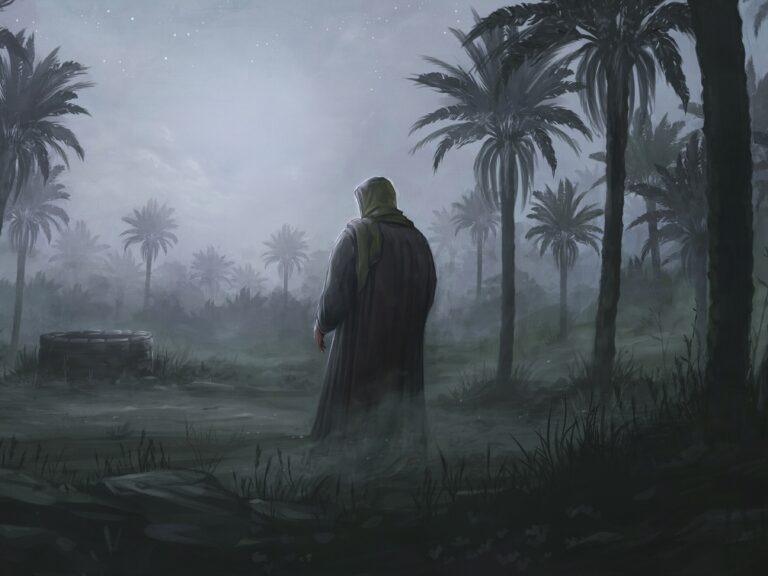
Solitude and the Lack of Supporters
In this passage, Imam al-Hadi (peace be upon him) joins two ideas: solitude and the lack of supporters. The two are not the same, for a person can be surrounded by a crowd and still be alone. What the Imam stresses is the absence of people who truly recognize the truth and are willing to pay a price for it. This kind of ordeal is far heavier than any physical hardship, because it stems from the weakness of those being addressed, not from a lack of resources.
The Solitude of the Prophets in the Quran
The Quran, the Book of God, depicts several faces of this solitude. After years of preaching, Noah (peace be upon him) found only a small band of followers and cried out to his Lord that he was “overcome.”² Lot (peace be upon him), facing his defiant people, wished that he had “strength, or could take refuge in a mighty support.”³ Abraham (peace be upon him) stood so alone in his devotion to the One God that the Quran calls him a “nation” (ummah) in himself.⁴ And Aaron (peace be upon him), in the absence of Moses (peace be upon him), was deemed weak by his people and threatened with death.⁵
What these accounts share is that the prophets’ deepest suffering lay in the scarcity of supporters and the wavering resolve of their companions, and not only in the hostility of their enemies.
The Place of Amir Al-Muminin in This Succession
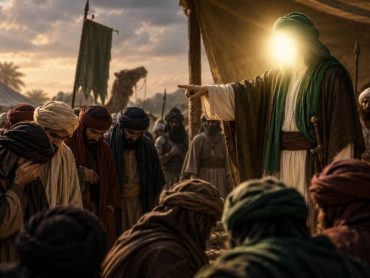
God and the Prophet (peace be upon him and his family) had unequivocally appointed Amir al-Muminin (peace be upon him) on the Day of Ghadir as the guardian and Imam of all Muslims. Yet after the Prophet’s martyrdom, he found himself in a situation where the Ummah had strayed from the path God had set.
Amir al-Muminin (peace be upon him) himself describes this situation in Nahj al-Balagha:
“I looked around and found no helper except my Ahl al-Bayt, and I was unwilling to send them to their deaths. So I shut my eyes though they were filled with dust, and I swallowed the bitterness with a bone lodged in my throat.”⁶
This unbearable anguish is the very voice of the “solitude” and “lack of supporters” described in the al-Ghadir Ziyanah of Imam al-Hadi (peace be upon him).
———————————–
-
- «فَأشبَهَت مِحنَتُكَ بِهِمَا مِحَنَ الأنبیاءِ عَلَیهِمُالسَّلامُ عِندَ الوَحدَةِ و عَدَمِ الأنصارِ» (Al-Mazar al-Kabir, p. 279)
- فَدَعَا رَبَّهُ أَنِّي مَغْلُوبٌ فَانتَصِرْ ﴿١٠﴾ (Surah al-Qamar: 10)
- قَالَ لَوْ أَنَّ لِي بِكُمْ قُوَّةً أَوْ آوِي إِلَىٰ رُكْنٍ شَدِيدٍ ﴿٨٠﴾ (Surah Hud: 80)
- إِنَّ إِبْرَاهِيمَ كَانَ أُمَّةً قَانِتًا لِّلَّهِ حَنِيفًا وَلَمْ يَكُ مِنَ الْمُشْرِكِينَ ﴿١٢٠﴾ (Surah al-Nahl: 120)
- وَلَمَّا رَجَعَ مُوسَىٰ إِلَىٰ قَوْمِهِ غَضْبَانَ أَسِفًا قَالَ بِئْسَمَا خَلَفْتُمُونِي مِن بَعْدِي ۖ أَعَجِلْتُمْ أَمْرَ رَبِّكُمْ ۖ وَأَلْقَى الْأَلْوَاحَ وَأَخَذَ بِرَأْسِ أَخِيهِ يَجُرُّهُ إِلَيْهِ ۚ قَالَ ابْنَ أُمَّ إِنَّ الْقَوْمَ اسْتَضْعَفُونِي وَكَادُوا يَقْتُلُونَنِي فَلَا تُشْمِتْ بِيَ الْأَعْدَاءَ وَلَا تَجْعَلْنِي مَعَ الْقَوْمِ الظَّالِمِينَ ﴿١٥٠﴾ (Surah al-Araf: 150)
- «فَنَظَرتُ فَإذا لَيسَ لي مُعينٌ إلّا أهلُ بَيتي فَضَنِنتُ بِهِم عَنِ المَوتِ و أغضَيتُ عَلَى القَذَى و شَرِبتُ عَلَى الشَّجا» (Nahj al-Balagha, Sermon 26)