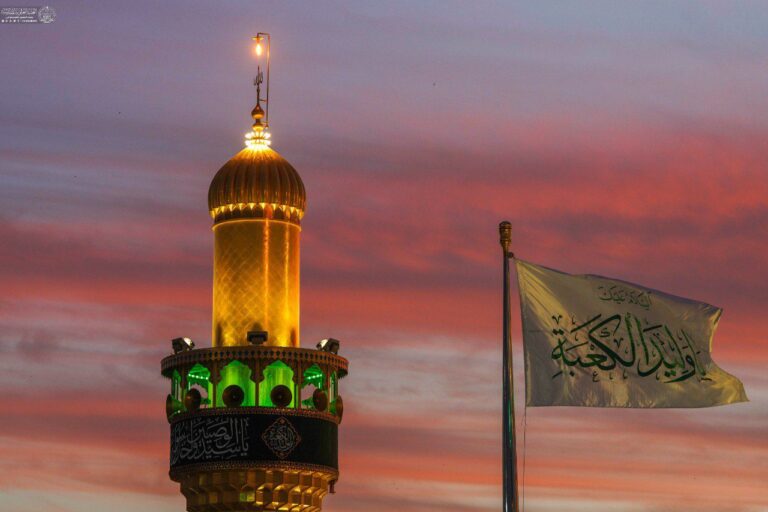
The fasting of the body is limited to time and the control of eating and drinking, and it is considered a preliminary stage to reaching the fasting of the soul. The fasting of the body is relatively easy, and anyone with a small amount of will can perform it. However, in the fasting of the heart and soul, all of man’s limbs and faculties are on the path of fasting. The primary goal of fasting, which is one of the important rulings of Islam, is the cultivation of piety (Taqwa) and the purification of hearts.
A Test of Sincerity and Strengthening of Will
The condition for reaching piety, which is the philosophy of fasting, is sincerity. If one can maintain sincerity in the worship of the month of Ramadan, they become a true guest of the Almighty.
Amir al-Muminin (peace be upon him) has stated, “God made fasting obligatory to serve as a test to gauge the sincerity of His servants.” [1]
Furthermore, Amir al-Muminin (peace be upon him) considers one of the reasons for the obligation of fasting to be the strengthening of faith and will, stating in the Nahj al-Balagha:
“Indeed, the fast of the month of Ramadan is a shield against divine punishment.” [2]
The Hidden Wisdoms in Acts of Worship
Regarding the wisdom of acts of worship such as fasting and prayer, Amir al-Muminin (peace be upon him) stated, “God has protected His believing servants through prayer, zakat, and obligatory fasts so that their limbs may find peace, their gaze may be filled with humility, their souls may be calmed, their hearts humbled, and pride may be removed from their existence. For in these acts of worship, there are hidden wisdoms such as the humbling of honorable faces before the God, the prostration and humility of noble limbs upon the earth, and the taming of the soul through hunger and keeping the stomach empty.” [3]
Physical Benefits
One of the secrets of fasting in Islam is the attainment of physical health. In addition to the spiritual benefits of fasting, Amir al-Muminin (peace be upon him) stated regarding its physical advantages:
“Fasting is one of the two primary factors of health.” [4]
In his testament to Imam al-Hasan (peace be upon him), Amir al-Muminin (peace be upon him) said concerning the wisdom of fasting, “Fast, for fasting is the zakat of the body and a protective shield for those who fast.” [5]
The Reward of Fasting
The ultimate reward of fasting, according to the words of our Imam, is reaching wisdom, then divine knowledge (Marifat), and finally certainty in one’s faith (Yaqin). In the Hadith of Miraj (the Prophet’s Night Journey), Amir al-Muminin (peace be upon him) narrated:
“The Prophet (peace be upon him and his family) asked his Lord on the night of Mi’raj, ‘O God! What is the reward of fasting?’
God replied, ‘Fasting brings wisdom; wisdom leads man to knowledge; and knowledge results in certainty. Once the servant attains certainty, it no longer matters to him whether he spends his day in poverty or in wealth.’” [6]
The Intercession of the Prophet (peace be upon him and his family) and Crossing the Sirat Bridge
The virtues of the month of Ramadan and its fasting, according to narrations, include transforming the terror of the grave into comfort, emerging radiantly from the grave, and receiving the intercession of the Prophet (peace be upon him and his family).
It is narrated from Dhahhak, on the authority of Amir al-Muminin (peace be upon him), that “The Messenger of God (peace be upon him and his family) stated: Shaban is my month, and the month of Ramadan is the month of God. Therefore, whoever fasts my month (Shaban), I shall be his intercessor on the Day of Resurrection. And whoever fasts the month of God (Ramadan), God will transform the terror of his grave into comfort and join his loneliness [to His own companionship], and he shall emerge from his grave with a white and radiant face, while his book of deeds is in his right hand and the document of immortality (in Paradise) is in his left hand.’”
When he stands before his Lord, God shall say, “My servant!” He will reply, “At your service, my Master!” God will ask, “Did you fast for Me?” He will answer, “Yes, my Master!”
Then God Almighty shall say, “Take the hand of this servant and bring him to his Prophet.”
He will be brought to the Prophet (peace be upon him and his family). The Prophet will say to him, “Did you fast my month?” He will answer: “Yes.”
Then the Prophet (peace be upon him and his family) will say, “Today, I intercede for you.”
Thereupon, God Almighty shall say: “I have waived My own rights for the sake of My servant; however, regarding the rights of the people, whosoever forgives him, the compensation for that shall be upon Me until he is satisfied.”
The Messenger of God (peace be upon him and his family) continued, “Then, I shall take his hand and lead him toward the Sirat. I find the Sirat to be very slippery, such that the feet of the transgressors do not remain firm upon it. [There as well] I shall take his hand.”
The guardian of the Sirat will ask me, “O Prophet of God! Who is this?” I will say:
“This is so-and-so, from my Ummah. He fasted my month in the world to attain my intercession and fasted the month of God to reach the divine promise.”
Thus, through divine forgiveness, he shall cross the Sirat until he reaches the gate of Paradise. I shall then command that Paradise be opened for him.
The guardian of Paradise says, “We are commanded to open Paradise for you and for your Ummah.”
[The narrator says, “Then Amir al-Muminin (Peace be upon him) said:] “Therefore, fast the month of the Prophet (Peace be upon him and his family) so that he may be your intercessor, and fast the month of Allah so that you may drink from the pure and sealed nectar of Paradise.” [7]
The Stations of Fasting
From the perspective of Amir al-Muminin (Peace be upon him), the true value of fasting lies in the purification of the inner self and the attainment of divine gnosis. Fasting is not merely a physical obligation but a comprehensive educational process whose ultimate goal is to prove the servant’s sincerity before Allah.
Regarding the superior fast, he states, “The fasting of the heart is better than the fasting of the tongue, and the fasting of the tongue is better than the fasting of the stomach.” [8]
Regarding the fasting of the soul and self, Imam Ali (peace be upon him) says:
“The fasting of the soul is the restraint of the five senses from all sins and the cleansing of the heart from all causes of evil and malice.” [9]
References:
[1] Nahj al-Balagha, Wisdom 252.
[2] Nahj al-Balagha, Sermon 110.
[3] Nahj al-Balagha, Sermon 192 (Sermon of Disparagement/Al-Qasiah).
[4] Ghurar al-Hikam, 168.
[5] Amali al-Mufid: 222/1, Amali al-Tusi: 8/8, both from al-Fajee al-Aqili from Imam Hasan (peace be upon him), Bihar al-Anwar: 96/248/10.
[6] Irshad al-Qulub, p. 203, Bihar al-Anwar, 77/27/6.
[7] Fadail al-Ashhur al-Thalathah: 124/132 and p. 64/46, Bihar al-Anwar: 97/83/54.
[8] Ghurar al-Hikam, Vol. 1, p. 417, Hadith 80.
[9] Ghurar al-Hikam, Vol. 1, p. 417, Hadith 79.