Lineage and Birth
Muhammad ibn Hanafiyyah was the son of Amir al-Muminin (peace be upon him) and Khawla al-Hanafiyyah (daughter of Jafar ibn Qays). He belonged to the first generation of the Tabi’in. He is sometimes referred to as “Muhammad ibn Ali” and also called “Muhammad al-Akbar.”
His childhood coincided with the caliphate of Umar, and his youth and teenage years fell during the time of Uthman’s caliphate. He took part in the Battles of Jamal, Saffein, and Nahrawan. In the Battle of Jamal, when he was about 21 years old, he carried his father’s banner and fought bravely.
Accompanying His Father in the Battle of Jamal
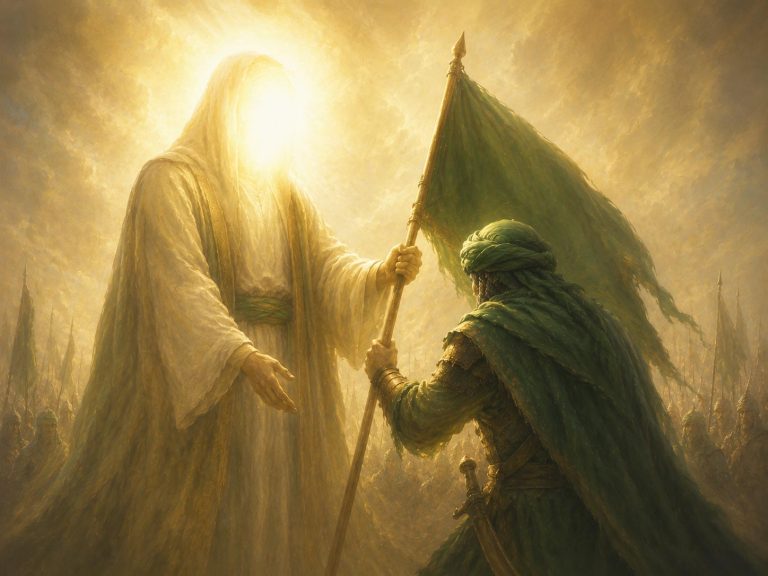
This battle was Muhammad ibn Hanafiyyah’s first real experience of warfare. Amir al-Muminin (peace be upon him) entrusted him with the heavy responsibility of carrying the banner. As he handed it over, he said:
“If the mountains are uprooted, remain firm. Clench your teeth, entrust your head to God, plant your feet like nails in the ground, look to the farthest points of the battlefield, and pay no heed to the terrifying scenes — for victory is the promise of God Almighty.”
His Father’s Right Hand on the Battlefield
Amir al-Muminin (peace be upon him) would guide his son with loving advice at times and with firm reminders and serious guidance at others. In the face of hardships and difficulties, he taught him steadfastness and perseverance. The poet, literary scholar, and commentator on Nahj al-Balagha, Abd al-Hamid ibn Hibatullah, known as Ibn Abi al-Hadid, recounts this incident in his Sharh
Nahj al-Balagha:
“Amir al-Muminin (peace be upon him) gave the banner to his son Muhammad ibn Hanafiyyah in the Battle of Jamal and told him, ‘Take it.’ Muhammad hesitated a little and said, ‘O Amir al-Muminin! Don’t you see the sky? It looks like the enemy’s arrows are pouring down like raindrops.’Amir al-Muminin (peace be upon him) then struck him on the chest and said, ‘You’ve taken after one vein of your mother.’ He then took the banner with his own blessed hand, raised it, and recited this rajaz verse while advancing: ‘Strike with the spear as your father strikes, so you may be praised; for if the fire of war is not kindled with straight swords and firm spears, there is no good inbattle.’ He then charged forward himself, the army followed, and they crushed the army of Basra.”
When someone asked Muhammad ibn Hanafiyyah, “Why does your father put you in danger in battle but doesn’t do the same with Hasan and Husain (peace be upon them)?” he replied: “They are his eyes, and I am his right hand. He protects his eyes with his hand.”
Amir al-Muminin (peace be upon him) would send Muhammad into the battlefield but prevented Imam Hasan and Imam Husain (peace be upon them) from going. In the Battle of Saffein, Amir al-Muminin (peace be upon him) stated about the two grandsons: “Watch over these two young men on my behalf. I fear that if they are killed, the lineage of the Prophet of God (peace be upon him and his family) will be cut off.”
Amir al-Muminin (peace be upon him) would send Muhammad into the battlefield but prevented Imam Hasan and Imam Husain (peace be upon them) from going. In the Battle of Saffein, Amir al-Muminin (peace be upon him) stated about the two grandsons: “Watch over these two young men on my behalf. I fear that if they are killed, the lineage of the Prophet of God (peace be upon him and his family) will be cut off.”
Practical Lessons from His Father in the Battle of Jamal
In the Battle of Jamal, Muhammad learned from his father the lesson of being severe against the disbelievers, merciful among themselves (Quran 48:29). On this path, his father would sometimes send him deep into enemy lines, sometimes rebuke him, and at other times comfort him — all with the sole aim of educating and raising his son.
Mundir al-Thawri, one of the narrators of history, reports:
“I heard Muhamgmad ibn Hanafiyyah describe the events of the Battle of Jamal like this: When the two armies lined up facing each other, Amir al-Muminin (peace be upon him) gave me the banner. But when he saw that as the soldiers drew closer, I pulled back a little out of fear, he took the banner from me, charged into the heart of the battlefield with it, and began fighting.”
Muhammad continues:
“That day I attacked a man from Basra. When I had completely overpowered him and he fell to the ground, he cried out, ‘I am upon the religion of Abu Talib!'”
Accompanying His Father in the Battle of Saffein
In the Battle of Saffein, Amir al-Muminin (peace be upon him) sent his son into battle using strict military strategy combined with deep affection. One of Muhammad ibn Hanafiyyah’s most important roles was carrying the banner of Amir al-Muminin’s army. The banner was a symbol of unity and strength, and entrusting it to Muhammad showed the Imam’s confidence in him.
Abdullah ibn Abbas ibn Abd al-Muttalib, known as Ibn Abbas — cousin of the Prophet (peace be upon him and his family) and of Amir al-Muminin — who has narrated many traditions, said:
Abdullah ibn Abbas ibn Abd al-Muttalib, known as Ibn Abbas — cousin of the Prophet (peace be upon him and his family) and of Amir al-Muminin — who has narrated many traditions, said:
“On one of the days of the Battle of Saffein, Amir al-Muminin (peace be upon him) called Muhammad ibn Hanafiyyah and said, ‘Attack the right flank of the enemy’s army!’ Muhammad and his companions attacked and shattered the right wing of Muawiyah’s forces. He returned wounded.
Muhammad said to the Imam, ‘I’m thirsty!’ The great man gave him a sip of water and poured some between his armor and skin. I could see the clotted blood coming out from between the rings of his armor.”
After giving Muhammad a short rest, Amir al-Muminin (peace be upon him) said, “Now attack the left flank of the enemy’s army!” He attacked with his companions, broke that section too, and returned wounded, crying out, “Water! Water!” The Imam did the same for him again.
Then he said, “Rise and strike the heart of the enemy’s army!” Muhammad attacked the center of Muawiyah’s forces and defeated them, but returned with severe injuries, weeping.
Then he said, “Rise and strike the heart of the enemy’s army!” Muhammad attacked the center of Muawiyah’s forces and defeated them, but returned with severe injuries, weeping.
Amir al-Muminin (peace be upon him) stood up, kissed Muhammad between the eyes, and said, “May your father be sacrificed for you! By God, you have made me happy. Why are you crying? Is it from joy or from pain and impatience?”
Muhammad replied, “How can I not cry? You sent me to the brink of death three times, and God brought me back safely each time. Yet whenever I returned to you, you gave me no rest, while you give no such orders to my two brothers Hasan and Husain (peace be upon them)?”
The Imam kissed Muhammad’s head and said, “My dear son! You are my son, but they are the sons of the Prophet of God (peace be upon him and his family). Should I not take care of them?”
Muhammad answered, “Of course, dear father. May God sacrifice me for you and for them!”
Amir al-Muminin’s Will to Muhammad ibn Hanafiyyah
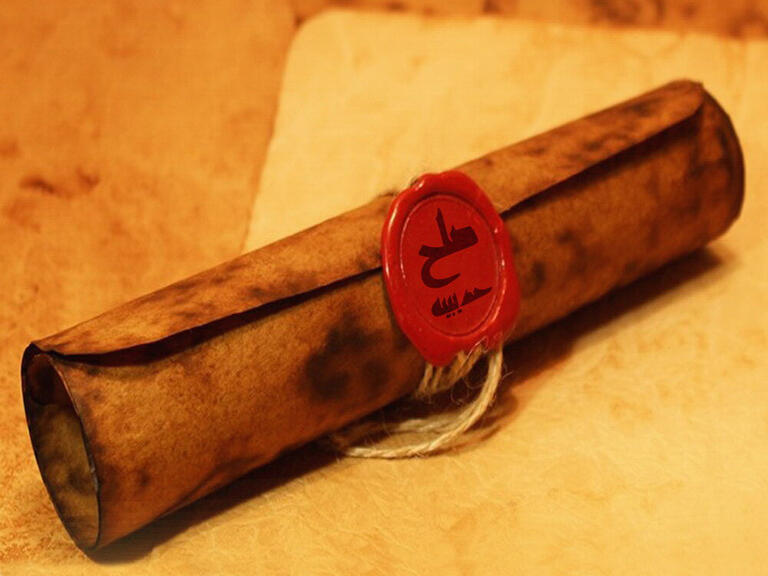
In this will, Amir al-Muminin (peace be upon him) first asked Muhammad ibn Hanafiyyah:
The Imam kissed Muhammad’s head and said, “My dear son! You are my son, but they are the sons of the Prophet of God (peace be upon him and his family). Should I not take care of them?”
Muhammad answered, “Of course, dear father. May God sacrifice me for you and for them!”
Amir al-Muminin’s Will to Muhammad ibn Hanafiyyah
In this will, Amir al-Muminin (peace be upon him) first asked Muhammad ibn Hanafiyyah:
“Do you remember the instructions I gave to your two brothers, Imam Hasan and Imam Husain (peace be upon them)?”
Muhammad said yes. The Imam then instructed him to observe those same instructions, to honor his brothers — for they have great rights upon him — and to follow their commands. He emphasized that Muhammad should not do anything without consulting them.
The Passing of Muhammad ibn Hanafiyyah
Muhammad ibn Hanafiyyah passed away on the first day of Muharram in the year 81 AH at the age of 65, during the caliphate of Abd al-Malik ibn Marwan. He is buried in the Baqi’ Cemetery in Medina.
[1] Tabari, Muhammad ibn Jarir, Tarikh al-Umam wa al-Muluk, vol. 4, p. 514
[2] Nahj al-Balagha, Sermon 11
[3] Bihar al-Anwar, vol. 42, p. 98
The Passing of Muhammad ibn Hanafiyyah
Muhammad ibn Hanafiyyah passed away on the first day of Muharram in the year 81 AH at the age of 65, during the caliphate of Abd al-Malik ibn Marwan. He is buried in the Baqi’ Cemetery in Medina.
[1] Tabari, Muhammad ibn Jarir, Tarikh al-Umam wa al-Muluk, vol. 4, p. 514
[2] Nahj al-Balagha, Sermon 11
[3] Bihar al-Anwar, vol. 42, p. 98
[4] Al-Tabaqat al-Kubra, vol. 5, p. 68
[5] Bihar al-Anwar, vol. 45, p. 348
[6] Al-Kamil fi al-Tarikh, vol. 3, p. 391