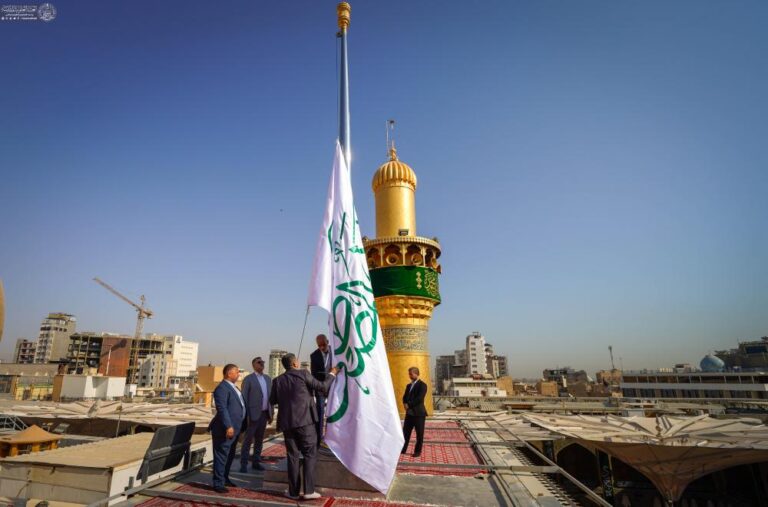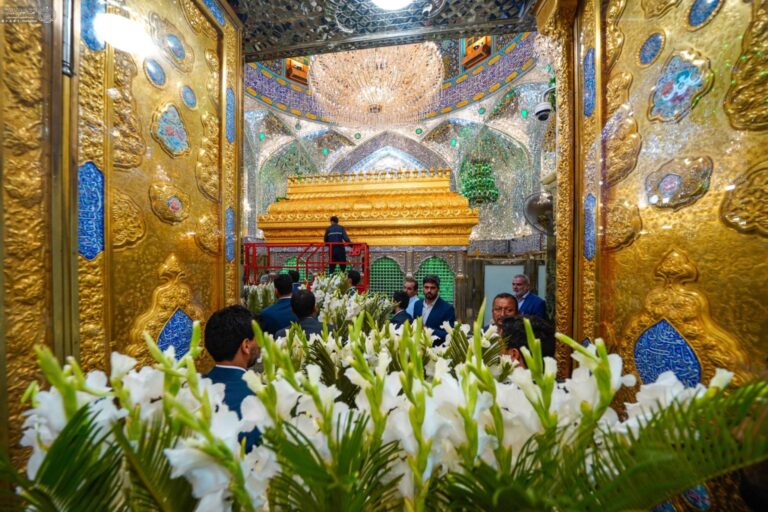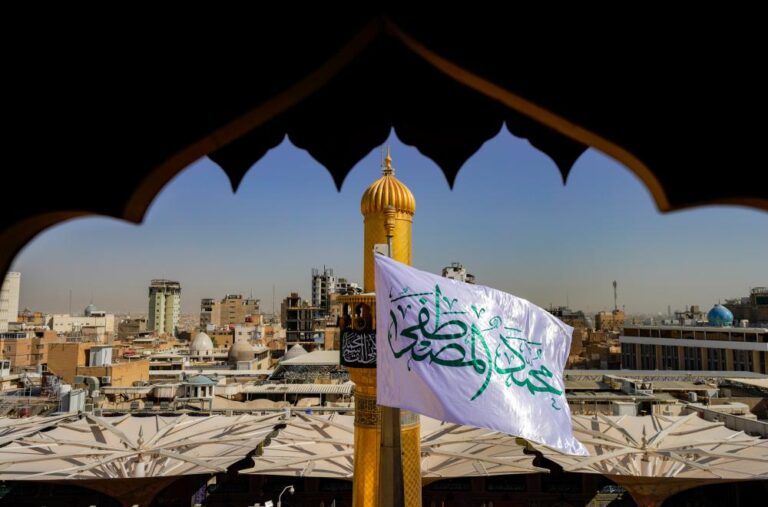
The seventh of Safar marks the anniversary of the martyrdom of the generous of the Ahl al‑Bayt (peace be upon them), Imam al‑Hasan al‑Mujtaba (peace be upon him). He was not only the son and heir of Amir al‑Muminin (peace be upon him), but also a full reflection of his father’s perfection and divine station in both belief and action—a bond vividly depicted in his learned sermons and battlefield valor.
The life of Imam al‑Hasan (peace be upon him) was intertwined with the weighty responsibilities of the Imamate and the succession to his noble father. In the lives of these two great Imams, a profound harmony of thought, defense of truth, and doctrinal conviction is clearly evident. From the time he wielded the sword of justice alongside his father amid the dust of the Battle of Jamal, to the morning of his father’s martyrdom, when he delineated the lofty station of “Amir al‑Muminin” for the Ummah from the pulpit of Kufa—this accompaniment was not merely a continuation of the prophetic mission, but rather a testament to the ultimate goal of these two venerable figures in elevating the religion of God.
The Manner of Martyrdom
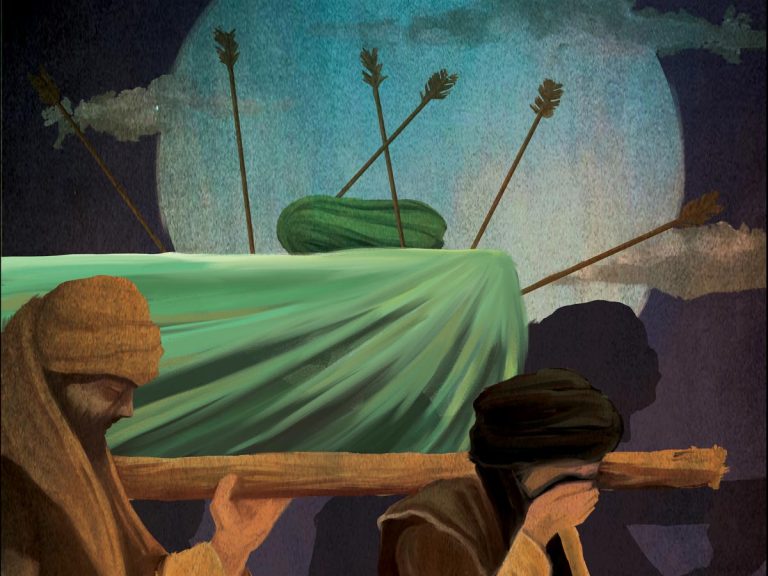
Imam al‑Hasan al‑Mujtaba (peace be upon him) was martyred on the 7th of Safar in the year 50 AH (670 CE), poisoned by his wife Ja’dah through the machinations of Muawiyah. The obstructions of the Umayyads continued even after his martyrdom; they prevented his burial beside the Prophet (may Allah’s peace and blessings be upon him and his family), and his purified body was laid to rest in al‑Baqi’.
The Responsibilities of Imam al‑Hasan (AS)
After the martyrdom of Amir al‑Muminin (peace be upon him), Imam al‑Hasan (peace be upon him) assumed the role of his father’s successor and executor. He took charge of the family, companions, endowments, and charitable affairs. [1]
Praised by His Father
Amir al‑Muminin (peace be upon him) asked his son, Imam al‑Hasan (peace be upon him), to deliver a sermon to the people, and afterward showed his great appreciation for him.
Abu al‑Jarud, a distinguished exegete and companion of Imam al‑Baqir (peace be upon him) and Imam al‑Sadiq (peace be upon him), narrated that he heard Imam al‑Baqir (peace be upon him) say: “Amir al‑Muminin (peace be upon him) told Imam al‑Hasan (peace be upon him): ‘Rise today and speak to the people.'”
Imam al‑Hasan (peace be upon him) stood up, praised God, and sent blessings upon the Prophet (may Allah’s peace and blessings be upon him and his family). Then, divinely inspired, he said: “Amir al‑Muminin (peace be upon him) holds such a station that whoever enters it is safe, and whoever turns away from it is an unbeliever. I say this, and I ask forgiveness from God for myself and for you.”
After Imam al‑Hasan (peace be upon him) descended from the pulpit, Amir al‑Muminin (peace be upon him) rose, kissed his son’s head, and said: “May my father and mother be sacrificed for you.” He then recited the verse: “Offspring, one of the other, and Allah is All‑Hearing, All‑Knowing.” (Qur’an 3:34) [2]
Valor on the Battlefield of Jamal
The bravery of Imam al‑Hasan al‑Mujtaba (peace be upon him) amid the flames of the Battle of Jamal reflects the manifestation of his father’s perfections and the consolidation of the Imamate’s path within him.
On the day of the Battle of Jamal, Amir al‑Muminin (peace be upon him) handed his spear to his son Muhammad ibn al‑Hanafiyyah and said: “Charge at the camel (of Aisha) with this spear.” Muhammad advanced, but the men of the Banu Dhabbah tribe blocked him and prevented him from nearing the camel. When he returned to his father, Imam al‑Hasan (peace be upon him) took the spear from his hand, advanced toward the camel, and struck it with the spear. When Imam al‑Hasan (peace be upon him) returned, traces of blood were visible on the spearhead. Muhammad ibn al‑Hanafiyyah was grieved that he had been unable to carry out the task, and signs of distress appeared on his face. Amir al‑Muminin (peace be upon him) said to him: “Do not be sad, for he (Hasan) is the son of the Prophet, while you are the son of Ali.” [3]
The Historical Sermon After His Father’s Martyrdom
The description of the virtues and stations of Amir al‑Muminin (peace be upon him) was powerfully articulated in the sermon of Imam al‑Hasan al‑Mujtaba (peace be upon him) on the day of his father’s martyrdom.
Abu Mikhnaf, the Shia historian from Kufa, narrated: “On the morning of his father’s martyrdom, after praising God and sending blessings upon the Prophet (may Allah’s peace and blessings be upon him and his family), Imam al‑Hasan (peace be upon him) said: ‘This night, a man was martyred whom no one has surpassed in good deeds, and none will ever reach his station.'”
He added: “He fought alongside the Messenger of God (may Allah’s peace and blessings be upon him and his family) and protected him with his own life. The Messenger of God would send him with his banner, and Gabriel would accompany him on his right and Michael on his left on the battlefield—and he would not return until God had granted victory through him. His martyrdom occurred on the same night that Jesus son of Mary ascended to heaven and Joshua son of Nun, the successor of Moses, passed away.
Of this world’s wealth, he left behind only seven hundred dirhams, which he had intended to use to hire a servant for his family.”
At this point, grief choked Imam al‑Hasan’s voice and he wept, and the people wept with him. Then he said: “I am the son of the Prophet (may Allah’s peace and blessings be upon him and his family), the son of the caller to God, and the son of the household from whom God has removed all impurity. We are that ‘good deed’ for which God, in the Qur’an, made love for us obligatory upon the Ummah.”
Then he said: “I am the son of the bearer of glad tidings, and the son of the warner. I am the son of the caller to God, and the son of the household from whom God has removed all impurity. We are that ‘good deed’ for which God, in the Qur’an, made love for us obligatory upon the Ummah. And He said: ‘Say, “I do not ask you for any reward for it except love of [my] relatives.” And whoever earns a good deed, We shall increase for him goodness therein. Indeed, Allah is All‑Forgiving, All‑Appreciative.’ (Qur’an 42:23). Thus, the ‘good deed’ is love for us, the Ahl al‑Bayt.” [4]
The Prophecy of the Martyrdom of the Family of Prophethood
Amid the tears of Amir al‑Muminin (peace be upon him), the Seal of the Prophets (may Allah’s peace and blessings be upon him and his family) unveiled a future filled with suffering and martyrdom for himself and his children.
Amir al‑Muminin Ali ibn Abi Talib (peace be upon him), while weeping, approached the Prophet (may Allah’s peace and blessings be upon him and his family) and said: “May my father and mother be sacrificed for you, O Messenger of God! Will you be killed?” The Prophet (may Allah’s peace and blessings be upon him and his family) replied: “Yes, I will be poisoned and martyred. You will be struck with a sword, and your beard will be stained with the blood of your head. My son al‑Hasan (peace be upon him) will be poisoned, and my son al‑Hussain (peace be upon him) will be slain by the sword—he will be martyred by a tyrant born of a tyrant, an impure born of an impure, a hypocrite born of a hypocrite.” [5]
References:
[1] Al‑Irshad, Vol. 2, p. 2
[2] Tafsir Furat al‑Kufi, p. 79
[3] Al‑Manaqib, Vol. 4, p. 21
[4] Bihar al‑Anwar, Vol. 43, p. 362
[5] Kitab Sulaym, Vol. 2, p. 834