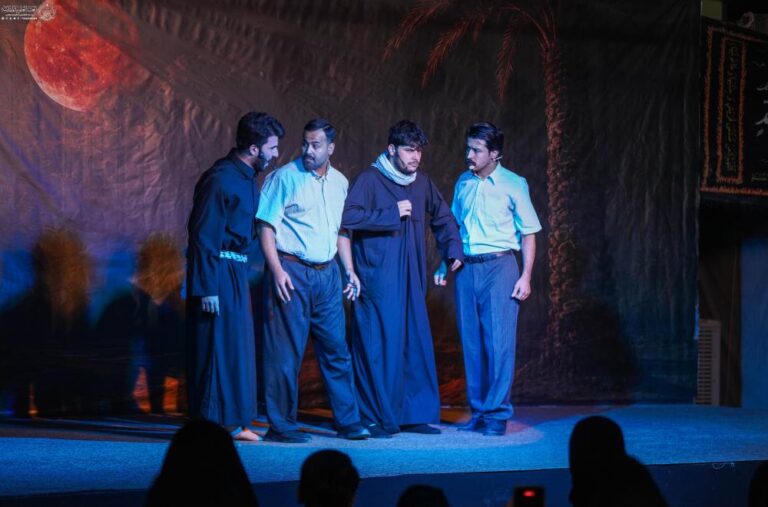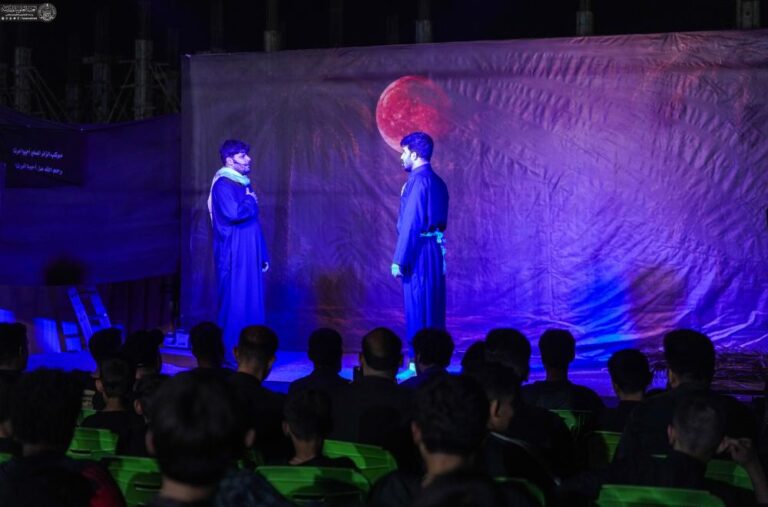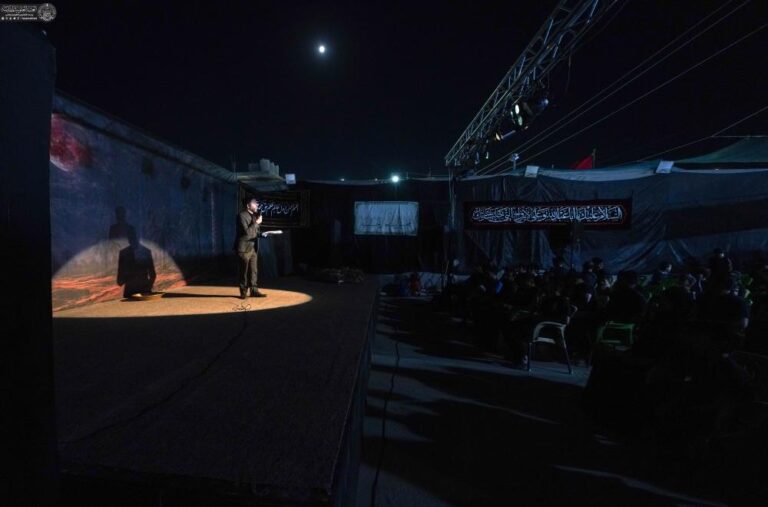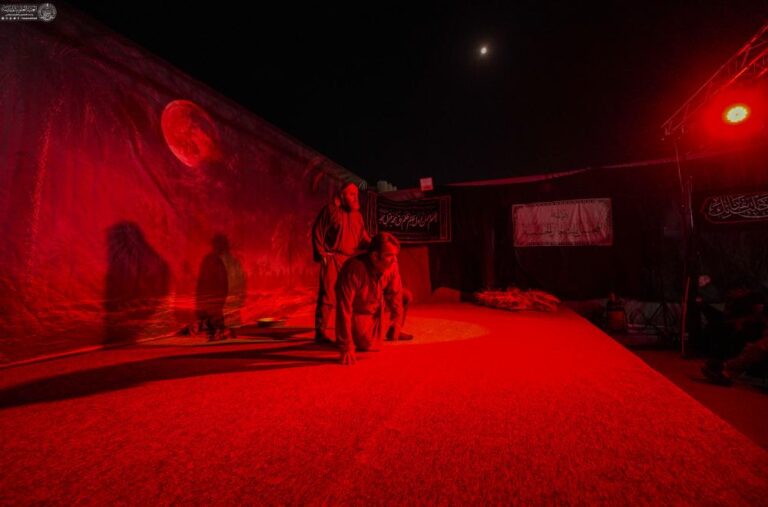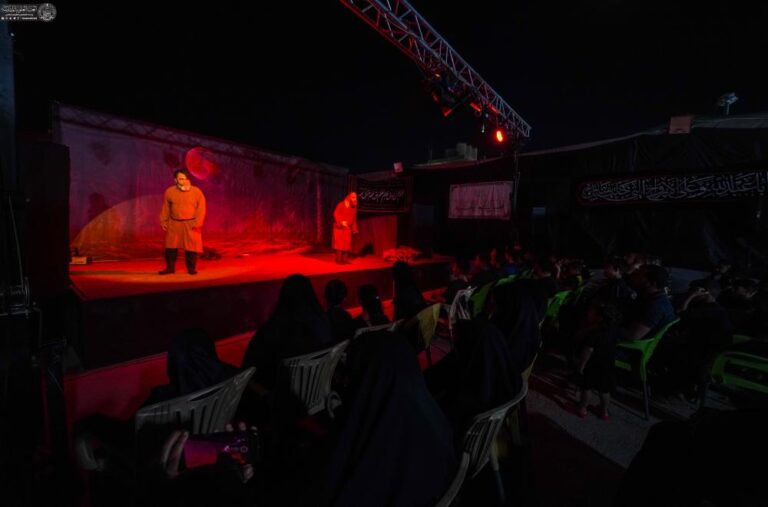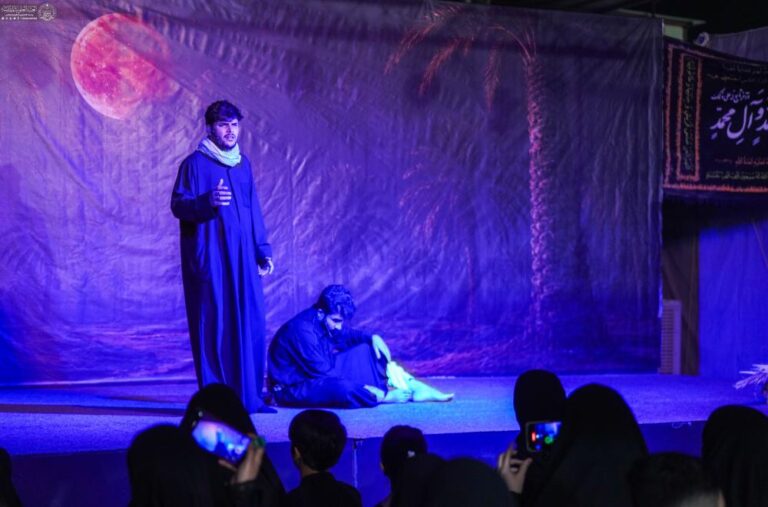
As part of its special cultural programming for the days of al-Hussaini Arbaeen, the Holy Alawi Shrine staged the play “Days of Mourning” along the Arbaeen walking route—an artistic work that depicts pivotal moments in Islamic history and draws connections between the movement of Imam al-Hussain (peace be upon him) and contemporary issues and challenges.
The Performance
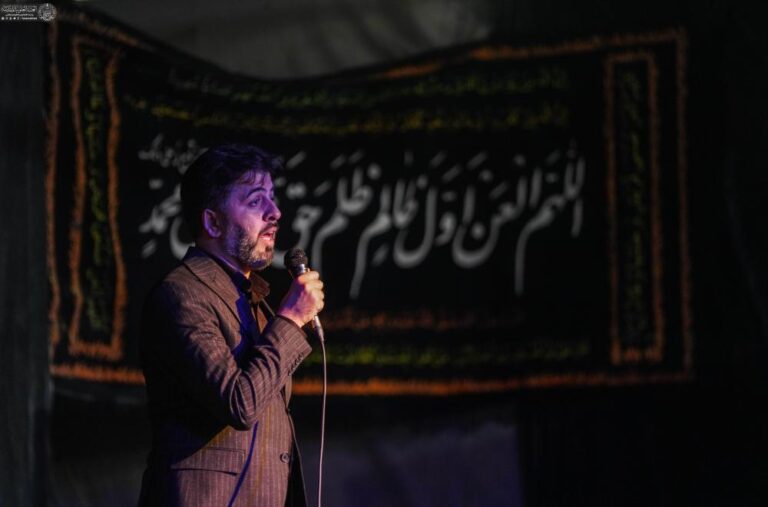
Hussein al-Dabbagh, Deputy Head of the Islamic Culture Department, told the Holy Alawi Shrine News Center:
“The play is being held under the supervision of the Intellectual and Cultural Affairs Department at the “Murtadha” rest station affiliated with the Holy Alawi Shrine, near marker No. 96, with performances continuing for four days.”
He noted:
“The play begins each night at 11 o’clock and features a group of artists and actors from various Iraqi provinces.”
Recreating Historical Episodes
He explained that the work consists of four main scenes. The first scene depicts the suffering and hardships endured by the Iraqi people under the former regime, during a period when the observance of al-Hussaini rites was banned. The second scene addresses the event of Ashura, recounting the values of sacrifice, devotion, and selflessness embodied in that epic.
He added that the third scene focuses on the life of the venerable companion Jabir ibn Abdullah al-Ansari, the first pilgrim to visit the shrine of Imam al-Hussain (peace be upon him), who made the journey on foot. The fourth scene presents the fatwa issued by the senior religious authorities on confronting the threat of terrorism, linking it to the ideals and principles for which Imam al-Hussain (peace be upon him) rose up.
Intellectual and Cultural Messages
He further noted:
“By recreating a number of powerful scenes from the event of Ashura, the play weaves them into dramatic narratives connected to present-day realities, portraying the enduring presence of the al-Hussaini movement in the conscience of Muslims. The recitation of al-Hussaini poetry in parts of the performance also reinforces its spiritual atmosphere and heightens its emotional impact.”
“Days of Mourning” is being performed as part of the Holy Alawi Shrine’s broader approach to using theatrical art to promote al-Hussaini culture and deepen awareness of the values embodied in the uprising of Imam al-Hussain (peace be upon him)—works that combine intellectual messages with creative artistic methods to engage pilgrims along the Arbaeen route through a compelling language that intertwines history and reality.