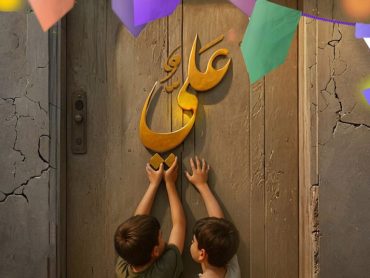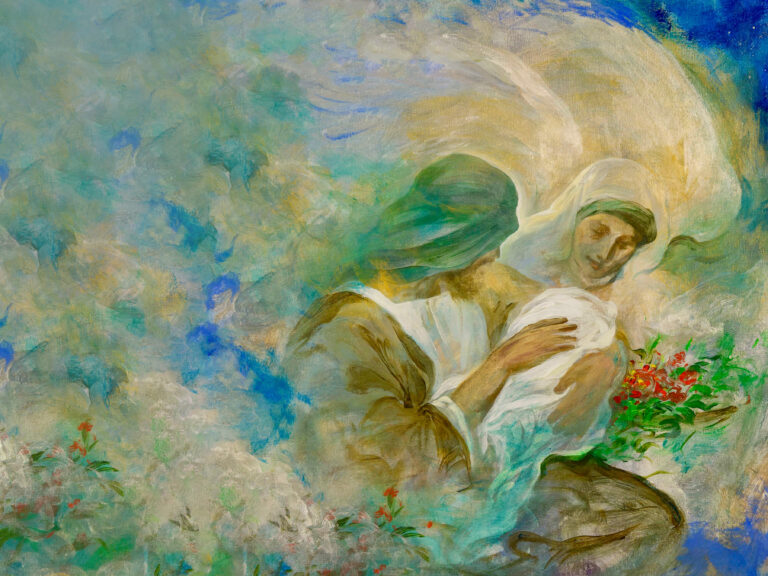
Allamah Muhammad Taqi Majlisi (d. 1070 AH), a renowned Shia scholar of the eleventh century, in explaining a narration from the Messenger of Allah (peace be upon him and his family), offers practical strategies for parents. They show that raising Alawi children requires, above all, conscious planning and linking the love of the Ahl al-Bayt (peace be upon them) with life’s sweet experiences.
In his book Rawdat al-Muttaqin, in explaining the narration “Raise your children upon the love of Ali (peace be upon him),” Allamah Muhammad Taqi Majlisi gives parents three strategies for establishing the love of Amir al-Muminin Ali (peace be upon him) in their children’s hearts:
- Recount the virtues of Amir al-Muminin Ali (peace be upon him) to your children.
- Whenever you obtain something your children like (food, clothing, a gift, and so on), tell them: “These gifts are from Amir al-Muminin (peace be upon him).”
- Whenever a calamity is averted from them, say: “By the blessing of the Master, these calamities have been turned away from you.” [1]
Raise them in this way so that love of him becomes firmly established in their hearts.
Parents must plan for raising Alawi children. Besides telling beautiful and engaging stories of the life and virtues of Amir al-Muminin Ali (peace be upon him) in the family setting, and attending gatherings that recount the virtues and teachings of the Ahl al-Bayt (peace be upon them), they should create and strengthen love for him in children’s hearts in a tangible way.
A child does not yet have the ability to analyze historical and theological questions in depth, but he experiences love. When he receives a gift and the name of Amir al-Muminin (peace be upon him) comes with it, little by little that name becomes joined in his mind with joy, kindness, security, and the sweetness of life. In other words, instead of merely telling the child “Love the Master,” we should let him feel that love in his life. First we plant the seed of love in the child’s heart, then we deepen that love with understanding and knowledge. Of course, it is obvious that love and knowledge must grow side by side.
We can make it so that when our child hears the name of Amir al-Muminin Ali (peace be upon him), he does not merely recall a historical figure, but feels that this name has accompanied all the sweet moments of his life since childhood.
Telling the child, when a calamity is averted, “By the blessing of Amir al-Muminin (peace be upon him), this calamity was kept away from you,” can strengthen his sense of refuge and of turning to Allah through him (tawassul). It also teaches him the truth that in times of hardship and affliction he should seek shelter in that refuge of the world.
References
[1] «…قولوا لَهُم فَضائلَه وَ كُلَّما جِئتُم بِشيء إليهِم ممّا يُحِبّونَه فَقولوا لَهُم جاءَكُم بِهذا عَليُ بن أبيطالِب وَ كُلَّما رُفِعَ عَنهُمُ البَلاءُ فَقولوا لَهُم ذَهَب بِه أميرُالمؤمنين عَليُ بن أبيطالِب عليهالسلام حَتّى يُحِبّون…»
Rawdat al-Muttaqin, vol. 8, p. 644.