The days following the passing of the Prophet (peace be upon him and his family) began with the events of Saqifah and a period of turbulent political upheaval — a difficult era that led to one of the bitterest events in Islamic history: the assault on the house of Amir al-Muminin (peace be upon him). This pressure to extract forced allegiance not only violated the sanctity of the Prophet’s household (peace be upon him and his family), but through the agonizing injuries inflicted upon Lady Fatimah (peace be upon her), led to the martyrdom of her six-month-old unborn child, Muhsin (peace be upon him) — the child whose blessed name had been chosen by the Prophet himself (peace be upon him and his family).
Revisiting Saqifah: The Imam’s Defense of the Quran and the Imamate
Amir al-Muminin’s (peace be upon him) effort to affirm the unbreakable bond between the Quran and the Prophet’s household, amid the political turmoil following the Prophet’s passing (peace be upon him and his family), was met with the coldness of the community and an assault on the sanctity of the Ahl al-Bayt (peace be upon them).
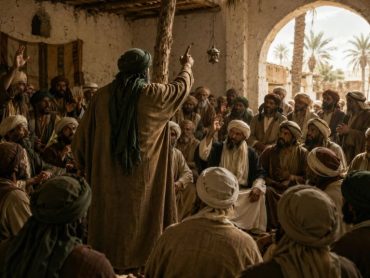
The process of pledging allegiance to Abu Bakr among the Arabs and others took place at the very same time as the burial of the Noble Prophet (peace be upon him and his family) was being completed.
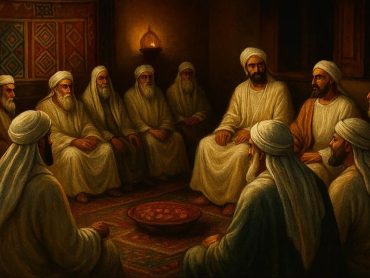
Umar ibn al-Khattab pledged allegiance to Abu Bakr and clasped his hand. Then a group of Arabs who had come to Medina at that time, along with those known as “those whose hearts are to be reconciled,” pledged allegiance to him as well, and others followed suit. News of this reached Amir al-Muminin (peace be upon him) only after he had finished washing, embalming, shrouding, preparing, and burying the Messenger of God (peace be upon him and his family), and performing the funeral prayer over him, together with the Bani Hashim and a group of his companions — among them Salman, Abu Dharr, al-Miqdad, Ammar, Hudhayfah, Ubayy ibn Ka’b, and roughly forty others.
Amir al-Muminin (peace be upon him) then rose, praised and glorified God, and said: “If the Imamate belongs to Quraysh, then I am more deserving of it than all of Quraysh; and if it does not belong to Quraysh, then the Ansar too have a rightful claim.” He then withdrew from them and returned to his house, remaining there together with the Muslims who followed him.
Amir al-Muminin (peace be upon him) said: “I find in five of God’s prophets an example for myself:
In Noah, when he said: My Lord, I have been overcome, so grant me victory.
And in Abraham, when he said: I distance myself from you and from what you worship besides God.
And in Lot, when he said: Would that I had strength against you, or could take refuge in a mighty support.
And in Moses, when he said: I fled from you when I feared you.
And in Aaron, when he said: This people deemed me weak and nearly killed me.”
The Community’s Indifference Toward the Quran and the Imam
Amir al-Muminin’s (peace be upon him) invocation of the Prophet’s hadith on the inseparability of the Quran and the Ahl al-Bayt, as the basis for establishing justice, was met with a firm rejection of both the people’s need for the Book of God and for his guardianship.
After this, Amir al-Muminin (peace be upon him) gathered the Quran, wrapped it in cloth, and brought it before the people — so heavy that the fabric beneath it made a sound under its weight. He said: “This is the Book of God, which I have compiled in the order of its revelation, exactly as the Messenger of God (peace be upon him and his family) commanded and instructed me.”
Some of them said: “Leave it and go.” Amir al-Muminin (peace be upon him) said: “The Messenger of God (peace be upon him and his family) told you: I leave behind among you two weighty legacies — the Book of God and my Ahl al-Bayt. These two shall never be separated from one another until they come to me at the Pool. So if you accept the Book of God, accept me alongside it, that I may judge between you according to the divine rulings within it.”
They said: “We have no need of this book, nor of you. Take it with you; you shall not be separated from it, nor it from you.” So Amir al-Muminin Ali (peace be upon him) turned away from them.
Muhsin: The First Martyr of Wilayah
When the Prophet (peace be upon him and his family) passed to meet his Lord, Amir al-Muminin (peace be upon him) and his followers remained in their house, in accordance with the covenant the Prophet had made with them, and closed the door to others.
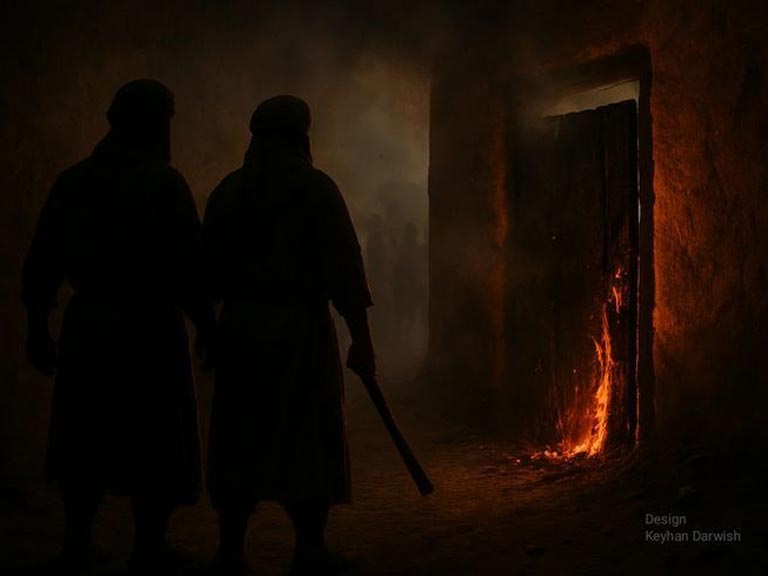
He and his followers remained in their house according to the covenant and instruction the Messenger of God (peace be upon him and his family) had given them. At that point, a group stormed the house, forced their way in, set the door on fire, and dragged Amir al-Muminin (peace be upon him) out by force. And they crushed the leader the Women of the World, Lady Fatimah (peace be upon her), between the door and the wall, to the point that her son Muhsin was martyred.
They then sought to extract allegiance from Amir al-Muminin (peace be upon him), but he refused, saying: “I will not do this.” They said: “We will kill you.” He replied: “If you kill me, I am still a servant of God and the brother of His Messenger.”
They then tried to open his clenched fist to place it upon Abu Bakr’s hand for the pledge, but he had closed it so tightly that they could not pry his fingers apart; so, while his hand remained closed, they forced it against Abu Bakr’s hand by sheer force. [1]
The Bitterest Days of Amir al-Muminin (peace be upon him)
The political and emotional turmoil following the Prophet’s passing (peace be upon him and his family) became bound to the relentless pressure to extract allegiance from Amir al-Muminin (peace be upon him) at Saqifah, marking the bitterest days of his life.
Amr ibn Abi al-Miqdam, a trustworthy narrator of the Imami school and a companion of Imam al-Sajjad, Imam al-Baqir, and Imam al-Sadiq (peace be upon them), narrates from his father, who narrates from his grandfather, that: “There were no two days harder or more painful for Amir al-Muminin Ali (peace be upon him) than these. The first was the day the Messenger of God (peace be upon him and his family) departed this world. As for the second — by God, I was sitting at Saqifat Bani Sa’idah to the right of Abu Bakr while the people were pledging allegiance to him, when Umar said to him: ‘O man! You have accomplished nothing so long as Ali has not pledged allegiance to you. Send someone to bring him to you so he may pledge allegiance.'” The narrator continues: Abu Bakr sent Qunfudh and told him: “Go to Ali and tell him: answer the call of the successor of the Messenger of God (peace be upon him and his family).”
The Assault on the House of Revelation
Amir al-Muminin’s (peace be upon him) effort to gather the scattered verses of the Quran was met with a violent assault by a group of Abu Bakr’s companions on his house, and the breaking down of its door.
Amr ibn Abi al-Miqdam continued: “Amir al-Muminin (peace be upon him) said: The Messenger of God (peace be upon him and his family) commanded me not to leave my house after him until I had gathered the Quran, for it was scattered across palm branches and shoulder bones.” Qunfudh returned and reported Amir al-Muminin’s words to Abu Bakr. Umar said: “Get up and go to that man.” So Abu Bakr, Umar, Uthman, Khalid ibn al-Walid, al-Mughirah ibn Shu’bah, Abu Ubaydah ibn al-Jarrah, and Salim, the freedman of Abu Hudhayfah, all rose, and the narrator went along with them.
Lady Fatimah (peace be upon her) believed that no one would enter her house without her permission, so she pressed the door shut and secured it. When they reached the door, Umar kicked it and broke it — a door made of palm branches. They then entered the house and dragged Amir al-Muminin (peace be upon him) out by the collar.
A Complaint Against the Usurpers of the Caliphate
Lady Fatimah’s (peace be upon her) anguish over the hardships that followed the Prophet’s passing (peace be upon him and his family), and her intent to cry out at the threshold of her Lord, was calmed only by the command of Amir al-Muminin (peace be upon him) and her return home.
Amr ibn Abi al-Miqdam said: Lady Fatimah (peace be upon her) came out and said: “O Abu Bakr and Umar! Do you wish to widow me from my husband? By God, if you do not release him, I will let down my hair, tear open my collar, go to my father’s grave, and cry out before my Lord.” She then left the house, took Imam Hasan and Husain (peace be upon them) by the hand, and set out toward the Prophet’s grave.
Amir al-Muminin (peace be upon him) said to Salman: “O Salman! Hurry to the daughter of Muhammad (peace be upon him and his family), for I see the two ends of Medina trembling and on the verge of being overturned. By God, if she does this, it will not be long before the earth swallows Medina and all who are in it.”
Salman said: I hurried to Lady Fatimah (peace be upon her) and said: “O daughter of the Prophet (peace be upon him and his family)! God, Blessed and Exalted, sent your father as nothing but a mercy; so return.” Lady Fatimah (peace be upon her) said: “O Salman! I can bear no more. Let me go to my father’s grave and cry out before my Lord.”
Salman said: “Ali sent me to you and commanded that you return.” Lady Fatimah (peace be upon her) said: “I hear his word and I obey.” And so she returned.
Forced Allegiance
After Amir al-Muminin (peace be upon him) was seized and confronted beside the Prophet’s grave, he was taken to Saqifah, where, under Umar’s intense pressure, he was threatened with death to force his allegiance.
Amr ibn Abi al-Miqdam continued the account: “At that moment, Amir al-Muminin (peace be upon him) was dragged out by the collar. Al-Zubayr, who had drawn his sword, came forward and cried out: ‘O sons of Abd al-Muttalib! Is this how Ali is treated while you still live?!’ He then charged at Umar to strike him with his sword. Khalid ibn al-Walid threw a stone that struck the back of his head, and the sword fell from his hand. Umar picked it up, struck it against a rock, and broke it.
Amir al-Muminin (peace be upon him) passed by the Prophet’s grave (peace be upon him and his family) and said with grief: ‘O son of my mother! This people have deemed me weak and humiliated me, and they are on the verge of killing me.'”
The narrator continues: Amir al-Muminin (peace be upon him) was brought to Saqifah, before Abu Bakr. Umar said to him: “Pledge allegiance.” The Imam replied: “And if I do not?” Umar said: “Then, by God, we will strike off your head.”
Amir al-Muminin (peace be upon him) said: “Then, by God, you will have killed a servant of God and the brother of the Messenger of God (peace be upon him and his family).” Umar said: “That you are a servant of God who is killed — yes; but that you are the brother of the Messenger of God (peace be upon him and his family) — no.” This exchange was repeated three times between them.
At this point, al-Abbas stepped forward and said: “O Abu Bakr! Deal gently with my nephew. I pledge myself that he will give you his allegiance.” Al-Abbas then took Amir al-Muminin’s (peace be upon him) hand and pressed it upon Abu Bakr’s hand, and they released the Imam while he remained filled with anger.
Amir al-Muminin (peace be upon him) raised his head to the sky and said: “O God! You know that the Prophet (peace be upon him and his family) told me: If their number reaches twenty, fight them. And this is Your own word in Your Book, where You said: If there are twenty of you who are steadfast, they will overcome two hundred. O God! They have not yet reached twenty.” He repeated this three times, then turned back. [2]
A Mark of Disgrace Upon Mughirah’s Forehead
One of the most striking arguments made by Imam al-Hasan (peace be upon him) in confronting Mu’awiyah and his companions came when, recalling the suffering of Lady Fatimah (peace be upon her), he sealed the grave sin of al-Mughirah ibn Shu’bah and his disrespect toward the station of the Prophet (peace be upon him and his family).
Among the arguments Imam al-Hasan (peace be upon him) raised against Mu’awiyah and his companions was when he addressed al-Mughirah ibn Shu’bah, saying: “You are the very one who struck Fatimah, the daughter of the Messenger of God, and left her body bloodied — and it was for this reason that she lost her unborn child.”
Imam al-Hasan (peace be upon him) went on to address the motive behind this act, saying: “You did this because you sought to belittle the Messenger of God (peace be upon him and his family), and to dishonor him by defying his command.”
Recalling the exalted station of his mother, the Imam continued: “And yet the Prophet (peace be upon him and his family) said to the pure Lady Zahra: ‘O Fatimah! You are the leader of the women of Paradise.’ So know, O Mughirah, that God will make you fuel for the fire of Hell.” [3]
References
[1] Ithbat al-Wasiyyah, p. 146.
[2] Al-Ikhtisas by al-Mufid, vol. 1, p. 185.
[3] Bihar al-Anwar, vol. 43, p. 197.