Historical reports point to other measures that Amir al-Muminin (peace be upon him) took to prevent her burial place from being identified. Leveling the ground over the grave, creating decoy graves, and the presence of forty fresh graves in al-Baqi are among the measures mentioned in historical and narrative sources. Examining this evidence sheds further light on how her grave came to remain hidden.
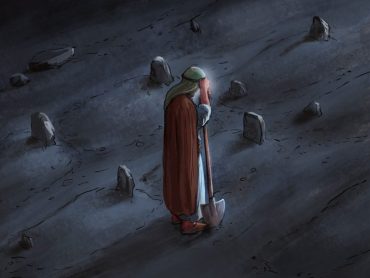
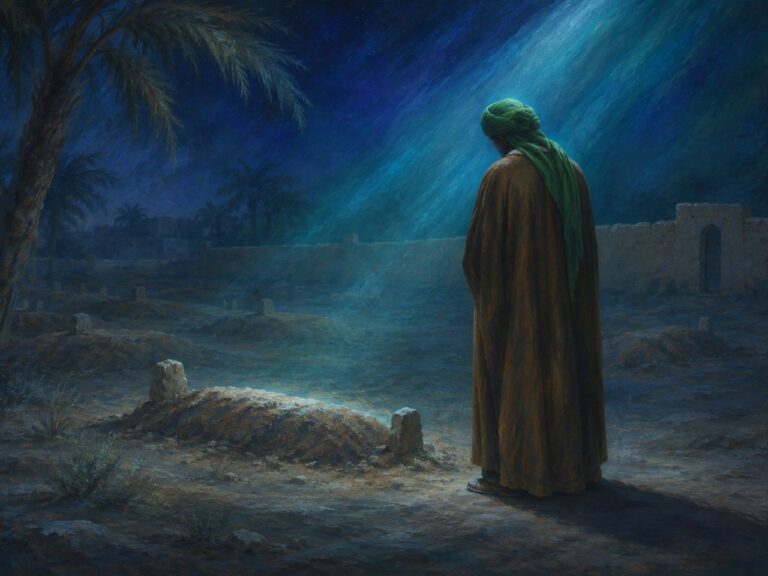
In Dalail al-Imamah, after describing how Lady Fatimah al-Zahra (peace be upon her) was buried at night, the text speaks of leveling the ground over the grave and erasing its traces. The report goes on to describe the state of al-Baqi the next morning: forty fresh graves could be seen there. This raises the presence of numerous graves in connection with the concealment of her burial place.[1]
Al-Hidayah al-Kubra also mentions a group of people who went to al-Baqi after her burial. They found forty fresh graves and could not tell which one belonged to the daughter of the Prophet (peace be upon him and his family). This led them to protest and blame one another, since the number of graves had made it impossible for them to identify her burial place.[2]
In Manaqib Al Abi Talib, Ibn Shahr Ashub records further measures taken to keep her burial place hidden. According to one report, Amir al-Muminin (peace be upon him) sprinkled water over forty graves so that her grave could not be distinguished from the others. The text then speaks of leveling the ground over her grave and creating seven decoy graves around it, a measure taken so that her grave would not be recognized. Each of these points to a different aspect of the steps taken to keep her burial place unknown, from leveling the grave and erasing its markers to sprinkling water over many graves and creating decoys.[3]
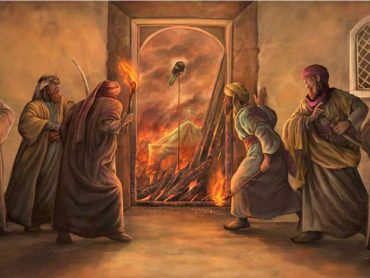
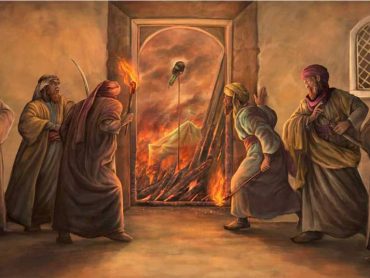
Another report in the historical sources tells of a group who tried to identify her grave and decided to dig up the graves of al-Baqi. According to this account, when Amir al-Muminin (peace be upon him) learned of their decision, he came to al-Baqi and warned that if even one of those graves were dug up, he would deal with them using his sword. In response, the group abandoned their plan. This report shows that the actions of Amir al-Muminin (peace be upon him) were not limited to concealing the grave’s markers. He also stood firm against attempts to identify and dig up the graves, preventing her burial place from being revealed.[4]
Taken together, this evidence shows that the concealment of the burial place of Lady Fatimah al-Zahra (peace be upon her) was not merely the result of her burial at night. It was accompanied by a series of deliberate measures by Amir al-Muminin (peace be upon him). The creation of numerous graves, the erasing of the grave’s markers, and the prevention of any digging up of graves all served to preserve this concealment. These measures should be considered alongside the will of Lady Fatimah, the Truthful and Pure (peace be upon her), regarding burial at night and the absence of certain individuals from her funeral and the prayer over her body, a combination that ultimately left the location of her grave unknown.
References
- «و أصبَحَ البَقيعُ لَيلَةَ دُفِنَت و فيهِ أربَعونَ قَبراً جُدَداً» (Dalail al-Imamah, p. 136)
- «فَاستَشكَلَ عَلَيهِم قَبرُها بَينَ تِلكَ القُبورِ فَضَجَّ النّاسُ» (Al-Hidayah al-Kubra, vol. 1, p. 177)
- «أنَّهُ رَشَّ أربَعينَ قَبراً حَتَّى لا يَبينَ قَبرُها» (Al-Manaqib, vol. 3, p. 363)
- «لَو نَبشتُم قَبراً مِن هَذِهِ القُبورِ لَوَضَعتُ السَّيفَ فيكُم» (Awalim al-Ulum, vol. 11, p. 1115)