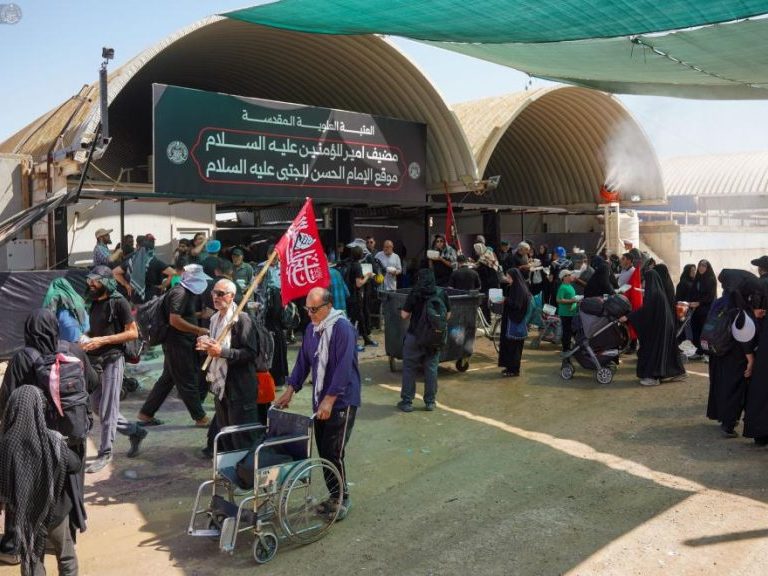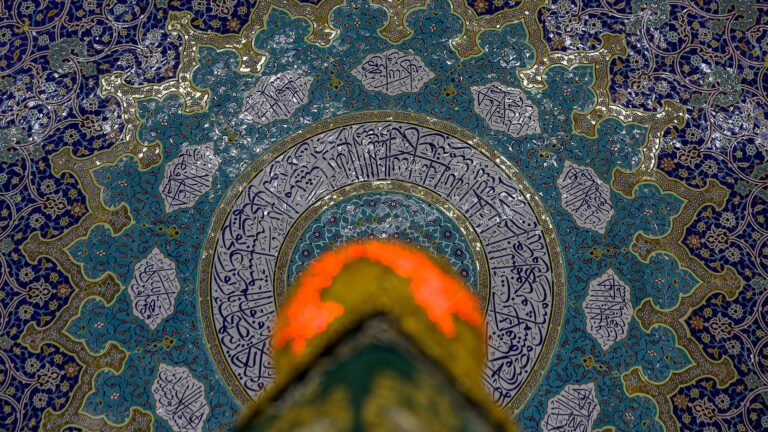
Yet a detail that has received far less attention is this: this shrine is the one most closely resembling the Holy Shrine of Amir al-Muminin (peace be upon him).
The original core of this shrine was the house of Imam al-Hadi (peace be upon him) which he purchased for himself and his esteemed family after being exiled to Samarra by order of the Abbasid caliph al-Mutawakkil.
Following the martyrdom of Imam al-Hadi at the hands of the Abbasids, this same house became his burial site and, later, that of Imam Hasan al-Askari (peace be upon him) as well. For several years, it served as a clandestine place of pilgrimage for Shia Muslims.
This continued until the year 333 AH, when Nasir al-Dawla al-Hamdani built a dome over the graves of the two Imams. The Buyids (Daylamites) subsequently placed an exquisite case over the sacred tomb and rebuilt the dome and shrine chamber in the finest manner.
But from what point did this luminous shrine come to resemble the Holy Shrine of Amir al-Muminin?
Mir Abd al-Latif Khan Shushtari, the Qajar-era travel writer, records in his book Tuhfat al-‘Alam:
Ahmad Khan of Khoy, one of the governors of Azerbaijan, dispatched Mirza Muhammad Rafi’ to Samarra with a considerable sum to rebuild the exalted shrine in the manner of the sacred threshold of Najaf. Having obtained permission from the Pasha, skilled Iranian architects began the work.
It was during this same period, in accordance with the will of Amir Kabir, that a comprehensive restoration–including the gilding of the dome and the repair and tiling of the courtyard and portico–was carried out using his personal funds. It was this very shrine that the Wahhabis destroyed in Muharram 1427 AH.
Today, even as the restoration of this holy shrine continues, the cry of the oppression endured by Amir al-Muminin and his infallible children(peace be upon them) reaches attentive ears louder than ever before.