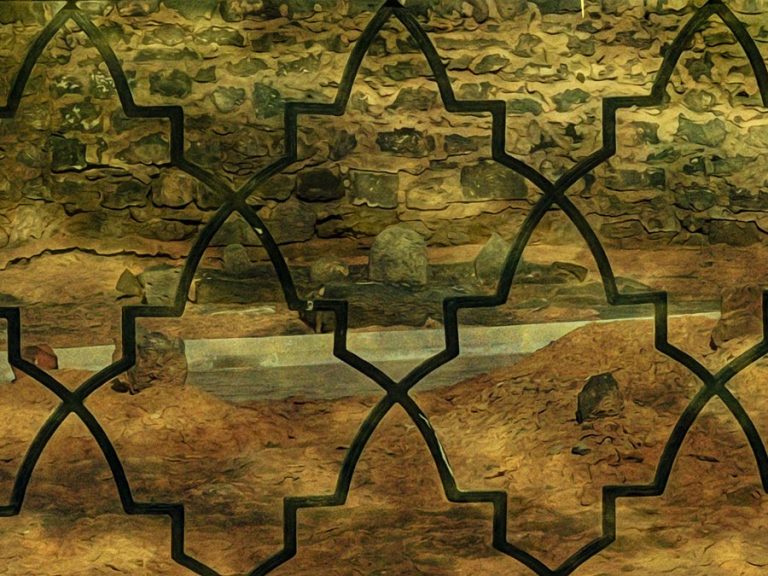
Imam Jafar al-Sadiq (peace be upon him) was born on the 17th of Rabi al-Awwal, 83 AH, in Medina. His esteemed father, Imam al-Baqir (peace be upon him), named him “Jafar” after his ancestor’s uncle, Jafar al-Tayyar. His noble mother, known by the kunyah “Umm Farwah,” was among the righteous women of her era.
In the constellation of the teachings of the Ahl al-Bayt, Imam al-Sadiq (peace be upon him), by linking the creation of the Seal of the Prophets and Amir al-Muminin (peace be upon him) from divine light to the historical reality of Ghadir, portrays the wilayah of the Master of the Pious as the compass of faith. In this series of narrations, he presents wilayah not as one pillar alongside the other precepts, but as the “key” to all the foundations of religion and the sole path to salvation — a truth so profound that it compels Iblis, on the Day of Ghadir, to confess his historic defeat before the steadfastness of Amir al-Muminin’s followers.
The Creation of Light
The creation of the Seal of the Prophets and Amir al-Muminin (peace be upon him) from divine light, prior to the creation of the world, reveals the exalted station of prophethood and Imamate before God.
Imam al-Sadiq (peace be upon him) said:
“The Messenger of God (peace be upon him and his family) and Amir al-Muminin Ali (peace be upon him) were a light before Almighty and Majestic God two thousand years before the creation of the world and all beings. When the angels beheld that light, they found a firm root from which a branch and a radiant beam had extended. So they said: ‘O our Lord and Master! What is this light?’ The Almighty and Glorious God revealed to them: ‘This is a light from My light; its root is prophethood and its branch is Imamate. Prophethood belongs to Muhammad (peace be upon him and his family), My servant and messenger, and Imamate belongs to Ali ibn Abi Talib (peace be upon him), My proof and guardian; and had it not been for these two, I would not have created My creation.'” [1]
Adam’s Supplication Through the Names of the Throne
Prophet Adam’s supplication through the lights of the Prophet (peace be upon him and his family) and Amir al-Muminin (peace be upon him) reveals the truth of the bond between creation and wilayah. Imam Jafar al-Sadiq (peace be upon him) said:
“When Adam committed his transgression, he turned to God by invoking Muhammad and his Ahl al-Bayt (peace be upon them), making them the means of his forgiveness.” Then God revealed to him: “O Adam! How did you come to know Muhammad?” Adam said: “When You created me, I raised my head and saw written upon the Throne: Muhammad (peace be upon him and his family) is the Messenger of God, and Ali ibn Abi Talib (peace be upon him) is Amir al-Muminin.” [2]
The Criterion for Measuring Faith
The placement of Amir al-Muminin (peace be upon him) as the sign between God and His servants clarifies for humanity the boundary between faith and disbelief.
Al-Mufaddal, a student and companion of Imam al-Sadiq (peace be upon him) and Imam Musa al-Kazim (peace be upon him), narrates from Imam Jafar al-Sadiq (peace be upon him) that he said:
“Indeed, the Almighty and Glorious God has made Amir al-Muminin Ali (peace be upon him) a sign and banner of guidance between Himself and His creation, and there is no sign between Him and mankind other than him. Thus, whoever affirms his wilayah is a believer, whoever denies it is a disbeliever, whoever fails to recognize him is astray, whoever places another wilayah alongside his is a polytheist, whoever comes before God holding to his wilayah enters Paradise, and whoever denies it enters the Fire.” [3]
Gabriel’s Testimony to the Covenant of Ghadir
The emphasis of the angel of revelation on the firmness of the Prophet’s covenant (peace be upon him and his family) with Amir al-Muminin (peace be upon him) reveals the fate of those who broke the covenant of Ghadir.
Imam Jafar al-Sadiq (peace be upon him) said:
“When the wilayah of Amir al-Muminin Ali (peace be upon him) was proclaimed by God and the Messenger of God (peace be upon him and his family) conveyed it to those present, a man among the gathering said: ‘The Prophet has bound so firm a covenant for this man that after him, none but a disbeliever will break it.'” At that, Umar ibn al-Khattab went to him and asked: “O servant of God, who are you?” But he remained silent and gave no answer. Umar came to the Messenger of God (peace be upon him and his family) and said: “O Messenger of God, I saw a man among the people saying: ‘The Prophet bound so firm a covenant for this man that none but a disbeliever will break it.'” The Prophet (peace be upon him and his family) said: “O Umar! That person was Gabriel; so beware lest you become one of those who break this covenant and turn away from the truth.” [4]
Divider of Paradise and Hellfire
The division of Paradise and Hellfire at the hands of Amir al-Muminin (peace be upon him) on the Day of Resurrection is a manifestation of his exalted station on that day, and shows his peerless standing among creation.
Imam Jafar al-Sadiq (peace be upon him) said:
“When the Day of Resurrection is established, a pulpit will be raised before the eyes of all creation. A man will stand atop it, with two angels at his right and left. The angel on the right will call out: ‘O creation! This is Ali ibn Abi Talib (peace be upon him), master of Paradise; he admits into it whomever he wills.’ And the angel on the left will call out: ‘O creation! This is Ali ibn Abi Talib (peace be upon him), master of Hellfire; he casts into it whomever he wills.'” [5]
The Reality of the Itrah in the Hadith of the Two Weighty Things
Regarding the meaning of “itrah” in the Hadith of the Two Weighty Things, Amir al-Muminin (peace be upon him) identifies the twelve Imams as the perpetual companions of the Quran.
Imam al-Sadiq (peace be upon him), narrating from his noble forefathers, related from Sayyid al-Shuhada (peace be upon him) that it was asked of Amir al-Muminin (peace be upon him) regarding the meaning of the Messenger of God’s saying (peace be upon him and his family): “Indeed I leave behind among you the two weighty things: the Book of God and my itrah — I leave behind among you two precious legacies: the Book of God and my progeny.” They asked: “Who are the itrah?” He said:
“Myself, Hasan, Hussain, and nine Imams from the line of Hussain, the ninth of whom is al-Mahdi, the Qaim of the Ahl al-Bayt. These will never be separated from the Book of God, nor will the Quran ever be separated from them, until they meet the Messenger of God (peace be upon him and his family) at the pool of al-Kawthar.” [6]
The Condition for Accepting Tawhid
The inseparable bond between tawhid and the acceptance of the wilayah of Amir al-Muminin (peace be upon him) and the infallible Imams illuminates the path to attaining divine mercy and pleasure.
Imam Jafar al-Sadiq (peace be upon him), narrating from his pure forefathers (peace be upon them), related that the Messenger of God (peace be upon him and his family) said:
“Gabriel brought a message from the Almighty and Glorious Lord, that God said: Whoever knows that there is no god but Me alone, that Muhammad (peace be upon him and his family) is My servant and messenger, that Ali ibn Abi Talib (peace be upon him) is My khalifah and successor, and that the Imams from his line are My proofs — I shall admit him into Paradise through My mercy, deliver him from the Fire through My forgiveness, grant him the neighborhood of My presence, make My honor certain for him, perfect My blessing upon him, and count him among My chosen and select servants; if he calls upon Me I answer him, if he calls upon Me I respond to him, if he asks I grant him, if he remains silent I am the first to bestow, if he stumbles I show him mercy, if he flees I call him back, if he returns I accept him, and if he knocks upon My door I open it to him.
But whoever does not testify to My oneness, or affirms it yet does not accept the messengership of Muhammad (peace be upon him and his family), or accepts the messengership yet does not accept the khilafah of Ali ibn Abi Talib (peace be upon him), or accepts his succession yet rejects the Imamate of his descendants, has been ungrateful for My blessing, has belittled My majesty, and has disbelieved in My signs and My books; if he comes to Me I deprive him, if he asks I withhold from him, if he calls upon Me I do not answer him, if he supplicates I do not respond to him, and if he hopes I disappoint him; this is his punishment, and I never wrong My servants.”
Then Jabir ibn Abdullah al-Ansari rose and asked: “O Messenger of God! Who are the Imams from the line of Ali ibn Abi Talib (peace be upon him)?” The Prophet (peace be upon him and his family) said:
“Hasan and Hussain, the two masters of the youth of Paradise; then the master of the worshippers of his age, Ali ibn al-Hussain; then al-Baqir, Muhammad ibn Ali — and O Jabir, you will meet him, so when you see him, convey my greetings to him. After him al-Sadiq, Jafar ibn Muhammad; then al-Kazim, Musa ibn Jafar; then al-Rida, Ali ibn Musa; then al-Taqi, Muhammad ibn Ali; then al-Naqi, Ali ibn Muhammad; then al-Zaki, Hasan ibn Ali; and after him his son, the one who rises with truth, al-Mahdi of my nation, he who will fill the earth with justice and equity just as it had been filled with oppression and tyranny.
O Jabir! These are my successors, my wasis, my sons, and my household; obedience to them is obedience to me, and disobedience to them is disobedience to me, and whoever denies them or any one of them has denied me. It is by their blessing that God holds up the sky lest it fall upon the earth save by His leave, and keeps the earth still lest it tremble and destroy its inhabitants.” [7]
The Presentation of Religion to Imam al-Sadiq (peace be upon him)
Belief in the wilayah of Amir al-Muminin (peace be upon him) and the Imams after him is the foundation for the acceptance of religion and the believer’s bond of wilayah with the Ahl al-Bayt.
The narrator says:
“I came before Imam Jafar al-Sadiq (peace be upon him) and said: ‘I wish to present my religion and belief to you, though I believe my faith to be complete.'” The Imam said: “Speak.” I said: “I bear witness that there is no god but Allah, and that Muhammad is His servant and messenger, and I believe in all that he brought from God. I also believe that Ali is an Imam whose obedience God has made obligatory; whoever recognizes him is a believer, whoever fails to recognize him is astray, and whoever rejects him is a disbeliever.” Then I named the Imams (peace be upon them) one by one until I reached Imam al-Sadiq (peace be upon him). The Imam then said: “What do you want from me? Do you wish, on the basis of this very belief, to establish a bond of friendship and wilayah between me and you? On the basis of these very beliefs, I accept your wilayah and your bond.” [8]
Wilayah: The Key to the Pillars of Islam
The precedence of the wilayah of Amir al-Muminin (peace be upon him) and the Ahl al-Bayt over the other pillars of religion reveals the place of Imamate in the fulfillment of divine precepts.
Zurarah, a narrator of hadith and a companion of Imam al-Baqir (peace be upon him) and Imam Jafar al-Sadiq (peace be upon him), narrates from Imam Jafar al-Sadiq (peace be upon him) that he said:
“Islam is built upon five pillars: prayer, zakat, hajj, fasting, and wilayah.”
Zurarah says: I asked: “Which of these pillars is the most excellent?” The Imam said:
“Wilayah is the most excellent of them all, for wilayah is the key to all those pillars, and the Imam and guardian is the people’s guide to fulfilling them.” [9]
The narrations of Imam al-Sadiq (peace be upon him) are the clearest lamp for understanding the truth of wilayah. He was, in truth, the foremost standard-bearer in introducing the heavenly station of Amir al-Muminin (peace be upon him) to the world.
References
[1] Bihar al-Anwar, vol. 15, p. 11
[2] Bihar al-Anwar, vol. 27, p. 7
[3] Amali al-Tusi, vol. 1, p. 410; al-Muhtadar, vol. 1, p. 93
[4] Bihar al-Anwar, vol. 31, p. 593
[5] Ilal al-Sharayi, vol. 1, p. 164
[6] Uyun Akhbar al-Rida (peace be upon him), vol. 1, p. 57
[7] Kamal al-Din wa Tamam al-Nimah, vol. 1, p. 258
[8] Rijal al-Kashshi, vol. 1, p. 424
[9] Al-Mahasin, vol. 1, p. 286