His Esteemed Rank on the Day of Judgment
Imam al-Sadiq (peace be upon him) said:
“On the Day of Resurrection, the first prophet to be questioned will be Noah (peace be upon him). He will be asked, ‘Did you convey the message?’ He will reply, ‘Yes, my Lord.’
Then it will be said to him, ‘Who bears witness for you?’ He will answer, ‘Muhammad ibn ‘Abdillah.’
Thus, Prophet Noah will come before the Seal of the Prophet (peace be upon him and his family) and the Commander of the Faithful (peace be upon him). The Prophet will then instruct Hamzah and Jafar ibn Abi Talib (peace be upon them) to testify on behalf of Noah and all other prophets that they indeed fulfilled their divine missions.”
When the narrator asked about the position of Imam Ali (peace be upon him), the Imam replied:
“The rank of the Commander of the Faithful (peace be upon him) is far greater than to bear witness for the prophets.”
“If Jafar and Hamzah were still alive”
Allamah al-Majlisi (may Allah sanctify his soul) writes:
“Al-Kulayni narrated from Imam Muhammad al-Baqir (peace be upon him) that when asked why the Banu Hashim lost their visible power and prestige after the Prophet’s demise—so much so that the Commander of the Faithful (peace be upon him) was subdued by Abu Bakr and Umar—the Imam (peace be upon him) replied:
‘Who remained from Banu Hashim? Jafar and Hamzah, who were firm in faith and pioneers in religion, had passed away. Those who remained—‘Abbas and ‘Aqil—were weak in faith and had recently embraced Islam. They were even captured in Badr and later released. Their faith lacked strength.
Had Hamzah and Jafar been alive during that tribulation, Abu Bakr and Umar would never have dared to usurp the right of Ali (peace be upon him), and if they had tried, they would surely have been slain.’”
The Most Virtuous Deeds in the Words of Jafar ibn Abi Talib and Hamzah ibn Abd al-Muttalib (peace be upon them)
The eminent Ismaili scholar Qadi al-Numan al-Maghribi narrated:
“The Prophet (peace be upon him and his family) once led the dawn prayer with us. After the prayer, he turned and said,
‘In my dream, I saw my uncle Hamzah ibn Abd al-Muttalib and my brother Jafar ibn Abi Talib in Paradise. Before them was a platter of red berries, which then turned into grapes, and then into dates. They ate from it each time.
I approached them and said, “May my parents be your ransom! What deed did you find to be the best?”
They replied, “O Messenger of Allah, the best of deeds are sending blessings upon you, giving drink to the thirsty, and loving Ali ibn Abi Talib (peace be upon him).”’”
The Martyrdom of Jafar ibn Abi Talib (peace be upon him)
In the eighth year after Hijrah, when the Prophet’s envoy Harith ibn Umayr al-Azdi was martyred by the governor of Mutah in the region of Balqa (present-day Karak, Jordan), the Prophet (peace be upon him and his family) organized a campaign and appointed three commanders—one of whom was Jafar ibn Abi Talib.
The Muslim army of three thousand faced the vast Byzantine and Ghassanid forces. Jafar fought valiantly until both his hands were severed while holding the banner of Islam, yet he would not let it fall. The Prophet later said:
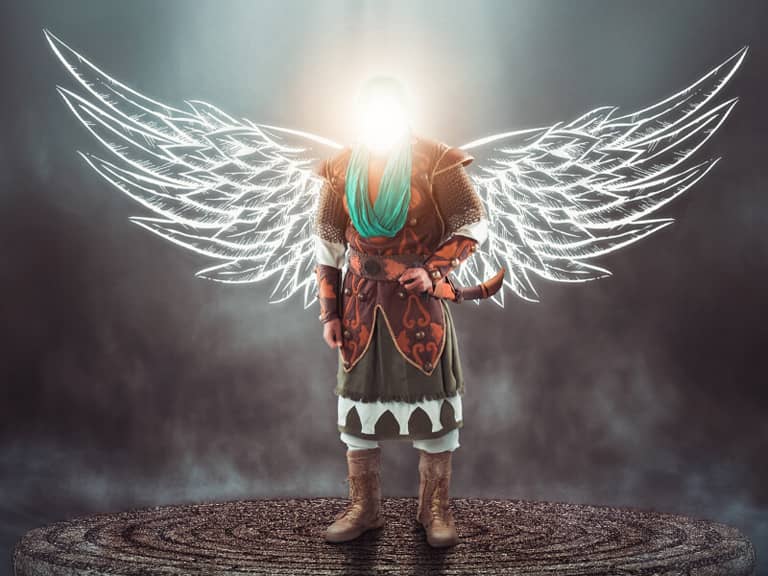
“Allah has granted Jafar two wings of ruby in place of his hands, and he flies with the angels in Paradise wherever he wishes.”
For this, the Prophet bestowed upon him the noble titles “al-Tayyar” (the Winged) and “Dhu al-Janahayn” (the Possessor of Two Wings).
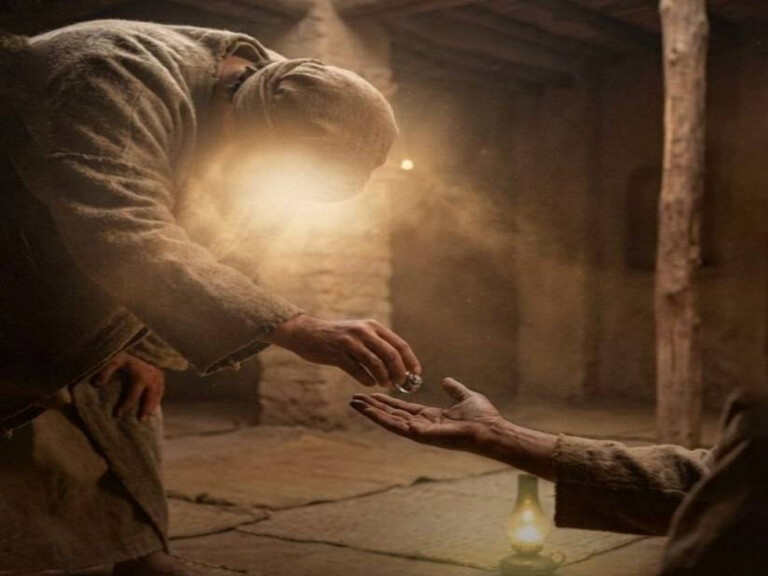
On the day of his martyrdom, the Prophet (peace be upon him and his family) gathered the people of Madinah, announced the events of Mutah, and proclaimed Jafar a martyr in the cause of Allah. He was forty-one years old at the time of his martyrdom. The Prophet also honored him with the title “Abu al-Masakin” (Father of the Poor) for his lifelong compassion and generosity toward the needy.
The Resting Place of Jafar al-Tayyar (peace be upon him)
The blessed shrine of Jafar al-Tayyar and his companions lies in the town of al-Mazar, near Mutah in the Karak region of Jordan. Historical sources note that Sultan Baybars I of Egypt later restored the site and built a beautiful dome and sanctuary over his resting place—preserving the memory of one of Islam’s earliest heroes and most selfless martyrs.