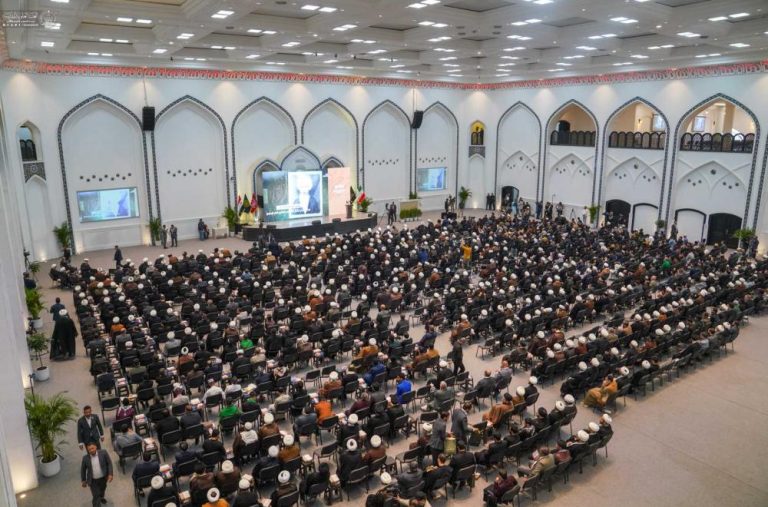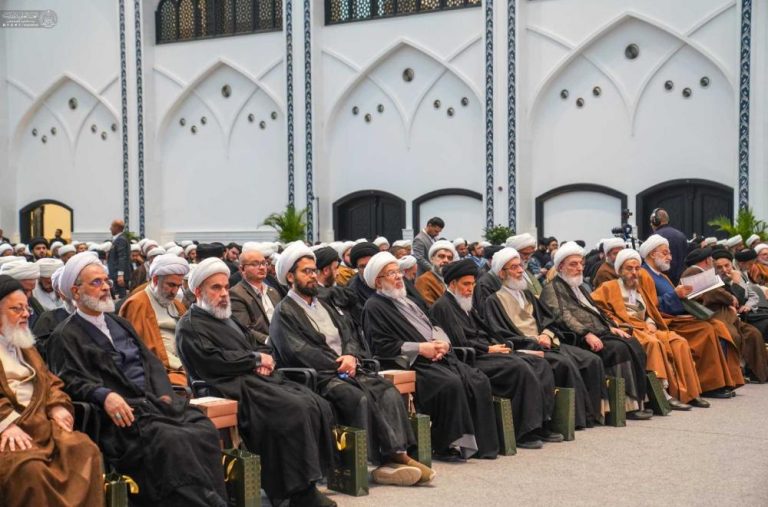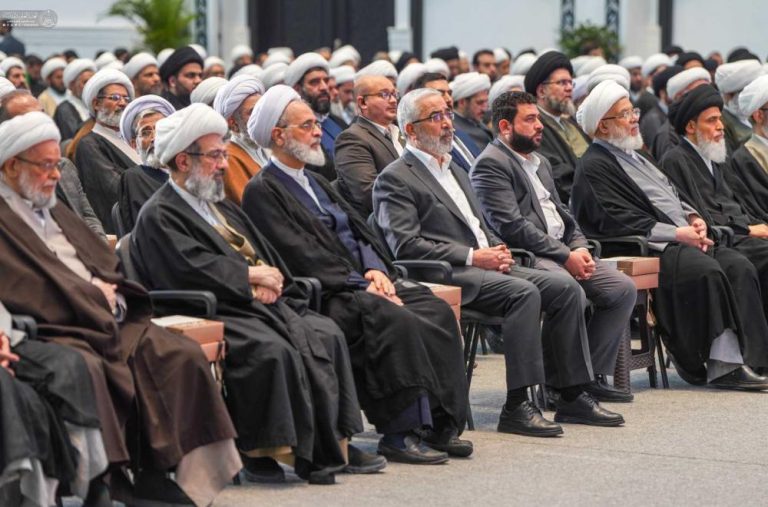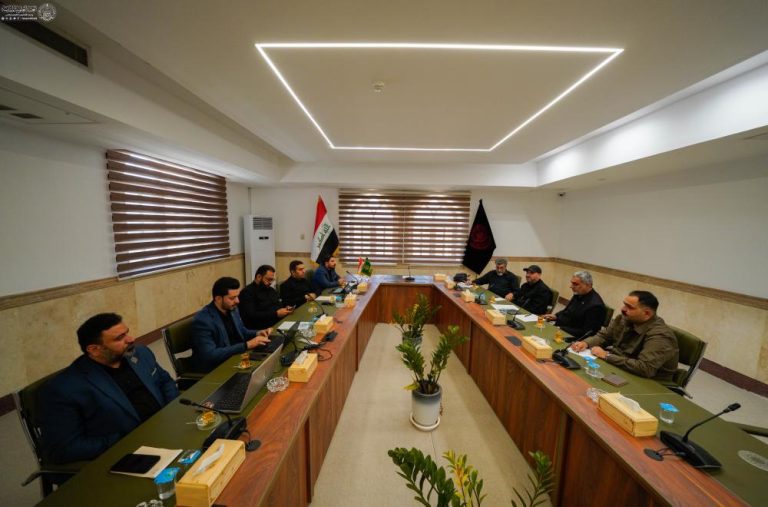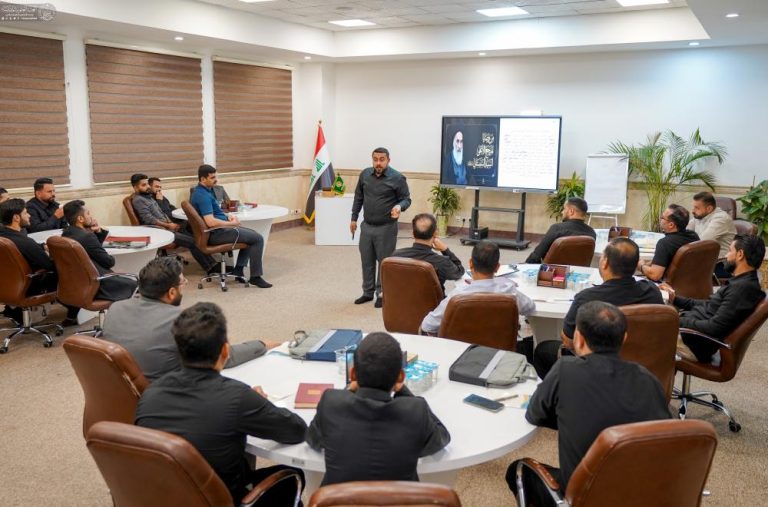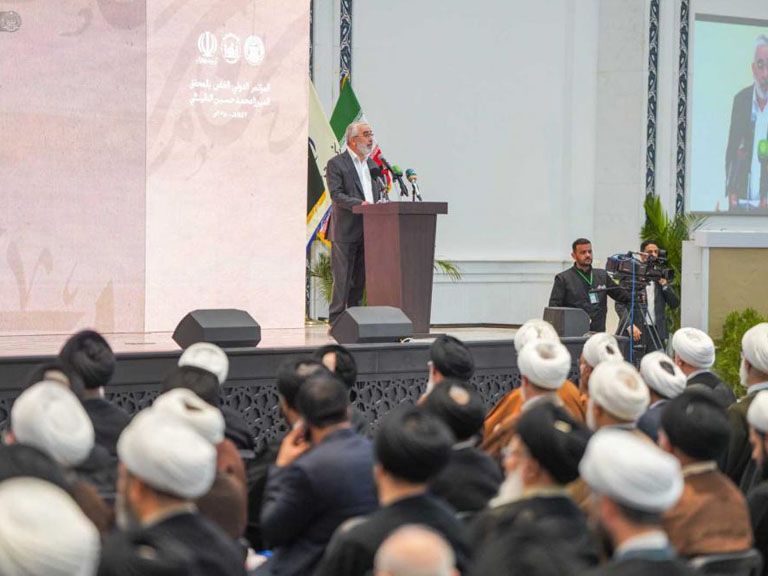
In his opening remarks at the inauguration ceremony of the Allamah Naini Conference, Sayed Isa al-Khirsan, Custodian of the Imam Ali Holy Shrine, stated that recalling the illuminating life and scholarly path of the distinguished jurist, Mirza Naini, in the precincts of the Holy Shrine of Amir al-Muminin (peace be upon him), is in truth a remembrance of the very spirit of the Najaf School—its authenticity, continuity, and its enduring expression in jurisprudence, theology, and ethics.
Sayed al-Khirsan remarked:
“Today, beneath the shade of the seminary’s tree of knowledge and piety, we have gathered to honor the memory of one of the great jurists, religious authorities, and pillars of the noble school of Najaf—the eminent scholar, the investigative jurist, Grand Ayatollah Shaikh Muhammad Hussain Naini.”
He emphasized that commemorating his life and legacy is, in effect, a commemoration of the spirit of the Najaf School—its authenticity, its enduring continuity, and its steadfast presence throughout the fields of jurisprudence, belief, and morality. He noted that this school, across the long period extending from the Occultation to the blessed advent, has advanced—before God and under the gaze of the Master of the Age (may God hasten his reappearance)—with divine support and providence, grounded firmly upon piety, justice, the protection of religion, the safeguarding of human life, and the preservation of noble human values.
Mirza Naini: A Living Pillar of the Seminary
Sayed al-Khirsan continued:
“Mirza Naini was among those distinguished individuals who combined profound juridical insight with a civilizational and mission-oriented awareness. His intellectual vision represented an extension of the Imami tradition of ijtihad and constituted a defining turning point in the formulation and refinement of foundational principles. The seminaries recognized him for his extensive scholarly output, his precision in addressing intellectual, scientific, and biographical issues, and his reliance on rational argument and logical demonstration.
These qualities made him one of the guiding pillars of scholarly leadership within the seminary—one of the prodigies of his era and a foundational figure of the Sharia, whose works remain alive to this day in the methods of academic inquiry and research.”
Researcher Naini: “A Nation in a Single Man”
The Custodian of the Imam Ali Holy Shrine further stated:
“The brilliance of Researcher Naini was not confined to his lectures or academic investigations; it extended to the broader concerns of the Muslim community as well.
He was among the pioneers of modern Islamic political thought. His monumental work, Tanbih al-Ummah wa Tanzih al-Millah, articulated the concepts of justice, freedom, and responsibility from an authentic jurisprudential perspective, offering a vivid example of dynamic ijtihad deeply connected to the lived realities of the community.
In examining the hardships faced by society, he traced their roots to two interrelated causes: ignorance and poverty. He would say that ignorance is, at its core, a form of poverty, and poverty is, in essence, a form of ignorance. This insight was one of the most remarkable reflections of his intellectual acuity and scholarly genius.
Allamah Naini was truly “a nation embodied in one man”—combining within himself knowledge, piety, reason, integrity, steadfastness in jurisprudence, and vigilance toward public affairs.
To recall his life is to recall the spirit of the Najaf School in its authenticity and continuity—a school that binds knowledge to responsibility and views ijtihad as both a historical mission and a model for the concept of divine stewardship.”
In conclusion, Sayed al-Khirsan expressed his gratitude to all those who have contributed to preserving the memory and perpetuating the name of this eminent jurist.