
In the final years of his blessed life, Imam al-Sadiq (peace be upon him) emphasized the love and guardianship (Wilayah) of Ali ibn Abi Talib (peace be upon him) more than ever before. These luminous declarations, issued during the harsh pressures of the Abbasid era and near the time of his martyrdom, show that Imam al-Sadiq (peace be upon him) made his most vital message the continuation of the very truth centered around Amir al-Muminin (peace be upon him).
Date and Place of Martyrdom
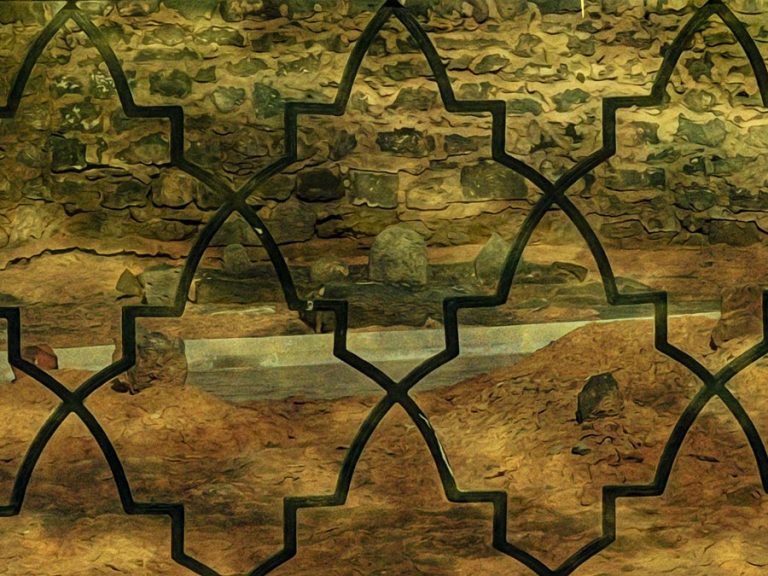
Imam Jafar al-Sadiq (peace be upon him), the head of the Jafari school and the sixth Imam of the Shias, revitalized the Shia faith during the course of his imamate. He was poisoned and martyred by Mansur al-Dawaniqi on the 25th of Shawwal in the year 148 AH, at the age of sixty-five. His holy body was laid to rest in the Baqi cemetery alongside the grave of his noble father. [1] [2]
The Scientific Movement and Actions of Imam al-Sadiq (peace be upon him)
Capitalizing on the favorable political climate and the pressing needs of society, Imam al-Sadiq (peace be upon him) continued the scientific and cultural movement initiated by his father, training great scholars in various traditional and rational sciences. He had more than 4,000 students, through whom he expanded Shia jurisprudence (Fiqh), theology (Kalam), and the teachings of Amir al-Muminin (peace be upon him), clarifying its fundamental principles and foundations.
The Status of Amir al-Muminin (peace be upon him) in the Words of Imam al-Sadiq (peace be upon him)
Through the interpretation of divine verses, Imam al-Sadiq (peace be upon him) describes the unparalleled status of Imam Ali (peace be upon him) on the Day of Resurrection. It is narrated that Yunus ibn Abd al-Rahman quotes Abu Ya’qub, who said: I recited this verse to Imam al-Sadiq (peace be upon him):
“When they see it [the punishment or the truth] near at hand, the faces of those who disbelieved will be distorted with grief, and it will be said: ‘This is that which you were calling for in haste.'” (Al-Mulk: 27)
Imam al-Sadiq (peace be upon him) said:
“When so-and-so and so-and-so behold the station and rank of Amir al-Muminin (peace be upon him) on the Day of Resurrection, and when Almighty God entrusts the Banner of Praise (Liwa al-Hamd) to the Holy Prophet (peace be upon him and his family)—while all the archangels and every prophet of God stand beneath that banner—the Prophet will then hand that banner to Ali ibn Abi Talib (peace be upon him).
In that moment, the faces of the disbelievers will darken and become distraught with intense sorrow and disgrace, and it will be said to them: ‘This is the very thing you sought with such haste.’ This refers to the very rank you once coveted and the title of ‘Commander of the Faithful’ you falsely claimed for yourselves.” [3]
The Wilayah of Amir al-Muminin (peace be upon him)
In an era when political storms and intellectual deviations swept through Islamic society, Imam al-Sadiq (peace be upon him) raised the banner of Wilayah and, with the language of knowledge and wisdom, reminded all of the rights of Amir al-Muminin (peace be upon him). He stated:
“Whoever loves Amir al-Muminin (peace be upon him) and accepts his guardianship shall have a radiant face on the Day of Resurrection, and his sins shall be forgiven.” [4]
The True Blessing in the Words of Imam al-Sadiq (peace be upon him)
In a series of his discourses, Imam al-Sadiq (peace be upon him) presents the true blessing not as the material aspects of life, but as the love and guardianship of Amir al-Muminin (peace be upon him).
Al-Sadir narrates:
“I was with Imam al-Sadiq (peace be upon him) when he said: ‘O al-Sadir! Do not ask about delicious food, soft garments, or pleasant fragrances; these were created for us, and we for them (meaning these blessings exist to serve us, not as our life’s goal), and we must use these blessings in the path of obedience to God.’ I said: ‘May my father and mother be sacrificed for you, O son of the Messenger of God, then what is the true blessing?’
He replied: ‘The true blessing is the love for Amir al-Muminin, Ali ibn Abi Talib (peace be upon him), and his household. On the Day of Resurrection, Almighty God will ask His servants: When I blessed you with the love of Ali and his family, how did you show your gratitude for this blessing?’” [5]
This statement is not only the expression of a creedal truth but also the continuation of the path of the Holy Prophet (peace be upon him and his family) and the manifestation of the spirit of Monotheism (Tawhid) in the form of Wilayah.
Obedience and Accompaniment of Amir al-Muminin (peace be upon him)
Regarding the exemption from punishment for those who love Amir al-Muminin (peace be upon him), Imam al-Sadiq (peace be upon him) said:
“Be a helper and companion to the call of Amir al-Muminin (peace be upon him); be at peace with his friends and at odds with his enemies. For Ali called toward guidance and walked in the path of God; the Prophet loved him, and God loved him too…”
“And whomever God loves, He does not punish.” [6]
The Master of Paradise and Hell on the Day of Resurrection
Imam Jafar al-al-Sadiq (peace be upon him) stated a wondrous truth:
“When the Day of Resurrection arrives, a lofty pulpit will be erected, visible to all creation. Then, a man will ascend it. An angel will stand to his right, and another to his left. The angel to his right will call out: ‘O servants of God! Behold! This is Ali ibn Abi Talib (peace be upon him); he is the master of the highest Paradise! By the permission of the Lord, he will admit whomever he wills into Paradise.’ And the other angel, positioned to his left, will proclaim: ‘O servants of God! Know this! This is Ali ibn Abi Talib (peace be upon him); he is also the master of Hellfire! By the permission of the Lord, he will send whomever he wills into Hell.'” [7]
Who Are Those Who Will Not Be Released from the Fire?
In the view of Imam Jafar al-Sadiq (peace be upon him), the enemies of the Master of the Devout will eternally reside in Hell. Mansur ibn Hazim narrates:
“I asked Imam Jafar al-Sadiq (peace be upon him), ‘Are there any who will never be released from the fire (after entering it)?'”
The Imam replied:
“Yes, the enemies of Amir al-Muminin (peace be upon him); they are the ones who will remain in the fire of Hell forever.” [8]
The Punishment of the Enemy of Amir al-Muminin (peace be upon him)
Imam Jafar al-Sadiq (peace be upon him) said regarding the enemies of Amir al-Muminin (peace be upon him):
“If the enemy of Amir al-Muminin (peace be upon him) passes by the water of the Euphrates, and this bounty of God flows abundantly and without measure, and he drinks from it, saying ‘Bismillah’ (In the name of God) at the beginning, and ‘Alhamdulillah’ (Praise be to God) after drinking—it is as if he has consumed the flesh of a carcass, or spilled blood from an animal, or eaten the flesh of a pig.” [9]
Reminding of the unparalleled status of Amir al-Muminin (peace be upon him), from the authority over Paradise and Hell to the radiance of the faces of his Shia, the Imam illuminated the path to salvation for all. The words of Imam Jafar al-Sadiq (peace be upon him), on the eve of his martyrdom, serve as an article of faith for generations; whoever upholds the guardianship of Amir al-Muminin (peace be upon him) will be guided in this world and saved in the hereafter.
References:
[1] Mufeed, Muhammad ibn Muhammad, Al-Irshad, Vol. 2, p. 180.
[2] Majlisi, Muhammad Baqir, Bihar al-Anwar, Vol. 47, p. 1.
[3] Al-Yaqeen bi Ikhtisasi Mawlana Ali (AS) bi Amirat al-Mu’minin, Vol. 1, p. 182.
[4] Mustadrak al-Wasail, Vol. 16, p. 25.
[5] Bihar al-Anwar, Vol. 100, p. 330.
[6] Bihar al-Anwar, Vol. 39, p. 201.
[7] Basair al-Darajat, Vol. 8, Chapter 18 / Ilal al-Sharai, Vol. 1, p. 164.
[8] Tafsir al-Ayashi, Vol. 1, p. 317.
[9] Al-Kafi, Vol. 8, p. 161.


