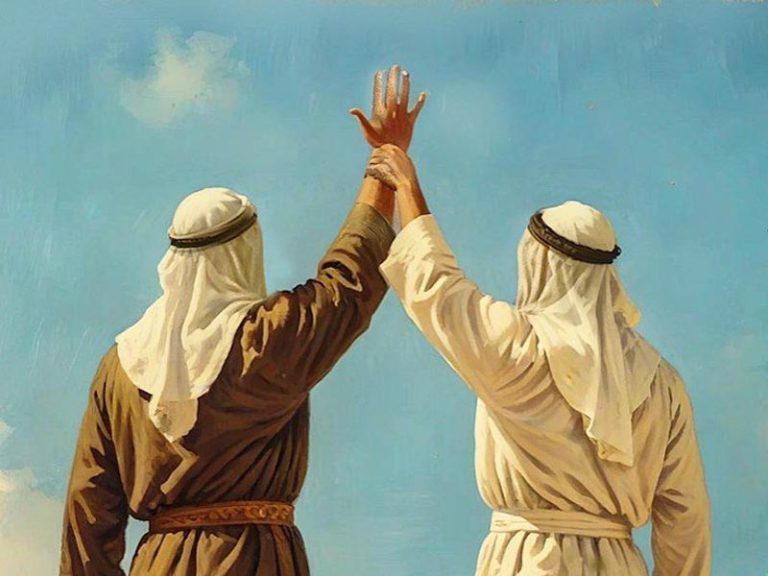
The event of Ghadir Khumm stands as a unique turning point in Islamic history. It was there that the Prophet Muhammad (peace and blessings be upon him and his family), by introducing Amir al-Muminin (peace be upon him) as his guardian and successor, proclaimed the perfection of the religion and the completion of God’s favor. Yet the virtue of this great day is not limited to that event alone. According to the narrations, Ghadir represents the continuation of a divine tradition: the appointment of rightful successors and spiritual leaders throughout the history of prophecy.
Ghadir and the Tradition of the Divine Prophets
Ghadir is not merely the remembrance of a historical event. In the narrations of the Ahl al-Bayt, it is described as the day on which God accepted the repentance of Prophet Adam, rescued Prophet Abraham from the fire, and the prophets introduced their appointed successors. Ghadir is the manifestation of a divine tradition repeated throughout the history of the prophets: the entrusting of the sacred responsibility of guidance to a divinely chosen successor and the continuation of the path of revelation. In the perspective of the Ahl al-Bayt, this day is the link connecting all divine covenants.
The following narration from Imam al-Sadiq (peace be upon him) unveils this profound connection between Ghadir and the tradition of the prophets:
Al-Mufaddal said to Imam al-Sadiq (peace be upon him):
“My master, do you instruct me to fast on this day — the Day of Ghadir?”
Imam al-Sadiq (peace be upon him) replied:
“Yes, by God! Yes, by God! This is the very day on which God accepted the repentance of Adam, and he fasted on that day out of gratitude.This is the day on which God saved Abraham from the fire, and he too fasted on that day in thanks to God. This is the day on which Moses (peace be upon him) introduced Aaron (peace be upon him) to the people as his successor and leader, and he fasted on that day in gratitude to God. This is the day on which Jesus (peace be upon him) publicly designated his successor, Simon Peter, and he fasted on that day in gratitude to God. And this is the day on which the Messenger of God (peace and blessings be upon him and his family) appointed the Commander of the Faithful, Ali (peace be upon him), among the people as a sign and leader, and openly declared his virtues. Therefore, he too fasted on this day in gratitude to God.” [1]
Wilayah: The Shared Legacy of the Prophets
Some days are not merely moments in time; they carry a truth that flows throughout history — days on which the trust of divine guidance was passed from a prophet to his appointed successor, ensuring the continuation of the faith.
Amir al-Muminin (peace be upon him) said:
“This is the day of Seth. This is the day of Idris. This is the day of Joshua. This is the day of Simon.” [2]
[1] Awalim al-‘Ulum, vol. 2, p. 212.
[2] Misbah al-Mutahajjid, vol. 1, p. 755; Manaqib Aal Abi Talib, vol. 2, p. 243; Bihar al-Anwar, vol. 37, p. 164.