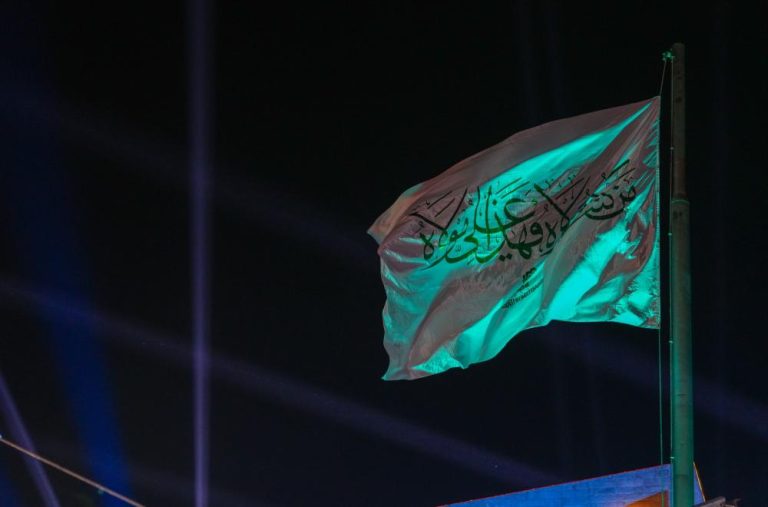
In the words of Imam al-Rida (peace be upon him), Ghadir is not merely a date; it is the day of renewing the covenant with wilayah and the means of benefiting from divine mercy. Just as on this day the bond between the people and the path of truth is strengthened, so too in his teachings is this meaning emphasized: that acting upon wilayah influences the forgiveness of sins, the answering of supplications, and the easing of the believer’s affairs.
The Station of Ghadir Among the Festive Days
Eid al-Ghadir, in the words of Imam al-Rida (peace be upon him), has been introduced as the day of the perfection of religion and the most brilliant divine festival among the great days of Islam.
It is narrated from Imam al-Rida (peace be upon him) that he said: “When the Day of Resurrection arrives, four days will be brought before Allah like a bride taken to her bridal chamber.”
It was asked:
“Which days are these?”
Imam al-Rida (peace be upon him) replied:
“The day of Eid al-Adha (Festival of Sacrifice), the day of Eid al-Fitr (Festival of Breaking the Fast), the day of Friday, and the day of Ghadir. Indeed, the day of Ghadir among these days is like the moon among the stars. This is the same day on which Ibrahim al-Khalil (Abraham, the Friend of God) was saved from the fire, and he fasted on that day in gratitude to Allah.
It is the day on which Allah perfected the religion when the Prophet (may Allah’s blessings be upon him and his family) established the Commander of the Faithful (peace be upon him) as a sign and a leader for the people, and made manifest his virtue and his succession (wisayah); so he fasted on that day.”
The Day of the Perfection of Religion and the Triumph of Truth
The day of Ghadir is the day of perfection, the acceptance of the deeds of the Shi’as, the forgiveness of sins, and the supplication of the angels for the lovers of the Ahl al-Bayt (peace be upon them).
Imam al-Rida (peace be upon him) continued, saying:
“This is the day of perfection; the day on which Satan is humiliated; the day on which the deeds of the Shi’as and the lovers of the family of Muhammad are accepted. On this day, Allah renders the deeds of the opponents like scattered dust, devoid of effect.
It is the day on which Allah commands Jibril (Gabriel) to erect the Throne of Divine Generosity before al-Bayt al-Ma’mur (the Flourishing House). Jibril ascends upon it, and the angels from all the heavens gather around him, sending blessings upon Muhammad and seeking forgiveness for the Shi’as of the Commander of the Faithful, the Imams (peace be upon them), and their lovers from among the children of Adam.
It is the day on which Allah commands the recording angels to lift their pens from writing the sins of the lovers of the Ahl al-Bayt and their Shi’as for three days from the day of Ghadir, in honor of Muhammad, Ali, and the Imams.”
The Spiritual and Soulful Blessings of the Day of Ghadir
Regarding the immense blessings of this day, Imam al-Rida (peace be upon him) said:
“This is the day that Allah has appointed for Muhammad, his family, and the people of His mercy. This is the day on which Allah increases the provision of whoever worships Him on it, and provides for his family and brothers, and frees him from the Fire.
This is the day on which the efforts of the Shi’as are appreciated, their sins are forgiven, and their deeds are accepted.
This is the day of the removal of sorrows, the lightening of the burden of sins, forgiveness and bestowal, the dissemination of knowledge, glad tidings, and the greatest festival. It is the day on which supplications are answered, and it is the day of the great standing (al-mawqif al-‘azim).
It is the day of adornment and the removal of darkness, the day of the covenant, the day of dispelling grief, and the day of pardoning the sinful Shi’as of the Commander of the Faithful (peace be upon him).”
Customs and Practices on the Day of Ghadir
By recalling the virtues and spiritual blessings of Ghadir, Imam al-Rida (peace be upon him) introduces Ghadir as the day of faith, the acceptance of deeds, providing food, performing pilgrimage (ziyarah), and attracting divine mercy. He says:
“This is the day of excelling in good deeds, the day of sending abundant blessings (salawat) upon Muhammad and the family of Muhammad, the day of contentment, and the festival of the Ahl al-Bayt.
It is the day of acceptance of deeds, seeking increase, the comfort of believers, (spiritual) commerce, friendship, and attaining divine mercy.
It is the day of purity, abstaining from major sins, worship, and providing iftar (the meal to break the fast) to those who are fasting. Whoever provides iftar on this day to a believing person who is fasting is like one who has fed a great multitude – to the point that the Imam repeated this ten times – and then he said: ‘Do you know what “fi’am” means?’
They said: ‘No.’
Imam al-Rida (peace be upon him) said: ‘One hundred thousand people.’
This is the day of exchanging congratulations. When believers meet one another, they say: ‘Praise be to Allah who has placed us among those who hold fast to the wilayah of the Commander of the Faithful (peace be upon him) and the Imams.’
This is the day of smiling at the faces of believers. Whoever smiles at his brother on the day of Ghadir, Allah will look upon him with mercy on the Day of Resurrection, fulfill a thousand of his needs, build for him a palace in Paradise of white pearls, and illuminate his face.
This is the day of adornment. Whoever adorns himself for the day of Ghadir, Allah will forgive all his minor and major sins, and will send angels who will record good deeds for him and elevate his ranks until the following year. If he dies, he will depart from this world as a martyr, and if he remains alive, he will live in felicity.
Whoever feeds a believing person, it is as if he has fed all the prophets and the truthful ones (siddiqun). And whoever visits (performs ziyarah to) a believer on this day, Allah will illuminate his grave, expand it, and seventy thousand angels will visit his grave every day, giving him glad tidings of Paradise.”
The Acceptance of Wilayah by the Elements of Existence
Imam al-Rida (peace be upon him) then speaks about the acceptance of wilayah by the inhabitants of the heavens and the earth. He says:
“On the day of Ghadir, Allah presented the wilayah to the inhabitants of the seven heavens. The inhabitants of the seventh heaven were the first to accept, and Allah adorned the Throne (al-‘Arsh) with it. Then the inhabitants of the fourth heaven accepted, and He adorned it with al-Bayt al-Ma’mur. Then the inhabitants of the lowest heaven accepted, and He adorned it with the stars.
Then He presented it to the earths. Mecca was the first to accept, and it was adorned with the Ka’bah. Then Medina accepted, and it was adorned with the presence of the Prophet (may Allah’s blessings be upon him and his family). Then Kufa accepted, and it was adorned with the Commander of the Faithful (peace be upon him).
Then it was presented to the mountains. The first mountains to accept were ‘Aqiq, Firuzah (turquoise), and Yaqut (ruby), and they became the finest gems. The other mountains that accepted became mines of gold and silver, while those that did not accept remained barren. It was presented to the waters: what accepted became sweet, and what rejected became salty and bitter.
It was presented to the plants: what accepted became sweet and pleasant in taste, and what rejected became bitter. It was presented to the birds: what accepted became melodious, and what rejected became voiceless or subdued in sound.
The likeness of the believers in accepting the wilayah of the Commander of the Faithful (peace be upon him) on the day of Ghadir is like that of the angels in prostrating to Adam. And the likeness of those who rejected it is like Iblis (Satan). On this day, the following verse was revealed: ‘Today I have perfected for you your religion.’ And Allah never sent any prophet except that the day of his commission (mab’ath) was, in his sight, like the day of Ghadir, because on that day he would appoint an executor (wasi) and a successor for his nation, and he would recognize the sanctity of that day.”
Iqbal al-A’mal, Vol. 1, p. 465