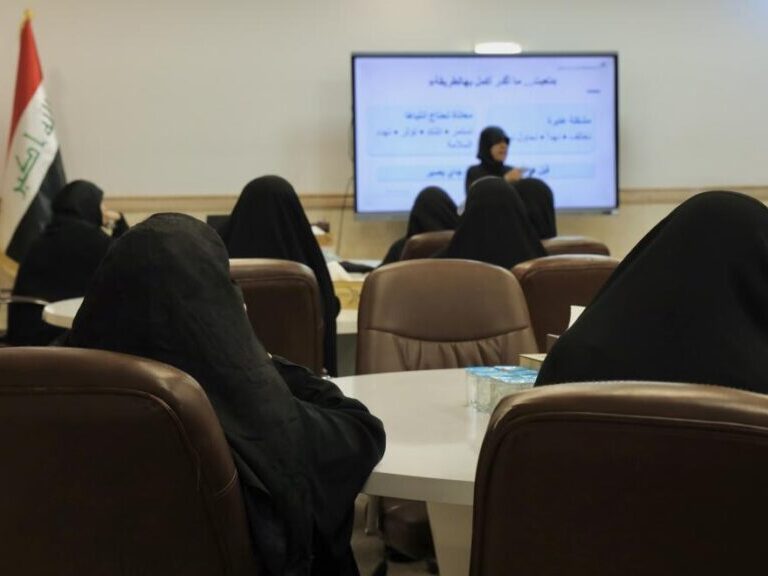
The Alawi Assembly for Research and Islamic Studies, affiliated with the Intellectual and Cultural Affairs Section, in cooperation with the al-Nathm Center — the Strategic Planning and Development Unit of the Holy Alawi Shrine — held a specialized research course for the servants of Amir al-Muminin (peace be upon him) who hold higher and university degrees.
The course was designed for researchers who are members of the Intellectual and Cultural Assembly affiliated with this body, and was held with the aim of raising their scholarly and intellectual level and strengthening their skills in research and academic writing.
Shaikh Salam al-Nasiri, Head of the Assembly, stated in an interview with the News Center:
“The holding of this course falls within the framework of the Assembly’s efforts to support researchers and enhance their capabilities.”
He added:
“These efforts are focused on training and empowering researchers according to approved scientific and professional methods in the preparation and writing of academic research.”
He further added:
“This course represents a step forward in the Assembly’s plans to create a dynamic research environment and raise the intellectual and cultural level of researchers, in a way that can contribute, through the presentation of specialized research and studies, to the vitality of scholarly and intellectual activity. This initiative is being carried out in line with the Assembly’s approach of developing researchers’ skills and strengthening their presence in scholarly and cultural fields.”
Dr. Muhammad al-Tamimi, an instructor at the University of Kufa and lecturer of the course, emphasized the importance of empowering researchers to make use of intelligent research guides.
He said:
“This helps the researcher distinguish credible scholarly publishing tools from other tools, and become familiar with genuine and effective tools in the field of digital content and artificial intelligence applications.”
He added:
“This course also addresses the tools researchers need, including scholarly, linguistic, and philosophical guides, among which is the artificial intelligence guide. These tools can help protect researchers’ intellectual rights and improve the quality of academic research.”
The course is being held over 30 days, in the form of eight training sessions, two days a week, in person. It was preceded by a virtual course on theoretical topics, which covered subjects such as selecting a research title, mapping out a research plan, and other scholarly matters.